The AI Investment Mirage: Apollo Global Management Warns of Diminishing Returns and Structural Fragility in the Tech Sector

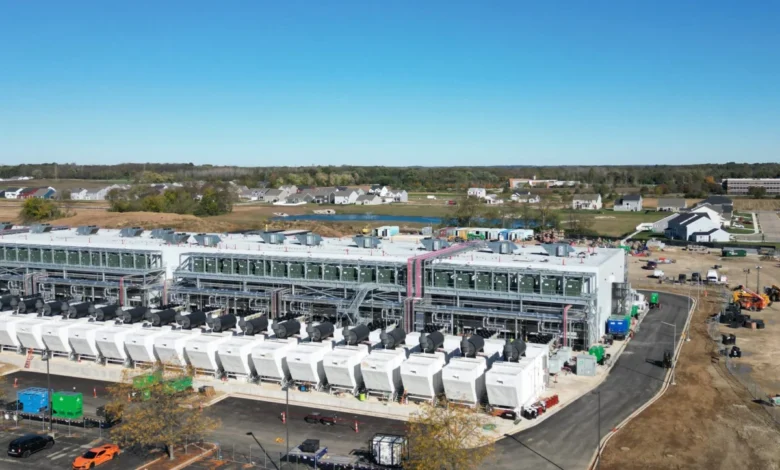
The artificial intelligence sector, which has served as the primary engine for equity market growth over the past two years, is facing an intensifying wave of skepticism from institutional analysts. Torsten Slok, Chief Economist at Apollo Global Management, has spearheaded a week-long critique of the industry’s fundamental economics, arguing that the massive capital expenditures (capex) flowing into data centers and compute infrastructure are failing to yield commensurate financial returns. As Wall Street undergoes a broader rotation away from high-growth tech, Slok’s warnings highlight a growing divergence between the narrative of "unlimited demand" and the reality of corporate bottom lines.
The Economic Disconnect: Marginal Costs vs. Marginal Benefits
At the heart of Slok’s analysis is a fundamental economic tension: the marginal cost of producing AI-driven compute is increasingly outpacing the marginal benefit delivered to the end user. Throughout the week, Slok presented a series of data-driven notes suggesting that the demand curve for AI compute is not the bottomless pit that investors once assumed. Instead, he characterizes it as flat and highly sensitive to pricing fluctuations.
The premise of the AI bull case has long relied on the assumption that as data centers are built, businesses will naturally adopt and integrate these tools to drive efficiency, revenue, and profit. However, Slok points to a notable absence of such results. For the vast majority of S&P 500 companies—excluding the dominant hyperscalers—AI remains an unproven cost center.
"The core economic flaw in the AI bull case is that the marginal cost of producing compute exceeds the marginal benefit it delivers to users," Slok noted in his Tuesday briefing. "How much compute and how many data centers are needed depends on the returns firms are able to generate. So far, the AI payoff for firms has been slow to materialize, implying a growing reluctance to pay for AI services."
This skepticism is underscored by a stagnation in token spending growth, a primary metric for measuring the actual usage of large language models (LLMs). When companies fail to see a direct translation from compute expenditure to revenue growth or cost savings, the impetus to sustain high-priced AI subscriptions weakens.
A Chronology of Growing Skepticism
The recent shift in market sentiment is not an isolated event but the culmination of a week defined by increasingly sharp economic critiques:
- Tuesday, October 20: Apollo released data on the slowing growth of token spending, challenging the "unlimited demand" narrative. Slok argued that data center construction models are currently disconnected from actual price-demand sensitivity.
- Thursday, October 22: The focus shifted to "circularity" in the AI ecosystem. Slok highlighted how capital is effectively being recycled: venture capital firms fund AI startups, which in turn use that capital to purchase compute from hyperscalers, who are then often backed by the same institutional investors.
- Saturday, October 24: Slok published a concluding analysis detailing the lack of AI-driven financial payoff for companies outside the "Magnificent Seven." He emphasized that while the tech giants show rising revenue per worker, the broader corporate landscape has yet to see a productivity bump.
The Problem of Circularity and VC-Backed Spending
A critical concern raised by Slok involves the structural integrity of the AI funding chain. The observation that 80% of the top 1% of AI spenders are venture-backed startups reveals a precarious dependency. In this model, these startups are not funding their infrastructure needs through organic operating cash flow or proven business models. Instead, they are burning through venture capital to pay for compute bills.
This creates a "circularity" that mimics past bubble-like dynamics. If the venture capital taps were to tighten—driven by rising interest rates or a cooling of exit markets—the demand for compute services would face a precipitous drop. This phenomenon has drawn the attention of broader financial oversight bodies, including S&P Global. Mark Habib, S&P’s Global Head for Digital Infrastructure, recently warned that the "interconnected financing structures" between hyperscalers and smaller AI firms remain largely opaque, leaving significant "hidden" debt off the public balance sheets of major tech players.
Market Reaction: Debt Markets and Credit Risk
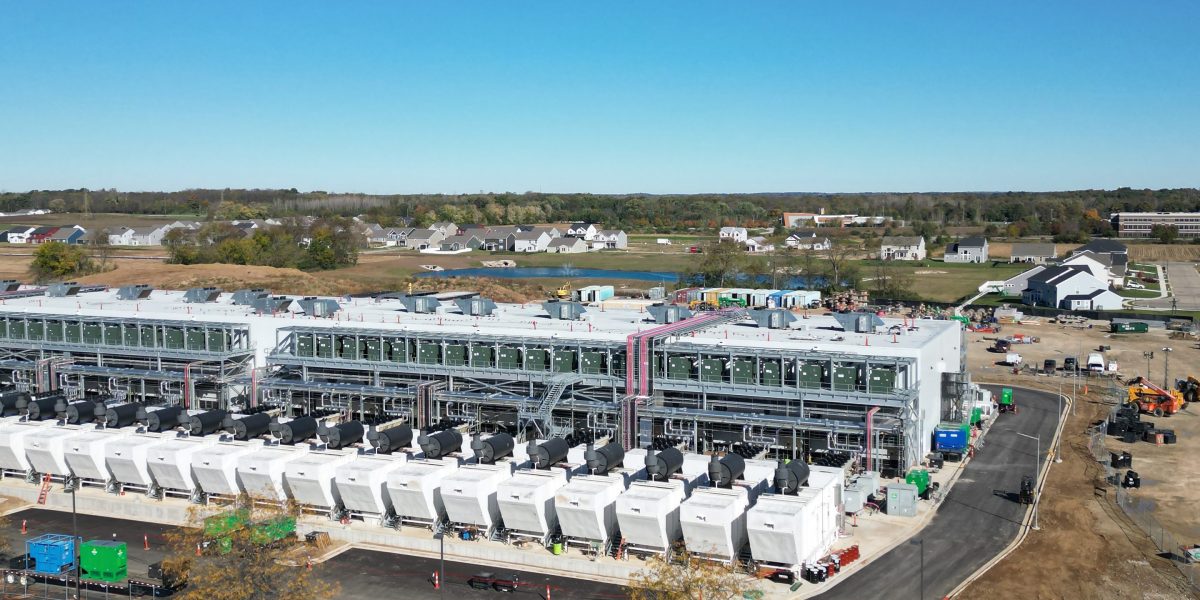
The financial markets have begun to price in this uncertainty. The volatility in chip-related stocks is no longer just a technical correction; it is a fundamental reassessment of the $800 billion to $1 trillion in planned capex for data center infrastructure.
The pressure is most visible in the credit markets. Meta, a company planning to spend between $135 billion and $145 billion this year on infrastructure and development, has seen its credit default swaps (CDS) widen to record levels. On Thursday, five-year CDS for Meta reached 114.79 basis points, reflecting heightened investor anxiety regarding the company’s massive capital commitments.
The situation is even more acute for smaller players. "Neocloud" providers, which rely on aggressive debt financing to compete with the hyperscalers, are seeing their market value erode rapidly. CoreWeave, a prominent firm in the space, has seen its stock price decline by over 30% this month, with its credit default swap spreads surging to 1,145 basis points—a clear signal that bond markets are pricing in a significantly higher risk of default.
The Judgment Gap: Why AI Isn’t a Universal Fix
Beyond the financial metrics, Slok offers a qualitative critique that strikes at the heart of the AI value proposition. He argues that while AI is an efficient tool for calculation, it lacks the essential components of corporate leadership: judgment, context, and accountability.
"AI may be a great calculator, but in business, intelligence is mostly judgment," Slok wrote. "Judgment depends on context, and the answer varies with which human or which model you ask."
This "judgment gap" poses a long-term hurdle for widespread corporate adoption. For an enterprise to rely on AI for critical decision-making, it must navigate complex layers of trust, cultural nuance, ethical trade-offs, and unwritten internal rules. When these elements are ignored, companies face significant reputational risk—a variable that rarely appears in the efficiency models touted by AI software providers.
Broader Implications for the Global Economy
The implications of this potential "AI correction" extend far beyond Silicon Valley. If the current trajectory of heavy, debt-fueled investment does not lead to a productivity surge, the global economy faces a potential "capital hangover."
- Macroeconomic Stability: The massive reallocation of capital toward data centers could be misdirected if the underlying technology fails to enhance labor productivity. This would result in significant asset write-downs and a contraction in corporate spending.
- Credit Contagion: As S&P’s Habib warned, the opacity of "interconnected financing" means that a default in a mid-sized AI firm could have cascading effects on the hyperscalers that serve as their primary vendors and creditors.
- Monetary Policy and Investment: If the AI boom fails to produce a tangible, broad-based boost to the economy, investors may pivot away from growth-at-any-cost models, forcing a return to valuation metrics centered on cash flow and dividend yields.
As of late October 2026, the tech industry finds itself at a crossroads. The initial hype phase, characterized by massive hardware procurement and aggressive expansion, is giving way to a more sober assessment of utility. Whether AI can transition from a "cost center" to a legitimate "growth driver" remains the central question for the next fiscal year. For now, the cautionary notes from analysts like Slok suggest that the era of blind, unchecked investment in AI infrastructure may be drawing to a close, replaced by a mandate for proven financial performance.
Related posts: