Automotive conglomerate Stellantis has filed a patent for a "High-Voltage Battery Quick-Release System for Vehicle," a mechanical innovation designed to mitigate the risks associated with lithium-ion battery thermal runaway. The patent, identified as 20260274078, outlines a system that allows an electric vehicle to jettison its primary power source should the battery pack reach critical temperatures or experience catastrophic failure. While battery safety remains a primary hurdle for the global transition to electrification, the proposal from the parent company of Dodge has ignited a broader discussion regarding the engineering challenges of managing high-density energy storage in consumer vehicles.
Contextualizing EV Battery Safety and Thermal Runaway
The transition to electric propulsion has brought significant advancements in performance, but it has also introduced new fire safety variables. Lithium-ion batteries, when compromised by physical impact, internal short-circuiting, or manufacturing defects, can enter a state known as thermal runaway. In this process, the cell’s internal temperature rises rapidly, leading to a self-sustaining chemical reaction that is notoriously difficult to extinguish.
Current firefighting protocols for EV battery fires often involve the use of excessive water—sometimes exceeding 30,000 gallons per incident—to cool the cells and halt the chain reaction. Unlike traditional internal combustion engine fires, which are generally fueled by flammable liquids that can be smothered, EV fires generate their own oxygen and heat, rendering conventional suppression methods largely ineffective. The Stellantis patent addresses this by proposing a physical separation between the vehicle chassis and the energy storage unit, essentially removing the fuel source from the vehicle’s structure.
Mechanics of the Quick-Release System
According to the technical specifications detailed in the patent filing, the system utilizes a pair of opposing castellated frames that secure the battery pack within the vehicle’s undercarriage. In the event of a detected thermal emergency, the system is designed to activate a release mechanism—potentially utilizing pyrotechnic fasteners or electromagnetic actuators—that allows the battery pack to detach from the frame.
Gravity facilitates the removal of the unit, allowing it to drop onto the road surface. To prevent the vehicle from being immobilized in a hazardous location, the design incorporates a secondary, low-voltage 12-volt battery system. This auxiliary power source is intended to provide enough current to the drivetrain to move the vehicle a short, safe distance away from the detached, high-temperature battery pack. This mechanism draws a parallel to aerospace engineering, specifically the warp core ejection protocols seen in science fiction, where a primary power source is jettisoned to prevent the destruction of the craft.
Engineering Comparisons and Industry Standards
This proposal follows a similar concept previously explored by Chinese automaker Chery, which developed a system capable of ejecting a battery pack laterally from a vehicle during a fire. However, the Stellantis patent differentiates itself by opting for a vertical drop mechanism. The vertical approach is viewed by some automotive engineers as more structurally intuitive for the current "skateboard" chassis architecture common in modern EVs, though it presents significant challenges regarding road clearance and debris impact.
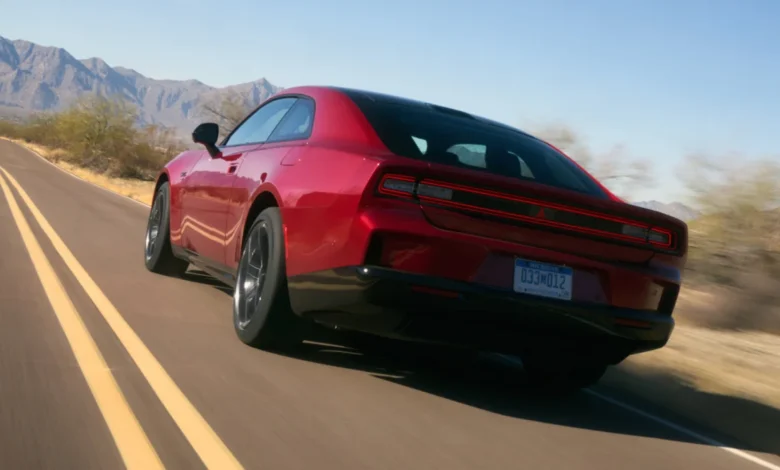
The choice of a Dodge Challenger silhouette in the patent’s illustrative diagrams has drawn interest from industry analysts. While the Dodge Challenger model was discontinued in 2024, the use of its chassis in the technical drawings serves as a placeholder for the company’s high-performance vehicle segment. This suggests that the manufacturer is considering how to integrate safety-critical systems into vehicles that prioritize high power density and weight-sensitive performance profiles.
Technical Challenges and Implementation Hurdles
Despite the engineering ingenuity, the implementation of such a system faces formidable hurdles. Regulatory approval in major markets, including the United States and the European Union, requires rigorous testing for vehicle structural integrity. The introduction of an ejection mechanism creates a potential point of failure; if the system were to trigger accidentally while a vehicle is traveling at highway speeds, the consequences could be catastrophic.
Furthermore, the environmental and logistical implications of leaving a compromised battery pack on a public roadway remain unresolved. In regions prone to wildfires or dense urban environments, an ejected battery—even if separated from the vehicle—still represents a significant fire hazard. Municipal infrastructure and emergency response teams would need to develop entirely new procedures for securing and disposing of high-voltage components left behind in the middle of a transit route.
Broader Implications for the Automotive Industry
The patent filing serves as a barometer for how legacy automakers are navigating the "Safety-First" era of electrification. As EV adoption rates continue to climb, consumers and regulators are demanding more robust solutions to the perceived risks of battery fires. While the occurrence rate of EV fires is statistically lower than that of internal combustion engine vehicles, the high-profile nature of such incidents continues to drive engineering research.
Industry analysts suggest that this patent is likely part of a broader defensive intellectual property strategy rather than a roadmap for immediate production. Companies often file patents to secure proprietary rights to technologies that may only reach the market in future iterations, or to protect potential solutions to complex safety requirements.
"We are currently in a period of intense experimentation," says a mobility researcher specializing in vehicle safety. "Manufacturers are exploring every possible pathway to reduce the liability and physical risk associated with large-format lithium-ion batteries. While an ejection system is technically fascinating, the industry is more likely to prioritize advancements in solid-state batteries and advanced thermal management systems that prevent the runaway event from occurring in the first place."
Chronology of EV Fire Safety Developments
The development of the Stellantis system arrives at a time when the automotive industry is grappling with a series of high-profile battery-related recalls.
- 2020-2022: A wave of recalls across several major manufacturers, including General Motors and Hyundai, regarding battery manufacturing defects that led to thermal runaway.
- 2023: Federal agencies, including the National Highway Traffic Safety Administration (NHTSA), increased scrutiny on EV charging cycles and thermal management software, leading to a focus on preventative AI-driven monitoring.
- 2024: Industry focus shifted toward "Fire-Resistant" packaging and advanced cooling systems that integrate directly into the battery module.
- 2025-2026: Emerging patents, such as this one from Stellantis, indicate a pivot toward physical separation technologies as a final failsafe mechanism.
Conclusion and Future Outlook
The "High-Voltage Battery Quick Release System" represents a provocative, if unorthodox, vision for future vehicle safety. While the likelihood of seeing a pyrotechnic battery-ejection system on a production car in the near term remains low, the patent highlights the extreme measures manufacturers are willing to consider to address the inherent risks of energy-dense propulsion.
As the automotive landscape moves toward total electrification, the dialogue between regulatory bodies, safety engineers, and manufacturers will continue to evolve. Whether through improved chemical composition of cells or advanced mechanical mitigation systems like the one proposed by Stellantis, the primary objective remains clear: ensuring that the energy storage systems powering the next generation of transport can be managed safely under any condition. For now, the technology remains a conceptual design, a testament to the ongoing effort to balance the promise of electric performance with the practical realities of safety in the modern era.