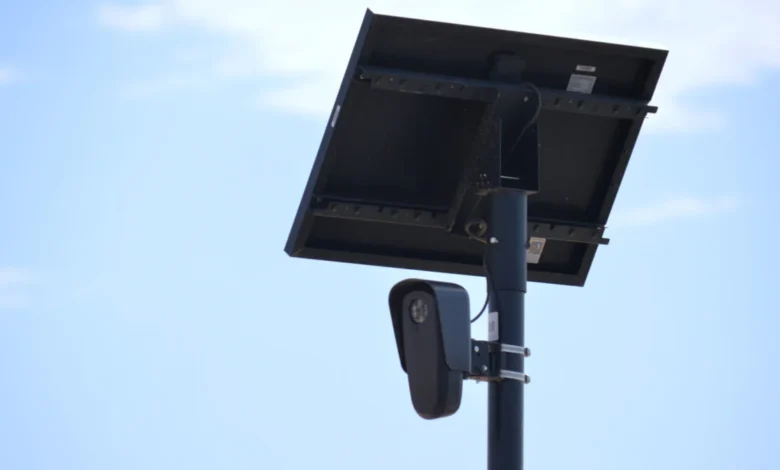
The proliferation of automated license plate recognition (ALPR) systems across the United States has sparked a significant debate regarding public surveillance, privacy, and municipal fiscal responsibility. Among the most visible players in this sector is Flock Safety, a technology firm that has deployed thousands of pole-mounted cameras in residential neighborhoods, commercial corridors, and law enforcement jurisdictions nationwide. However, as the presence of these devices has grown, so too has a pattern of physical vandalism targeting the hardware. This rising trend of destruction has placed local governments in a precarious financial position, as they are often contractually obligated to bear the costs of repairing or replacing equipment damaged by the public.
The Anatomy of Surveillance Infrastructure
Flock Safety’s business model relies on "Security-as-a-Service," a subscription-based approach where municipalities or private homeowners’ associations lease hardware rather than purchasing it outright. The cameras are designed to capture high-resolution images of license plates and vehicle characteristics, which are then cross-referenced against criminal databases. While proponents argue that this data is a vital tool for law enforcement to solve crimes, critics view the ubiquitous nature of the cameras as an encroachment on civil liberties.
This tension has manifested physically. In recent years, numerous incidents of vandalism have occurred, ranging from spray-painting lenses to the complete removal of camera poles. These acts of defiance are not merely property damage; they represent a growing public pushback against the normalization of 24/7 monitoring. When a camera is incapacitated, the question of financial liability moves to the forefront of local governance.
Financial Liability and Contractual Obligations
In many jurisdictions, the financial burden of vandalism falls squarely on the taxpayer. Contracts between Flock Safety and municipal entities typically include clauses that define the "Customer’s" responsibility for the hardware. For instance, public records from the Fort Bend County, Texas, government reveal clear financial stipulations regarding damaged equipment. According to the signed agreements, if Flock hardware is lost, stolen, or damaged, the county is responsible for requesting a replacement at a predetermined cost.
The price tag for such replacements is significant. Standard poles, which serve as the mounting point for the cameras, carry a replacement fee of approximately $500, while more complex "advanced poles" can cost upwards of $2,000. Replacing the camera unit itself typically adds another $800 to the bill. When these costs are aggregated across a fleet of cameras—especially in cities like Houston, where six cameras were disabled in a single wave of vandalism—the taxpayer-funded cost for maintaining surveillance infrastructure becomes substantial.
The "Camera Protection Plan" Paradigm
In response to the recurring issue of damaged equipment, Flock Safety introduced an optional service layer known as the "Camera Protection Plan." This plan is marketed to law enforcement agencies as a form of insurance, promising that the company will repair or replace covered LPR and video cameras at no additional cost when damage occurs.
However, the economics of this plan remain opaque. While it provides a safety net for local police departments, it is not a free service. It operates as an annual add-on, requiring an additional premium paid out of municipal budgets. Critics argue that this creates a circular financial loop: taxpayers fund the initial contract for surveillance, they fund the additional protection plan, and should the protection plan be bypassed, they fund the out-of-pocket replacement costs for vandalized units. The absence of public disclosure regarding the cost of these protection plans leaves a gap in transparency, making it difficult for taxpayers to determine the true total cost of ownership for their city’s surveillance network.
Chronology of Vandalism and Public Pushback
The trend of targeting surveillance hardware is not isolated to Texas. Since the widespread rollout of ALPR systems began in earnest around 2020, reports of camera interference have emerged in various regions.
- 2021–2022: As Flock cameras expanded into more residential zones, the first documented instances of lens tampering appeared in suburban regions, often accompanied by local protests at city council meetings.
- July 2024: The city of Houston experienced a high-profile incident where multiple cameras were felled, drawing national attention. This coincided with the renewal of multi-year contracts, suggesting a direct link between policy decisions and physical acts of protest.
- Ongoing: Various jurisdictions continue to report sporadic damage, ranging from wires being cut to the complete toppling of mounting structures, forcing law enforcement to reconsider the physical security of their surveillance assets.
Official Perspectives and Law Enforcement Rationale
Law enforcement agencies that utilize Flock Safety systems generally maintain that the cameras are essential tools for public safety. Police departments often highlight statistics showing a reduction in violent crime or the successful recovery of stolen vehicles as justification for the expenditure. When asked about the financial impact of vandalism, many departments argue that the benefits of the surveillance program far outweigh the occasional costs of hardware maintenance or replacement.
From the perspective of law enforcement, the "cost" of vandalism is not just the price of a replacement camera, but the lost opportunity to catch perpetrators during the downtime. Consequently, some agencies view the "Camera Protection Plan" as a necessary operational expense, akin to insuring a patrol vehicle or maintaining a precinct building. They contend that the accountability lies with the individuals committing the crimes, not with the technology or the agency deploying it.
Broader Implications for Municipal Budgets
The ongoing issue of surveillance hardware maintenance raises broader questions about municipal fiscal planning. As cities move toward "smart city" technologies, the long-term maintenance costs of these systems often go underestimated during the initial bidding and approval processes. When a system is subjected to external forces—such as environmental wear or, in this case, intentional vandalism—the resulting budget spikes can lead to unplanned reallocations of funds.
Furthermore, the relationship between private surveillance providers and public entities creates a complex legal landscape. When a private company holds the keys to the data and the hardware, and the public bears the risk of the equipment’s loss, the bargaining power often shifts toward the vendor. Municipalities are essentially locked into a provider, as switching vendors would require replacing the entire infrastructure, further incentivizing cities to accept higher maintenance costs rather than reconsidering the necessity of the surveillance program entirely.
Socio-Political Analysis: Surveillance and the Public
The vandalism of Flock cameras serves as a physical manifestation of a profound divide in American society. On one side are the security-minded citizens and policymakers who believe that technological monitoring is a requisite for modern law enforcement. On the other are those who view the erosion of anonymity in public spaces as an existential threat to personal freedom.
The act of damaging these cameras is a rare form of direct political expression. Unlike signing a petition or attending a town hall meeting, destroying a camera creates an immediate, tangible disruption of the surveillance state. For the vandal, the destruction is a statement that the community does not consent to being tracked. For the municipality, the destruction is a nuisance that creates a fiscal burden and a policing headache.
As these tensions persist, the conversation is likely to evolve from one focused on "who pays for the damage" to a more fundamental inquiry: what is the appropriate balance between public safety and the public’s right to live without being monitored? Until that balance is struck in a way that satisfies the majority of citizens, the cycle of deployment, public resistance, and subsequent fiscal impact is likely to continue.
Ultimately, the burden of these surveillance programs remains firmly on the taxpayers. Whether it is through the initial subscription fees, the optional protection plans, or the direct costs of replacing damaged hardware, the public continues to fund the infrastructure that keeps them under constant watch. As more cities consider adopting or expanding these systems, the financial and social risks of doing so will remain a critical part of the discourse for local governments and the constituents they serve.