Tesla Semi Logistics Expansion Signals Major Shift in Heavy Freight Amid Global Energy Instability

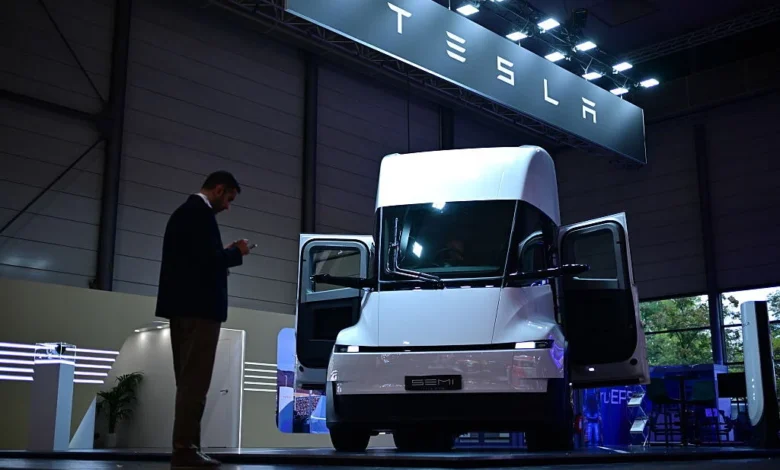
The heavy-duty logistics sector is undergoing a profound transformation as a coalition of global corporate titans—including Microsoft and PepsiCo—has placed a landmark order for 2,500 Tesla Semi electric trucks. This procurement, scheduled for fulfillment over the next 18 months, represents one of the most significant commitments to zero-emission heavy transport in history. The move comes at a critical juncture for the American automotive industry, which currently faces a paradoxical landscape defined by federal regulatory rollbacks and unprecedented volatility in global fossil fuel markets.
The Macroeconomic Context: Diesel Volatility and the EV Pivot
For logistics operators, the decision to pivot toward electric powertrains is increasingly driven by hard economic realities rather than environmental mandates alone. As of this month, diesel prices in the United States have reached record-shattering heights. This spike is largely attributed to the ongoing conflict in the Middle East, specifically the war in Iran, which has severely disrupted crude oil production and maritime shipping lanes. With diesel prices hovering at nearly double their year-over-year averages, the total cost of ownership (TCO) for traditional internal combustion engine (ICE) trucks has become a major liability for fleet operators.
During a pre-taped address, Elon Musk emphasized the economic rationale behind the shift. "The truck is going to make a ton of sense economically because the cost of electricity is much less than the cost of diesel, especially in these crazy times," Musk noted. This statement acknowledges the broader geopolitical instability that has characterized recent energy markets—instability that has persisted despite the shifting priorities of the current administration.
Regulatory Tensions and Federal Policy Shifts
The surge in electric vehicle (EV) adoption for commercial use occurs against a backdrop of significant federal policy contraction. Last year, the Trump administration, supported by a GOP-led legislature, oversaw the elimination of billions of dollars in federal subsidies previously earmarked for electric vehicle infrastructure and manufacturing incentives. Furthermore, the administration has actively pursued the relaxation of fuel economy standards for heavy-duty truck engines.
These regulatory changes are particularly consequential, as heavy-duty vehicles represent approximately 7 percent of total greenhouse gas emissions in the United States. By easing the requirements for manufacturers to meet aggressive climate-aligned emission targets, the administration has created a regulatory environment that favors legacy diesel technology. However, the market demand from large-scale corporate entities suggests that the private sector is continuing to prioritize electrification regardless of the current federal stance. The industry’s internal movement toward sustainability appears to be decoupled from the fluctuating political winds in Washington, D.C.
Chronology of the Tesla Semi Program
The journey of the Tesla Semi has been marked by long development cycles and shifting timelines, making this latest order a milestone for the company’s manufacturing credibility.
- November 2017: Tesla officially unveils the Semi prototype, promising revolutionary range and charging speeds. At this time, Musk promises the inclusion of "Enhanced Autopilot" as a standard feature.
- 2018–2021: Repeated delays in mass production are attributed to battery cell constraints and the optimization of the proprietary 4680 battery architecture.
- December 2022: The first production units are delivered to initial launch partners, marking the official start of the commercial rollout.
- Q1 2024: The alliance of shippers, facilitated by the Smart Freight Centre, finalizes the order for 2,500 units, representing the largest single commitment to the platform to date.
- Future Outlook (2025-2026): Tesla projects the integration of "Full Self-Driving (Supervised)" software into the Semi platform, a feature that has been in development for years but remains subject to rigorous safety oversight.
Analysis of the Collective Procurement Strategy
The order of 2,500 units is not merely a purchase; it is a strategic maneuver designed to normalize the price point of heavy-duty electric transport. By pooling demand across multiple carriers, the Smart Freight Centre and its partners have leveraged economies of scale, compelling manufacturers to reduce per-unit costs.
Meena Bibra, a spokesperson for the nonprofit Smart Freight Centre, explained that the selection process was highly rigorous. "The group selected Tesla trucks over competitors after assessing price, performance, production capability, and service support," Bibra noted. This indicates that while Tesla is currently the beneficiary of this record-setting order, the door remains open for other manufacturers to capture market share. Companies such as Kenworth, Volvo, and the EV startup Ride are actively competing for the remainder of the logistics sector’s transition, as carriers look to diversify their fleets based on specific performance requirements and existing infrastructure compatibility.
Technical Hurdles and Future Software Integration
While the physical performance of the Tesla Semi—particularly its range and regenerative braking capabilities—has garnered praise from initial operators, the digital layer of the vehicle remains a point of intense focus. Tesla has stated that its "Full Self-Driving (Supervised)" feature will be available for the Semi in the "very near future."
The promise of autonomous or semi-autonomous freight operations is the "holy grail" for the logistics industry, as it promises to address the chronic shortage of commercial drivers and significantly reduce labor costs. However, regulators have expressed skepticism regarding the safety profile of Tesla’s driver-assistance technologies. As these trucks enter the fleet, the performance of these software systems in real-world, high-traffic conditions will be under intense scrutiny by the National Highway Traffic Safety Administration (NHTSA) and other transport authorities. The shift from "Enhanced Autopilot," promised in 2017, to the more advanced "Full Self-Driving" suite reflects the company’s evolution, though the timeline for full implementation remains subject to both technological readiness and legal clearance.
Broader Economic and Environmental Implications
The introduction of 2,500 electric trucks into the U.S. logistics network will have a measurable impact on the infrastructure of major transport corridors. According to data from the CALSTART ZET Dashboard, the deployment of these vehicles will nearly double the number of heavy-duty electric trucks currently operational on U.S. roads.
This scale of deployment necessitates a parallel investment in megawatt-scale charging infrastructure. Unlike passenger EVs, heavy-duty trucks require specialized high-voltage charging stations capable of handling massive battery packs during short turnaround windows. As logistics companies transition away from diesel, the burden of developing this infrastructure is being shared between private utilities, the trucking companies themselves, and the vehicle manufacturers.
Furthermore, the environmental impact is significant. Given the heavy-duty sector’s contribution to total U.S. greenhouse gas emissions, the replacement of 2,500 diesel-burning tractors with electric equivalents will provide a quantifiable reduction in nitrogen oxides and particulate matter in urban logistics hubs and along major interstate highways.
Conclusion: A Market-Driven Transformation
The current trajectory of the heavy-duty trucking industry reveals a compelling narrative: even in the absence of robust federal support, market forces are driving the transition toward electrification. The volatility of global oil prices, compounded by the strategic necessity for corporations to lower their carbon footprints to meet ESG (Environmental, Social, and Governance) targets, has created a formidable tailwind for companies like Tesla.
As these 2,500 trucks begin to hit the road over the next 18 months, they will serve as a bellwether for the rest of the industry. If Tesla can successfully scale production and demonstrate the reliability of the Semi platform under heavy load, it may well catalyze a wider industry migration. For now, the logistics sector remains a space where economic pragmatism—the simple math of electricity versus diesel—is proving more influential than the shifting currents of political discourse. Whether the administration’s focus on lowering fuel economy standards will ultimately hinder this transition remains to be seen, but for the present moment, the momentum resides with the electric fleet.