Elizabeth Holmes sparks controversy with cryptic social media posts regarding child safety while serving prison sentence

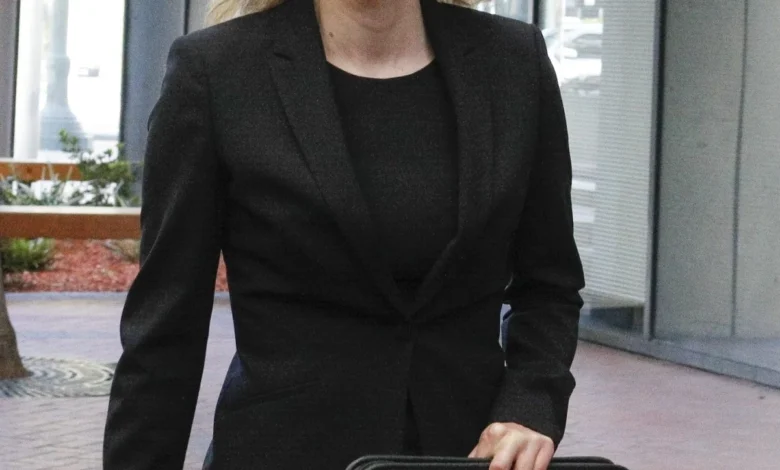
The incarcerated founder of the defunct blood-testing startup Theranos, Elizabeth Holmes, has ignited a fresh wave of public scrutiny following a series of aggressive and cryptic messages posted to her social media account on X (formerly Twitter) on Friday, September 25. Holmes, who is currently serving a 135-month sentence at the Federal Prison Camp in Bryan, Texas, utilized the platform to air grievances concerning her children’s well-being, a move that has drawn sharp criticism given the nature of the fraud conviction that led to her imprisonment.
The messages, which included an AI-generated image depicting a match being struck over a burning bridge, contained pointed warnings directed at unnamed parties. “I don’t get angry often. Tonight, I am,” Holmes wrote. “People put my child’s health and safety at risk. They knowingly and consciously chose this path. If protecting my child means burning bridges, I’ll burn them to light the way.”

A Chronology of the Theranos Collapse and Legal Aftermath
To understand the intensity of the public reaction to Holmes’s statements, one must revisit the trajectory of her once-celebrated company. Founded in 2003 when Holmes was just 19, Theranos promised to revolutionize the diagnostic industry with proprietary technology capable of performing an array of blood tests using only a few drops of blood. At its peak, the company was valued at $9 billion, and Holmes was heralded as a visionary tech mogul.
However, the reality of the technology began to unravel in 2015 following an investigative report by The Wall Street Journal, which revealed that Theranos was not utilizing its own machines for the vast majority of tests and was instead relying on traditional commercial analyzers. The fallout was swift and systemic:
- 2015: Investigative journalism exposes significant inaccuracies in Theranos’s proprietary Edison devices.
- 2016: Federal regulators from the Centers for Medicare & Medicaid Services (CMS) ban Holmes from operating clinical laboratories for two years after finding the company’s practices posed "immediate jeopardy to patient health and safety."
- 2018: Theranos officially dissolves. Holmes and her former partner, Ramesh “Sunny” Balwani, are indicted on multiple counts of federal wire fraud and conspiracy.
- 2022: A jury finds Holmes guilty on four counts of defrauding investors. She is sentenced to over 11 years in federal prison.
- 2023: Holmes begins serving her sentence at the Federal Prison Camp in Bryan, Texas.
- 2026: Reports emerge indicating that, due to good behavior and credit for time served, Holmes is expected to transition to a halfway house in 2027.
The Duality of Public Sentiment and Social Media Engagement
The reaction to Holmes’s recent social media posts highlights a deep-seated disconnect between her personal narrative and the public perception of her crimes. Critics were quick to point out the irony of a woman convicted of endangering public health through fraudulent medical technology claiming that others are putting her family at risk.

When one user noted that the lies told at Theranos had "put countless people’s health and safety at risk," Holmes replied by mocking the user’s profile picture, suggesting her followers send money to the individual to "get a more flattering" image. This combative engagement style, while perhaps intended to project strength, has been interpreted by legal observers as a risky strategy for a convicted felon seeking a reduction in her sentence.
The Quest for Executive Clemency
Central to the ongoing discourse surrounding Holmes is her persistent effort to secure a pardon or sentence commutation from President Donald Trump. Her recent social media activity includes overt displays of political support, such as sharing campaign materials and offering positive commentary on the administration’s political standing.
Legal experts note that such public posturing is rarely helpful in the formal petition process for executive clemency. The Department of Justice’s Office of the Pardon Attorney maintains strict guidelines for reviewing such requests, emphasizing remorse and acceptance of responsibility—elements that some argue are absent from Holmes’s current public persona. Furthermore, her attempts to lobby the executive branch occur against a backdrop of ongoing restitution obligations. Holmes and Balwani were ordered to pay $452 million in restitution to the victims of their fraud, a debt that remains a significant point of contention for those affected by the company’s collapse.

Institutional Support and Historical Context
Holmes’s rise to prominence was bolstered by an unprecedented level of support from the American political and military establishment. Her board of directors once included former Secretaries of State Henry Kissinger and George Shultz, as well as former Secretary of Defense Jim Mattis. The eventual abandonment of Holmes by these figures serves as a testament to the magnitude of the deception. Mattis and Shultz, in particular, were instrumental in providing the company with an aura of credibility that prevented early skepticism from investors and the scientific community.
The current public interest in Holmes has been further stimulated by the upcoming release of the documentary You Can See Everything, directed by Nathan Fielder and Lance Oppenheim. The film, which documents the final weeks before Holmes surrendered to federal custody, was screened at the 53rd Telluride Film Festival to significant critical attention. The documentary offers an intimate look at the life of a woman who transitioned from the heights of Silicon Valley influence to the constraints of federal incarceration.
Broader Implications and Public Health Accountability
The case of Elizabeth Holmes remains a definitive case study in the risks of "fake it until you make it" corporate culture when applied to the healthcare sector. The specific harm caused by Theranos was not limited to financial loss for investors; it extended to patients who received incorrect blood test results, which in some cases led to unnecessary medical procedures or the delay of critical care.

As the legal proceedings enter their later stages and discussions regarding her transition to a halfway house intensify, the discourse surrounding Holmes serves as a reminder of the importance of scientific validation and regulatory oversight. Her recent social media activity, while personal in nature, underscores the enduring tension between her private life and the public accountability she continues to face.
For the victims of Theranos, the focus remains on the $452 million in restitution and the long-term impacts of the medical misinformation that was disseminated under the guise of innovation. Whether or not Holmes receives a reprieve through the political process, her actions continue to be measured against the standard of the public trust she violated during the company’s decade-long existence. As she looks toward a 2027 transition, the public remains vigilant, ensuring that the legacy of Theranos is defined by the consequences of its actions rather than the celebrity status of its founder.