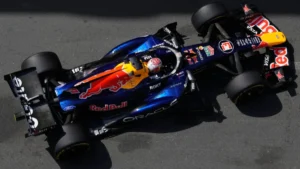
The Azerbaijan Grand Prix returns to the streets of Baku this weekend, marking a pivotal moment in the 2026 Formula 1 World Championship calendar. As the circus arrives in the Caspian Sea city, the anticipation among fans and teams is palpable, with the Baku City Circuit notorious for producing some of the most unpredictable and chaotic racing in the sport. Saturday’s track action serves as the precursor to the main event, with the technical demands of the narrow, winding streets testing the limits of the new-generation machinery. Fans can follow every development, session, and post-session analysis live on Sky Sports F1 and Sky Sports Main Event as the drivers navigate the unforgiving concrete barriers of the Azerbaijani capital.
The Technical Challenge of the Baku City Circuit
Designed by renowned circuit architect Hermann Tilke, the Baku City Circuit is a unique hybrid that challenges the engineering teams in ways few other tracks do. It is a tale of two halves: a high-downforce, technical section that winds through the historic Old City, and a blistering high-speed stretch along the Neftchilar Avenue seafront.
Measuring 6.003 kilometers, the track features 20 turns, many of which are tight, 90-degree corners that punish any lapse in concentration. The infamous Turn 8, located near the medieval fortress walls, remains one of the narrowest points in Formula 1, measuring just 7.6 meters across. The disparity between the need for maximum grip in the technical sectors and the requirement for low drag on the long main straight forces teams to compromise heavily on their car setups. Finding the "sweet spot" often determines who qualifies on the front row and who spends the weekend chasing the field.
A Chronology of the Baku Weekend
The weekend schedule began with the customary free practice sessions, which served as a shakedown for the teams to calibrate their power units and brake cooling systems. The hot, dusty conditions in Baku frequently lead to track evolution, meaning the surface becomes significantly faster as rubber is laid down throughout the weekend.
Following the initial practice sessions, Saturday’s agenda shifted toward qualifying readiness. The importance of track position in Baku cannot be overstated; overtaking is possible, particularly at the end of the long main straight, but the risk of accidents—often necessitating the deployment of the Safety Car—is statistically higher here than at almost any other circuit on the calendar.
Statistical Overview and Performance Metrics
Data from previous years indicates that the Baku City Circuit produces a high rate of attrition. Since its debut in 2016, the race has frequently been decided by late-race drama, mechanical failures, and strategic gambles. Average speeds often exceed 210 km/h, while the main straight allows cars to reach top speeds in excess of 340 km/h.
Key performance indicators for this weekend include:
- Brake Wear: The heavy braking zones, particularly into Turn 1 and Turn 3, place immense pressure on carbon brake discs, requiring careful management throughout the 51-lap race.
- Tire Degradation: With ambient temperatures often climbing, the Pirelli compound selection plays a critical role. The transition from the smooth, high-grip sections to the abrasive street surfaces requires drivers to manage their thermal degradation effectively.
- Fuel Load: Due to the stop-start nature of the circuit, fuel consumption is high, necessitating precise engine mapping to ensure the car reaches the checkered flag.
Official Perspectives and Team Preparedness
As teams prepare for the qualifying shoot-out, the paddock remains abuzz with technical discussions. Representatives from the leading constructors have noted that the 2026 regulations have introduced new variables to the Baku equation. With the updated aerodynamic packages, the sensitivity to crosswinds coming off the Caspian Sea has become a primary concern for the aerodynamicists.
"Baku is a circuit where you cannot afford to be hesitant," stated a senior team engineer ahead of the qualifying session. "The proximity of the walls means that confidence is just as important as the raw performance of the car. We have seen in previous years that a driver who is comfortable pushing the limits of the track boundary often finds the tenths of a second that separate the top five from the rest of the pack."
Drivers have echoed this sentiment, emphasizing the physical and mental toll of the circuit. The lack of run-off areas means that any error is amplified, often resulting in a red flag that can compromise a driver’s entire qualifying strategy.
Broader Impact on the 2026 Championship
The Azerbaijan Grand Prix serves as a critical junction in the 2026 season. With the championship battle tightening, every point earned in Baku is vital for both the Drivers’ and Constructors’ standings. The unpredictability of the circuit often allows mid-field teams to punch above their weight, potentially causing a major shake-up in the points table.
Strategists are currently running thousands of simulations to determine the optimal pit-stop window. Given the historical likelihood of a Safety Car or Virtual Safety Car intervention in Baku, the ability to react quickly to track conditions is often the deciding factor in race victory. A "cheap" pit stop under a yellow flag can vault a driver from the middle of the pack to a podium position, a scenario that has unfolded repeatedly in Baku’s short but storied history.
The Role of Technology and Broadcasting
The digital infrastructure surrounding this weekend’s event highlights the modernization of Formula 1 coverage. Through platforms like the live blog hosted by Norkon and the extensive broadcast reach of Sky Sports, fans are granted unprecedented access to real-time data, team radio, and telemetry. This transparency allows for a deeper appreciation of the strategic chess match occurring on the pit wall.
As the afternoon progresses, the focus will shift entirely to the qualifying grid. The fight for pole position is expected to be a contest between the top-tier teams, but the narrow margins suggest that a surprise entry from the second tier is always a possibility.
Looking Ahead to Race Day
As the sun begins to dip behind the skyscrapers of Baku, the teams will finalize their data analysis to prepare for the final sprint. The lessons learned during Saturday’s sessions will be distilled into race strategies, with an eye toward the inevitable environmental factors—wind, temperature, and track grip—that define the Baku experience.
The Azerbaijan Grand Prix has earned its reputation as a "wildcard" event. Whether it results in a tactical masterclass or a chaotic thriller, the race promises to be a defining chapter in the 2026 season. Fans are encouraged to keep a close watch on the live timing screens and expert commentary provided by Sky Sports throughout the remainder of the weekend to ensure they do not miss any pivotal moments from the Baku City Circuit.
In summary, the 2026 Azerbaijan Grand Prix presents a unique set of challenges that test the synergy between man and machine. As the grid prepares for the final push, the atmosphere in Baku remains electric, underscoring the enduring appeal of street racing at its most intense and uncompromising level. Whether through the lens of technical analysis or the sheer spectacle of high-speed racing, the event continues to be a cornerstone of the modern Formula 1 experience, demanding excellence from every team and driver involved.
Related posts: