The Holographic Principle and the Fabric of Space-Time: How Modern Physics Reimagines the Universe

For nearly three decades, theoretical physics has been gripped by a concept that fundamentally challenges our everyday understanding of reality: the holographic principle. First emerging from the intersection of quantum mechanics and general relativity, this framework suggests that the three-dimensional space we inhabit may be an illusion, and that all the information contained within a volume of space can be entirely accounted for by data encoded on its lower-dimensional boundary.
The implications of this theory stretch far beyond esoteric mathematics. They offer potential solutions to some of the most enduring paradoxes in physics, including the fate of information swallowed by black holes, and provide a bridge toward the elusive goal of a unified theory of quantum gravity. As researchers continue to refine these models, the scientific community is forced to re-evaluate foundational concepts of distance, volume, and the very nature of existence.
The Genesis of Holography: Black Holes and Information
To understand how physics arrived at the holographic principle, one must look back to the foundational breakthroughs of the 1970s. During this era, physicists Jacob Bekenstein and Stephen Hawking applied quantum mechanics to the study of black holes, leading to a profound realization regarding black hole entropy.
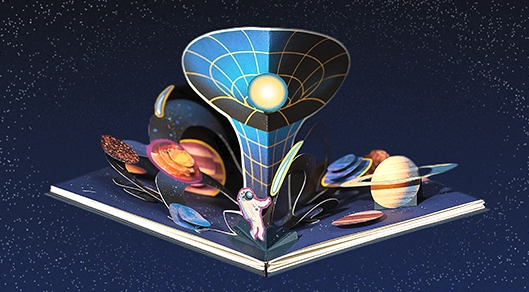
Traditionally, entropy measures the amount of hidden information or microscopic disorder within a system, and scales directly with volume—meaning a larger box can hold more gas molecules and thus possesses greater entropy. However, when Bekenstein and Hawking calculated the entropy of a black hole, they discovered a startling anomaly: the entropy scaled in proportion to the black hole’s surface area, not its volume.
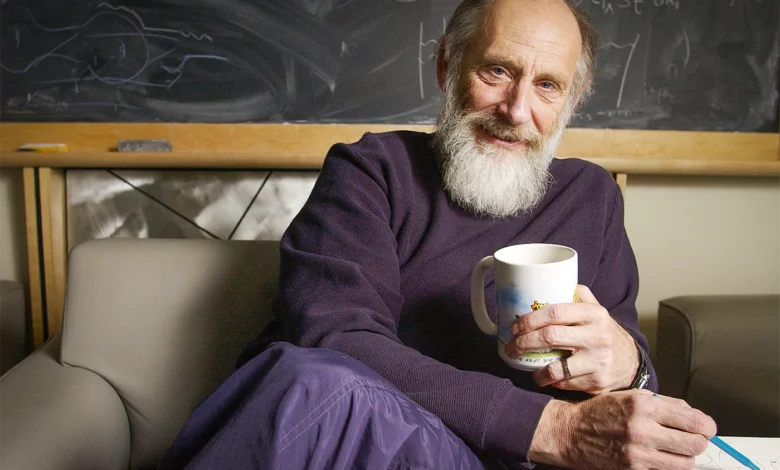
This counterintuitive discovery meant that as a black hole grows by absorbing matter, its capacity for information is governed strictly by the area of its event horizon. In the 1990s, physicist Leonard Susskind at Stanford University, alongside Nobel laureate Gerard ‘t Hooft and Charles Thorn, expanded upon this mathematical clue. Susskind proposed that a black hole could be understood as a literal hologram, where everything occurring inside the interior is fully represented by physical processes happening on its outer boundary.
Because any region of space can theoretically collapse into a black hole if packed with enough mass, physicists reasoned that this holographic property must apply universally to all of space-time, not just black holes.
The Mathematical Breakthrough: AdS/CFT Correspondence
While black hole thermodynamics provided strong conceptual arguments, the mathematical validation of holography arrived in 1997 through a landmark paper by physicist Juan Maldacena, followed shortly by foundational contributions from Steven Gubser, Igor Klebanov, Alexander Polyakov, and Edward Witten. Their work introduced the AdS/CFT correspondence—short for anti-de Sitter/conformal field theory.

AdS/CFT established an exact mathematical equivalence between two seemingly disparate physical realms:
- An interior space known as anti-de Sitter (AdS) space, which features a specific negative curvature and incorporates the force of gravity.
- A boundary space residing on the outer edge of the AdS volume, governed entirely by a conformal field theory (CFT) of quantum particles operating without gravity.
The breakthrough demonstrated that these two frameworks, despite describing completely different dimensions and physical interactions, are mathematically identical. The volume of the interior space and the area of the boundary surface contain the exact same amount of physical information.
This correspondence provided skeptics with undeniable mathematical proof that gravity and quantum mechanics are not inherently incompatible, but are instead deeply intertwined languages describing the same underlying physical reality. As researchers frequently note, AdS/CFT transformed holography from a speculative hypothesis into a concrete analytical tool.
Diverging Interpretations: Confronting Real-World Geometry
Despite the elegance of AdS/CFT, applying these lessons to our actual universe presents a significant hurdle. The anti-de Sitter spaces used in theoretical models feature a negative spatial curvature that allows for a neat, enclosing boundary. In contrast, astronomical observations reveal that our universe is expanding at an accelerating rate, dictated by a positive cosmological constant. This points to a de Sitter space—a geometry that curves outward, possessing no natural outer boundary or enclosing surface.

This divergence has split the theoretical physics community into distinct camps:
- The Skeptics: Researchers like Latham Boyle at the University of Edinburgh argue that while black hole entropy is undeniable, interpreting it strictly through a holographic lens may conflate distinct physical phenomena. Boyle suggests that volume-based particle entropy and area-based entanglement entropy—which arises from quantum connections crossing a surface—represent two separate mechanisms rather than a single unified quantity. Furthermore, skeptics emphasize that without a boundary in de Sitter space, holography may remain confined to idealized mathematical models rather than describing our reality.
- The Holographers: Conversely, proponents of the principle argue that local observers deep within a curved space cannot easily distinguish between anti-de Sitter and de Sitter geometries. They maintain that the foundational truths uncovered in AdS models must reflect broader truths about gravity across all cosmological structures.
It from Qubit: Redefining Distance and Reality
For those who embrace the holographic paradigm, the philosophical and ontological implications are profound. A leading research program known as "it from qubit" posits that the physical fabric of space-time ("it") emerges entirely from fundamental units of quantum information, or qubits, residing on a lower-dimensional boundary.
Under this framework, traditional notions of distance are turned upside down. In our standard macroscopic experience, two objects are distant from one another because intervening space separates them, preventing immediate physical interaction. However, holographic models suggest the reverse: space itself may be a byproduct of independence. Two entities appear distant precisely because their underlying quantum qubits do not strongly interact or correlate with one another.
This perspective likens our three-dimensional reality to a high-resolution video game. The bulky buildings and landscapes perceived by a player do not exist as solid volumetric objects within the console; rather, they are emergent projections generated by flat, two-dimensional pixels flickering on a screen.
Broader Impact and Future Directions
The ongoing exploration of the holographic principle continues to reshape modern theoretical physics in several critical ways:
- Resolution of the Black Hole Information Paradox: Holography provided the framework for modern resolutions to the paradox first posed by Hawking, demonstrating that information falling into a black hole is not permanently destroyed, but is instead scrambled and radiated back out through quantum entanglement at the event horizon.
- Advances in Quantum Computing and Quantum Information: The mathematical tools developed to study holographic entanglement have found unexpected applications in condensed matter physics and quantum information science, helping researchers model complex quantum many-body systems.
- New Cosmological Models: Recent theoretical proposals by Susskind and other collaborators are attempting to formulate de Sitter holography without relying on traditional boundaries, potentially mapping entire cosmological volumes into singular quantum points.
While humanity remains far from developing a complete, experimentally verified theory of quantum gravity, the holographic principle stands out as one of the most powerful conceptual leaps of the past century. Whether space-time is ultimately revealed to be an emergent illusion born of quantum information or merely a convenient mathematical shadow, holography has permanently altered how physicists pose questions about the universe, space, and time itself.