Breaking Down Plastic Waste: Oak Ridge Researchers Turn Everyday Polyethylene Into High-Value Liquid Fuels at Low Temperatures

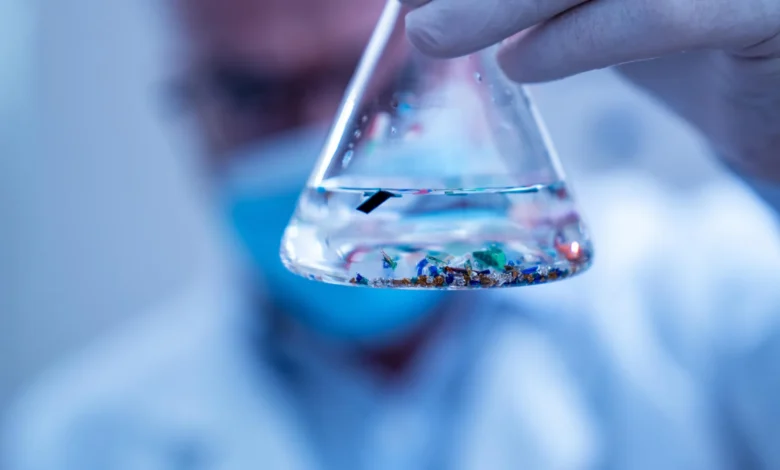
Researchers at the United States Department of Energy’s Oak Ridge National Laboratory (ORNL) have successfully pioneered a novel, highly efficient chemical pathway to convert polyethylene—one of the most ubiquitous and durable plastics on Earth—into valuable gasoline- and diesel-like fuels. This breakthrough represents a significant leap forward in waste management and energy technology, offering a viable method to simultaneously mitigate the global plastic pollution crisis and enhance domestic energy security.
Polyethylene is foundational to modern manufacturing and consumer packaging. It forms the core material for everyday items such as single-use shopping bags, flexible food packaging, milk jugs, and commercial-grade white plastic cutting boards. Because of its exceptional durability, chemical resistance, and low production cost, hundreds of millions of tons of polyethylene are manufactured globally each year. However, these very same properties mean that discarded polyethylene persists in ecosystems and landfills for centuries, creating an environmental emergency that has eluded comprehensive industrial solutions.
The research team at ORNL has addressed this challenge by developing a catalytic conversion process that pairs polyethylene waste directly with molten salts containing aluminum chloride. In this innovative system, the molten salts fulfill a dual purpose, functioning simultaneously as the reactive liquid medium and the active catalyst driving the chemical transformation. The findings of this landmark study have been published in the Journal of the American Chemical Society, and the institution has formally applied for a patent to protect the intellectual property surrounding the technology.
A Chronicle of Innovation: Decades of Molten Salt Research
The roots of this modern chemical breakthrough stretch back more than half a century, drawing heavily upon ORNL’s storied history in nuclear engineering and materials science. During the 1960s, the laboratory spearheaded the Molten Salt Reactor Experiment, a visionary project that proved complex mixtures of molten inorganic salts could safely and effectively function as both nuclear fuel and high-temperature reactor coolant.
Building upon decades of institutional expertise regarding the behavior of molten salts under extreme conditions, ORNL Corporate Fellow Sheng Dai envisioned an entirely different application for these resilient chemical compounds. Dai, who also serves as a section head for separations and polymer chemistry at the University of Tennessee, Knoxville (UTK), recognized that the chemical stability and unique solvency of molten salts could be harnessed to dismantle the stubborn carbon-carbon backbones of waste polymers.
Under the management of ORNL polymer scientist Tomonori Saito, a multidisciplinary team was assembled to bring this vision to life. The collaborative effort united experts in neutron scattering, quantum chemistry, catalysis, and advanced spectroscopy. Liqi Qiu, a postdoctoral researcher at UTK who performed the bulk of the laboratory experiments under Dai’s supervision, noted that the project was designed from its inception to solve fundamental chemical problems while generating tangible economic opportunities for industry.
Unlocking the Molecular Mechanics: Atom-by-Atom Analysis
To transition from conceptual theory to a reproducible chemical process, the research team needed to observe and understand the exact atomic-level interactions occurring as solid plastic degraded into liquid hydrocarbons. Because polymers are structurally complex, unlocking this mechanism required an unprecedented deployment of advanced analytical user facilities across the United States.
Using soft X-ray spectroscopy at Lawrence Berkeley National Laboratory’s Advanced Light Source—working alongside researchers Min-Jae Kim and Jinhua Guo—the team examined how aluminum and polyethylene interact at electronic and atomic levels. The data revealed that charged aluminum atoms bind with three neighboring atoms, establishing highly active, highly acidic catalytic sites. These sites aggressively target the long, unbroken molecular chains characteristic of polyethylene, cleaving them systematically into smaller, manageable hydrocarbon fractions.
Further investigations utilized sophisticated isotopic labeling and neutron scattering techniques. By tagging reactive carbon ions with deuterium—a stable isotope of hydrogen—and leveraging the Spallation Neutron Source at ORNL, Luke Daemen and Sheng Dai tracked the migration and behavior of hydrogen atoms throughout the reaction. Because polymers are fundamentally rich in hydrogen, neutrons proved exceptionally well-suited for resolving the behavior of these light elements without disrupting the system.
Additional validation came from gas chromatography-mass spectrometry conducted by Felipe Polo-Garzon, which separated and identified individual chemical compounds within the resulting liquid. Bobby Sumpter of the Center for Nanophase Materials Sciences employed high-performance computer simulations to model energy shifts and carbon-ion stability, while Michael Koehler utilized in-situ X-ray diffraction at UTK to track phase changes in real-time. Carlos Alberto Steren provided critical nuclear magnetic resonance data on the aluminum sites, and Logan Kearney supplied high-density polymer samples paired with expert guidance on industrial feedstock integration.
Breaking Thermal Paradigms: Conversion Below 200 Degrees Celsius
Perhaps the most commercially compelling aspect of the ORNL methodology is the exceptionally mild operating environment required to drive the chemical conversion. Traditional industrial techniques for breaking down polyethylene into simpler hydrocarbons rely heavily on pyrolysis—a thermal decomposition process that requires subjecting the material to extreme heat, typically ranging from 450 to 500 degrees Celsius. Pyrolysis is energy-intensive, environmentally costly, and frequently yields inconsistent product mixtures that require extensive subsequent refining.
In stark contrast, the ORNL molten salt system achieves high-value fuel conversion at temperatures below 200 degrees Celsius—thermal conditions roughly equivalent to those found inside a standard household kitchen oven.
"We converted polymer waste to value-added fuels by using commercially available inorganic salts as the reaction media to provide the catalytic sites," explained Zhenzhen Yang, an ORNL staff scientist and co-corresponding author of the study. "Unlike traditional techniques for converting polymer to fuel, the new process did not require noble-metal catalysts, organic solvents, or external hydrogen. This is the first time molten salts were used as media to produce high-value-added chemicals from waste without any catalytic initiator or solvent and at a temperature below 200 degrees Celsius."
Operating at sub-200-degree temperatures while eliminating expensive noble-metal catalysts, external hydrogen feeds, chemical initiators, and organic solvents radically simplifies the engineering required for industrial-scale deployment. Furthermore, laboratory experiments demonstrated a remarkably high gasoline yield of approximately 60 percent under these mild conditions. Isotopic analysis further confirmed that the structural configuration of the input polymer directly dictates the output fuel profile: simpler, linear polymer chains predominantly generate gasoline-grade compounds, whereas more intricate, branched chains yield diesel-grade alternatives.
Addressing Remaining Challenges and Future Industrial Scaling
Despite the extraordinary efficiency and novelty of the aluminum-based molten salt system, the researchers acknowledge that significant technical hurdles remain before the process can be commercialized on a global scale.
The primary vulnerability of the current system lies in the chemical nature of the aluminum chloride-based salts. These compounds are highly hygroscopic, meaning they possess a strong chemical affinity for moisture. When exposed to ambient water vapor, the salts readily absorb humidity, which can compromise their structural stability and degrade catalytic efficiency over repeated reaction cycles.
To overcome this limitation, the ORNL research team is actively investigating advanced containment strategies. Future development phases will explore confining the molten salts within carbon-based matrices or halogenated frameworks. Such encapsulation techniques could shield the active catalysts from environmental moisture, simplify the separation of the resulting liquid fuels from the reaction media, and drastically extend the operational lifespan of the catalytic system.
Broader Economic and Environmental Implications
If successfully scaled from laboratory benches to commercial industrial facilities, the ORNL molten salt conversion technology could rewrite the economic calculus of plastic waste management. Landfills across the globe are overwhelmed by non-biodegradable polyolefins, and municipal recycling programs frequently struggle with the economic realities of sorting, cleaning, and reprocessing contaminated plastic trash.
By positioning plastic waste not as an intractable disposal problem, but as a concentrated, abundant feedstock for liquid hydrocarbon production, this technology aligns environmental remediation with industrial pragmatism. The elimination of expensive auxiliary inputs—such as noble metals and external hydrogen—makes the economic proposition increasingly attractive to petrochemical and energy sectors seeking sustainable pathways to compliance and profitability.
"Polymer source material is abundantly available from consumer waste, and our catalyst system, aluminum molten salts, is very cheap," concluded Liqi Qiu. "This advance may be promising for industry."
As the research team continues to refine catalyst stability and design pilot-scale reactors, the breakthrough stands as a testament to the power of cross-disciplinary scientific collaboration—transforming environmental liabilities into the fuel of tomorrow.