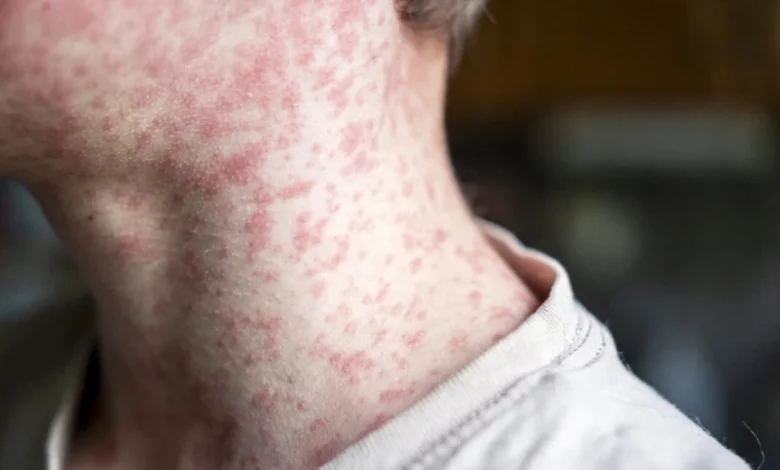
The Pennsylvania Department of Health confirmed on Tuesday that the state has recorded its fourth measles-associated death this year, marking a grim milestone in an outbreak that has now persisted for several months. The latest fatality involves an unvaccinated 18-year-old resident of Mifflin County, whose death has been attributed to acute disseminated encephalomyelitis (ADEM), a severe and rare autoimmune complication triggered by the measles virus. This news follows the state’s confirmation over the weekend of the death of an unvaccinated 40-year-old woman in Jefferson County, further underscoring the severity of a contagion that was once considered effectively eliminated in the United States.
These recent tragedies bring the total death toll to four, following the earlier losses of two infants in Lancaster County—a newborn boy and a six-week-old girl—both of whom were too young to receive the measles, mumps, and rubella (MMR) vaccine. As the Commonwealth grapples with its most significant measles surge in over thirty years, public health officials are intensifying efforts to contain the spread of the virus, which continues to threaten vulnerable populations across 38 counties.
A Pathological Overview of ADEM
The death of the 18-year-old in Mifflin County serves as a stark reminder of the long-term neurological dangers posed by measles. According to Mifflin County Coroner Andrea L. Alcalde, the victim suffered from acute disseminated encephalomyelitis (ADEM), a condition characterized by rapid, widespread inflammation of the brain and spinal cord.
Clinically, ADEM occurs when the immune system mistakenly attacks the myelin sheath—the protective covering of nerve fibers—in response to an underlying infection. While the measles virus is a known trigger, the condition can also arise from other viral pathogens. In the pre-vaccine era, ADEM was a recognized and feared complication of the measles virus. The inflammatory process can lead to severe neurological symptoms, including vision loss, paralysis, and in extreme cases, fatal brain swelling. Coroner Alcalde confirmed that the determination was made following a comprehensive review of medical records and clinical history, emphasizing that no further details regarding the individual would be disclosed out of respect for the grieving family.
Chronology of the 2026 Outbreak
The current crisis represents a departure from the relatively stable disease environment of the past decade. The outbreak began in early 2026 and quickly gained momentum, spreading through community clusters and challenging the state’s healthcare infrastructure.
- Early 2026: Initial cases emerge, marking the start of what would become the largest outbreak in three decades.
- Mid-2026: Cases spread across rural and suburban counties. The vulnerability of infants becomes a focal point as reports of the first two deaths in Lancaster County reach the public.
- Late Summer 2026: Public discourse intensifies as high-profile figures and local health authorities clash over the efficacy and safety of the MMR vaccine.
- September 2026: A coroner in Jefferson County confirms the death of a 40-year-old woman due to measles complications.
- Late September 2026: The Pennsylvania Department of Health confirms the fourth death—the 18-year-old in Mifflin County—while reporting that total case counts have surged to 693.
Statistical Reality and Epidemiological Trends
The scale of the outbreak is illustrated by the latest figures provided by the state health department. With 693 confirmed cases spread across 38 counties, the virus has demonstrated a high degree of mobility, facilitated by its extreme contagiousness. Measles is one of the most infectious diseases known to science; a single infected individual can transmit the virus to approximately 90% of unvaccinated people in close proximity.
The impact on the medical system has been significant, with 133 hospitalizations recorded to date. The rapid influx of patients has placed strain on local emergency departments and intensive care units, which are struggling to balance measles management with routine care. Furthermore, the reporting of 99 new cases within the last seven-day window indicates that the outbreak has not yet reached its plateau, prompting urgent calls for increased vaccination uptake and improved contact tracing efforts.
Official Responses and Public Health Strategy
Pennsylvania Secretary of Health Debra Bogen issued a formal statement on Tuesday, expressing her condolences to the families of the deceased and outlining the state’s strategy to curtail the transmission of the virus. "My thoughts are with the two families who lost loved ones to this highly contagious virus," Bogen stated. "We remain committed to working with our partners across Pennsylvania to stem this outbreak and prevent more deaths."
The Department of Health is currently focusing on two primary pillars: public education and accessibility. By providing evidence-based information regarding the safety profile of the MMR vaccine, the department hopes to address the misinformation that has contributed to vaccine hesitancy in some regions. Additionally, the state is coordinating with local health systems to ensure that the MMR vaccine is readily available, particularly for children who missed their scheduled doses and adults who may lack immunity.
State health officials have confirmed that the latest two deaths will be officially integrated into the Pennsylvania measles outbreak dashboard during the next scheduled update, ensuring transparency in data reporting.
Broader Implications for Public Health Policy
The resurgence of measles in Pennsylvania highlights the fragile nature of herd immunity. In communities where vaccination rates fall below the critical threshold—typically around 95% for measles—the virus can find pockets of susceptible hosts, leading to outbreaks that quickly spill over into the general population.
The deaths of both the very young, who are ineligible for the vaccine, and unvaccinated adults, who had the opportunity for immunization, illustrate the two distinct risks of the current outbreak. For the infants, the risk is a direct infection of the respiratory system, which can lead to severe pneumonia and secondary infections. For the older victims, the risk includes the potential for long-term neurological complications like ADEM or subacute sclerosing panencephalitis (SSPE), a rare but fatal degenerative disease of the central nervous system that can occur years after an initial measles infection.
Experts in infectious disease suggest that the Pennsylvania outbreak could serve as a case study for the rest of the nation. The incident has prompted discussions regarding the necessity of stricter school vaccination requirements, the role of social media in spreading anti-vaccine rhetoric, and the logistical challenges of managing an epidemic in an era of heightened public skepticism.
As the state moves into the next phase of its response, the focus remains on closing the immunity gap. Public health advocates emphasize that measles is a vaccine-preventable disease and that the current mortality rate, while tragic, is largely avoidable. By prioritizing widespread immunization, the state aims to return to its previous status of measles elimination.
However, until the transmission chains are broken, the Pennsylvania Department of Health continues to urge all residents to verify their vaccination status with their primary care providers. For those who are unsure of their immunization history, blood tests are available to check for measles antibodies. In the meantime, the state remains under a heightened state of alert, with ongoing efforts to monitor every new case and provide the necessary clinical support to those currently battling the virus. The tragedy of these four deaths underscores the vital importance of vaccination as the cornerstone of modern public health, a reality that the Commonwealth is now forced to contend with in the face of an evolving and dangerous outbreak.