Joe Concha Blasts Democratic Socialists of America Over Misdemeanor Decriminalization Proposal

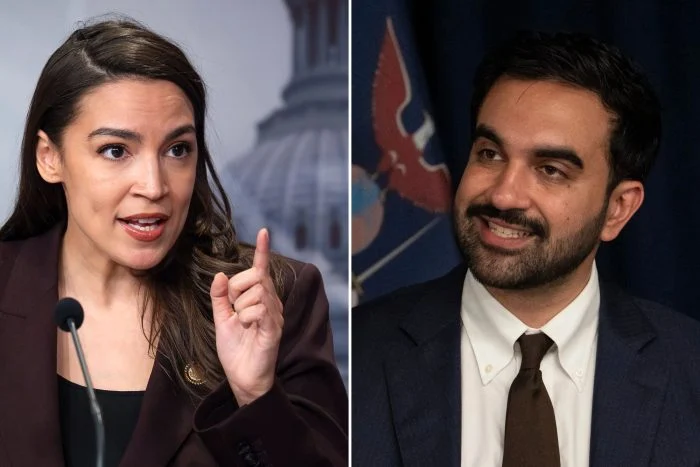
The debate over criminal justice reform in the United States has reached a new juncture following recent policy proposals advanced by the Democratic Socialists of America (DSA). During an appearance on Fox News’s Saturday in America with Kayleigh McEnany, Washington Examiner columnist Joe Concha leveled sharp criticism against the organization’s platform, specifically targeting measures that call for the effective elimination of misdemeanor prosecutions. Concha characterized the platform as fundamentally unworkable, warning that dismantling lower-tier criminal enforcement risks severe public safety consequences and economic fallout for urban centers nationwide.
The remarks highlight a growing national schism over progressive prosecution strategies, progressive platform design, and the boundaries of reform versus deregulation in the American legal system. As crime, quality-of-life offenses, and retail theft continue to dominate political discourse, the DSA’s policy proposals have drawn intense scrutiny from conservative commentators, law enforcement associations, and moderate lawmakers alike.
The Controversy Surrounding the DSA’s Criminal Justice Platform
The Democratic Socialists of America, an organization that has seen increased influence within certain municipal and regional progressive political circles, has long advocated for sweeping changes to the traditional criminal legal architecture. Among the group’s policy resolutions are measures aimed at shrinking the footprint of the carceral state, reducing prison populations, and reallocating government resources away from traditional policing and prosecution models.
Recently, portions of the platform addressing low-level infractions—commonly categorized as misdemeanors—have drawn mainstream attention. The platform generally argues that misdemeanor enforcement disproportionately harms marginalized communities, imposes unnecessary economic burdens on low-income defendants through fines and fees, and fails to address the root socioeconomic causes of unlawful behavior. Consequently, various chapters and affiliated policy groups have proposed deprioritizing, decriminalizing, or entirely eliminating criminal penalties for a wide array of non-violent misdemeanor offenses.
Critics argue that these proposals go far beyond standard prosecutorial discretion, effectively creating zones of non-enforcement for offenses such as petty theft, public disorder, trespassing, and low-level drug possession. During his segment on Fox News, Joe Concha did not mince words regarding the potential ramifications of such policies.
"It’s delusional, and it’s dense," Concha told host Kayleigh McEnany. "I mean, if you abolish misdemeanor offenses, it’s a gateway to anarchy. Just look at San Francisco and what it’s done to itself by embracing this sort of insane proposal."
Historical Context and Precedents in American Cities
Concha’s reference to San Francisco points to a broader national precedent involving progressive criminal justice experiments over the past decade. Cities across the United States—including New York, Philadelphia, Chicago, Los Angeles, and San Francisco—have experimented with various forms of progressive prosecution, non-enforcement policies for low-level crimes, and bail reform initiatives.
In San Francisco and other jurisdictions, district offices previously adopted policies of declining to prosecute certain low-level offenses, such as shoplifting below specified dollar thresholds, public camping, and minor drug offenses, unless accompanied by specific aggravating factors. Proponents argued these policies conserved precious judicial and law enforcement resources for violent crimes while reducing the cycle of incarceration.
However, these initiatives faced severe political and public pushback. Critics, business owners, and neighborhood associations pointed to rising rates of retail theft, open-air drug markets, and deteriorating public spaces as direct consequences of reduced accountability. The backlash eventually led to high-profile political battles, including the 2022 recall of San Francisco District Attorney Chesa Boudin and subsequent shifts toward more traditional enforcement postures by local leadership.
Against this historical backdrop, critics of the DSA platform argue that institutionalizing the abolition of misdemeanors would enshrine policies that many municipalities have spent years attempting to roll back or modify.
Supporting Data and the Debate Over Retail Theft and Public Order
The intersection of low-level crime enforcement and urban economic vitality has been heavily documented by economic and law enforcement research groups. According to reports from the National Retail Federation (NRF) and various municipal commerce departments, retail shrink—driven largely by organized retail crime and routine shoplifting—has cost American businesses billions of dollars annually.
Proponents of misdemeanor enforcement argue that low-level offenses function as the foundational tier of the "broken windows" theory of policing, which posits that maintaining public order and addressing minor infractions prevents the escalation of more serious crimes. When low-level theft or vandalism goes unpunished, advocates for traditional enforcement contend, it signals a lack of consequences that emboldens offenders and degrades the overall commercial and social fabric of a community.
Conversely, criminal justice reform advocates and organizations aligned with the DSA present alternative data. They point to studies indicating that traditional enforcement of misdemeanors yields high recidivism rates, destabilizes families through the collateral consequences of criminal records, and consumes disproportionate amounts of municipal budgets without demonstrating a clear deterrent effect on violent crime. From this perspective, resources saved by eliminating misdemeanor prosecution could be redirected toward housing, mental health services, and community-based violence intervention programs.
Official Responses and Counterarguments
Representatives for the Democratic Socialists of America have consistently defended their platform as a necessary blueprint for true equity and human rights within the legal system. Supporters argue that the current system criminalizes poverty, homelessness, and substance abuse, transforming social welfare problems into penal matters. They maintain that true public safety is achieved through robust social safety nets, stable housing, and universal healthcare rather than the punitive enforcement of poverty-related infractions.
Meanwhile, law enforcement unions, chambers of commerce, and conservative political figures have increasingly made the DSA platform a focal point of their political messaging. They argue that platforms advocating for the wholesale removal of criminal penalties for misdemeanors demonstrate a disconnect from the everyday concerns of working-class citizens, small business owners, and commuters who rely on orderly public spaces.
Elected officials from both major political parties have frequently distanced themselves from the more radical components of progressive justice platforms, cognizant of voter polling that consistently ranks public safety and law enforcement support as top priorities in local and national elections.
Broader Implications and Political Fallout
The clash over the DSA’s misdemeanor proposals carries significant implications for the broader political landscape, particularly as municipal and federal elections approach. The debate encapsulates the ongoing ideological struggle within the American left and the broader electorate regarding the definition of criminal justice reform.
For conservative commentators like Joe Concha, highlighting such proposals serves to define the policy boundaries of the progressive movement for a national audience, framing them as extreme and detrimental to community stability. For the DSA and its allies, the platform represents a principled stance against a punitive status quo, even in the face of intense mainstream media criticism and political opposition.
As cities continue to grapple with the complex realities of post-pandemic urban recovery, retail economics, and public safety demands, the question of how to handle low-level offenses remains one of the most contentious domestic policy issues in the United States. Whether through legislative battles, ballot initiatives, or municipal policy shifts, the debate over the future of misdemeanors will undoubtedly remain at the forefront of American politics for the foreseeable future.