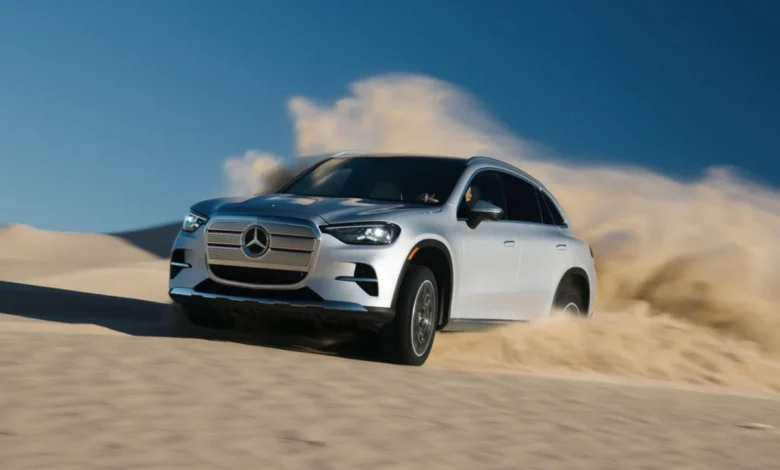
As the global automotive industry navigates the most disruptive technological transition in a century, traditional luxury automakers find themselves at a critical crossroads. Mercedes-Benz, one of the world’s oldest and most prestigious manufacturers of premium passenger cars, is charting a strategic course that balances the immediate profitability of internal combustion engines with an aggressive, multi-billion-euro pivot toward vehicle electrification and digital integration. In a comprehensive long-term outlook examining production output and operational performance through the end of the decade, industry analysts have mapped out how the Stuttgart-based manufacturer is expected to scale its electric vehicle (EV) infrastructure while managing legacy manufacturing footprints. Led by expert automotive researchers such as Jonathan Storey, recent production forecasts underscore the complex realities of transitioning a global manufacturing giant toward a net-zero carbon future. This in-depth analysis explores the projected trajectories for Mercedes-Benz, detailing the volume shifts, technological milestones, macroeconomic headwinds, and strategic adaptations that will define the automaker’s journey to 2030 and beyond.
Main Facts and Strategic Overview
The core finding of the long-term production forecast highlights a decisive structural shift within Mercedes-Benz manufacturing plants across Europe, North America, and Asia. By 2030, the automaker intends to be fully electric wherever market conditions allow, a policy adjustment that has forced a complete overhaul of its historic assembly lines. While the company originally stated its intention to go all-electric by the end of the decade "where market conditions allow," the reality of fluctuating consumer adoption rates, uneven charging infrastructure development, and volatile supply chains has necessitated a flexible manufacturing strategy.
Mercedes-Benz is no longer banking on a single powertrain technology by 2030. Instead, management has updated its projections to indicate that electrified vehicles—comprising both battery-electric vehicles (BEVs) and sophisticated plug-in hybrids (PHEVs)—will account for up to 50% of total passenger car sales by the mid-2020s, with the ambition to reach nearly 100% by the end of the decade if market demand and regulatory frameworks align. Total annual production output for the brand is expected to hover between 2.2 million and 2.6 million units over the forecast period, fluctuating in response to supply chain resilience, semiconductor availability, and broader economic cycles in key markets such as China, Germany, and the United States.
The transition is not merely about swapping internal combustion engines for battery packs; it requires a radical reimagining of global supply chains, battery cell manufacturing partnerships, and software development. Mercedes-Benz has committed to investing tens of billions of euros into research and development, digitalization, and factory retooling. The ultimate objective is to safeguard the brand’s legendary profit margins—traditionally among the highest in the luxury segment—while absorbing the substantial upfront costs of EV development.
Chronology of the Electric Transformation
To understand how Mercedes-Benz arrived at its current production outlook for 2030, it is essential to trace the chronology of strategic announcements and manufacturing milestones that have shaped the company’s trajectory over the past decade.
In July 2019, Mercedes-Benz officially unveiled its "Ambition 2039" strategy, setting a clear long-term goal for a carbon-neutral new car fleet by 2030. This initiative marked the formal beginning of the company’s systemic pivot away from fossil fuel dependency, establishing interim targets for reducing the carbon footprint of its supply chain, production plants, and vehicle use phase.
By July 2021, the automaker significantly accelerated its electrification timeline during a dedicated strategy update. Mercedes-Benz announced that it was ready to go all-electric by the end of the decade, wherever market conditions permit. The company pledged to invest over €40 billion between 2022 and 2030 for research, development, and industrialization of battery-electric vehicles. Furthermore, plans were unveiled to build eight gigafactories worldwide for battery cell production in partnership with key suppliers, securing an estimated annual capacity of over 200 gigawatt-hours.
Throughout 2022 and 2023, the automotive landscape experienced severe macroeconomic turbulence, including post-pandemic supply chain bottlenecks, semiconductor shortages, geopolitical conflicts, and inflationary pressures. Despite these headwinds, Mercedes-Benz pressed forward with plant transformations. The historic Sindelfingen plant in Germany, known as Factory 56, served as the blueprint for digitalized, flexible, and sustainable automobile production. Factory 56 was designed to assemble luxury and executive vehicles with different drivetrains—ranging from conventional engines to plug-in hybrids and pure battery-electrics—on a single assembly line.
In early 2024, responding to a slower-than-expected global adoption rate for pure electric vehicles in certain regions, Mercedes-Benz adjusted the phrasing of its targets. Management clarified that while the ambition remains to achieve an all-electric lineup by 2030, the company realistically expects electrified vehicles (including advanced hybrids) to make up roughly 50% of sales by the middle of the decade, and that it will retain the capability to build internal combustion engines well into the 2030s if consumer demand dictates. This pragmatic recalibration forms the cornerstone of the latest production forecasts leading up to 2030.
Supporting Data and Production Metrics
Detailed volume projections for Mercedes-Benz reveal a nuanced picture of industrial reallocation. According to industry analyses of manufacturing footprints, the geographic distribution of Mercedes-Benz production is shifting to align more closely with regional consumer demand, particularly in the tri-region framework of Europe, North America, and Greater China.
-
European Manufacturing Hubs: Plants in Bremen, Sindelfingen, and Rastatt remain the backbone of high-end and entry-level luxury production. However, these facilities are undergoing extensive modernization. Sindelfingen continues to produce the S-Class, EQS, and luxury derivatives, while Bremen handles the C-Class and various electric variants like the EQE. By 2030, European plants are projected to source over 65% of their production volume from electrified architectures (specifically the upcoming MMA and MB.EA platforms).
-
North American Operations: The Vance plant in Alabama, United States, plays a pivotal role in supplying large SUVs to the global market, including the GLE, GLS, and their battery-electric counterparts (EQE SUV and EQS SUV). Production forecasts indicate that North American output will remain steady at approximately 300,000 to 350,000 units annually, with a heavy emphasis on luxury utility vehicles that yield high average selling prices and robust profit margins.
-
The Chinese Market and Local Partnerships: China remains the single largest market for Mercedes-Benz. Through its joint venture with Beijing Automotive Group (BAIC), branded as Beijing Benz Automotive Co. (BBAC), local production accounts for a substantial share of total global volume—often exceeding 700,000 units per year. Production forecasts suggest that Chinese output will increasingly skew toward locally tailored luxury electric vehicles, designed to meet the unique digital and comfort preferences of Chinese consumers.
-
Platform Consolidation: A critical metric in the forecast to 2030 is the reduction of platform complexity. Mercedes-Benz is moving away from the sprawling array of legacy platforms to four dedicated vehicle architectures:
- MB.EA: Covering medium-to-large passenger cars.
- AMG.EA: Dedicated to high-performance electric vehicles.
- VAN.EA: For luxury commercial vans and private-use multi-purpose vehicles.
- MMA: Designed for compact and entry-level luxury electric-first vehicles.
This consolidation is expected to slash production costs, simplify supply chain logistics, and improve manufacturing efficiency by up to 20% by the end of the decade.
Official Responses and Stakeholder Perspectives
The strategic roadmap leading to 2030 has elicited diverse reactions from corporate leadership, labor unions, environmental watchdogs, and financial markets.
Management, led by Chief Executive Officer Ola Källenius, has consistently defended the company’s flexible approach as a necessary shield against market volatility. In recent stakeholder communications, Källenius emphasized that Mercedes-Benz will remain "technologically flexible" to weather changes in geopolitical regulations and consumer preferences. "The transition to electric mobility is not a straight line," management has noted in earnings reports. "Our manufacturing ecosystem is engineered to react dynamically. Whether our customers demand pure battery power, highly efficient hybrids, or state-of-the-art combustion engines in the transition phase, we have the industrial footprint to deliver."
Labor representatives and works councils have generally supported the multi-powertrain strategy, viewing it as a vital safeguard for employment across German manufacturing facilities. The transition to electric vehicle manufacturing inherently requires fewer assembly hours per vehicle than internal combustion engines, raising legitimate concerns about workforce reductions. By maintaining flexibility and retraining workers for high-voltage battery assembly and software integration, Mercedes-Benz and its labor partners have sought to mitigate large-scale job losses.
Financial analysts have offered a mixed, albeit generally favorable, assessment of the 2030 outlook. While Wall Street and European financial institutions praise the company’s disciplined focus on pricing power and luxury segment dominance—noting that Mercedes-Benz has successfully protected its operating margins even amid inflationary pressures—some analysts caution that maintaining dual manufacturing lines for both electric and combustion architectures could create structural cost inefficiencies compared to "pure-play" EV manufacturers.
Environmental organizations and sustainability advocates have pushed for stricter adherence to the original 2030 all-electric deadline, arguing that legacy automakers must force the market transition rather than reacting to slow consumer uptake. Nevertheless, independent climate assessments acknowledge that Mercedes-Benz’s Scope 3 emissions reduction targets (covering the lifecycle emissions of its vehicles) remain among the most ambitious in the traditional automotive sector.
Broader Impact and Industry Implications
The production forecast for Mercedes-Benz through 2030 serves as a microcosm of the wider transformation occurring across the global automotive landscape. Several key implications emerge from the data and strategic trajectory of the company:
First, the myth of an overnight shift to 100% battery-electric vehicles has been thoroughly debunked by industrial reality. Mercedes-Benz’s recalibrated roadmap demonstrates that legacy automakers must manage a protracted transition period lasting well into the 2030s. This requires immense capital expenditure to maintain legacy combustion engine lines while simultaneously funding the bleeding-edge R&D required for autonomous driving, solid-state batteries, and proprietary vehicle operating systems (such as MB.OS).
Second, the geographical realignment of production highlights the growing importance of regionalization. In an era marked by trade tensions, geopolitical fragmentation, and shifting tariff regimes, building vehicles where they are sold—particularly in the core markets of Europe, North America, and China—is no longer just a logistical preference; it is an absolute operational necessity to insulate supply chains from external shocks.
Third, the success of Mercedes-Benz’s strategy through 2030 will hinge on software monetization and brand equity. As hardware differentiation diminishes in an electrified, highly standardized automotive future, premium manufacturers are increasingly relying on digital services, over-the-air updates, autonomous driving subscription features, and bespoke interior luxury to justify higher price points. If Mercedes-Benz can successfully execute its platform consolidation and maintain its pricing power, the production output projected to 2030 will sustain its position as a global benchmark for automotive luxury.
Ultimately, the journey to 2030 represents a high-stakes balancing act. By coupling rigorous financial discipline with technological adaptability, Mercedes-Benz is attempting to redefine what it means to be a luxury car manufacturer in the twenty-first century—transforming historic assembly lines into flexible, sustainable, and digitally advanced hubs of modern mobility.