Democratic Socialists of America Face Scrutiny Over Media Missteps and Controversial Political Alliances

The political landscape surrounding the progressive wing of the Democratic Party is facing renewed scrutiny following a series of high-profile media missteps by members of the Democratic Socialists of America (DSA) and mounting controversies involving allied candidates. According to political analysts and recent media appearances, prominent figures within the movement have struggled to articulate coherent policy positions when pressed on national television, while progressive candidates face intense blowback over contentious associations and past statements.
These developments highlight a growing friction between mainstream progressive electoral success—exemplified by figures such as Representative Alexandria Ocasio-Cortez (D-NY) and Senator Bernie Sanders (I-VT)—and the organizational messaging of grassroots socialist networks. Critics argue that while prominent lawmakers have successfully integrated populist economic themes into the broader Democratic coalition, local activists and organizational leaders frequently default to radical rhetoric that alienates broader swaths of the American electorate.
The Media Challenge: Translating Activism into Mainstream Policy
Speaking on Fox News, Washington Examiner columnist Joe Concha pointed to a recurring vulnerability among DSA representatives during primetime television appearances. Concha argued that organizational leaders often advocate for sweeping, systemic overhauls without possessing the necessary grasp of implementation details or fiscal mechanics.
“When you talk about abolishing the police, abolishing the prison system, abolishing the presidency, defunding the Department of Defense, and leveling these punishing taxes, you better be able to explain how exactly that’s going to be paid for and then share the details around it,” Concha said during a media appearance.
This sentiment is not limited to conservative critics; it is increasingly shared by progressive strategists frustrated with the organization’s public-facing strategy. In an interview with Axios, an anonymous strategist who has previously worked with the DSA lamented that the group was squandering a historic opportunity to expand its political footprint. Pointing to successful national figures, the strategist noted that the organization could be capitalizing on the popularity of figures like Ocasio-Cortez, Sanders, and New York politician Zohran Mamdani.
Instead, the strategist remarked, organizational representatives frequently appear on cable news channels fixated on fringe topics, such as abolishing the United States Senate or defending historical figures like Fidel Castro, effectively shifting the public focus away from popular economic reforms like universal healthcare or wealth taxes.
As evidence of this disconnect, critics point to a recent interview between a New Yorker journalist and Megan Romer, a national DSA co-chairwoman. When questioned on the specifics of the organization’s proposal to "tax the hell" out of the wealthy, Romer reportedly struggled to provide a substantive framework, answering initially with uncertainty before failing to deliver policy specifics. Analysts note that such moments hand political opponents ready-made narratives framing democratic socialism as economically illiterate or disconnected from fiscal reality.
The Michigan Senate Race and Abdul El-Sayed’s Controversial Alliances
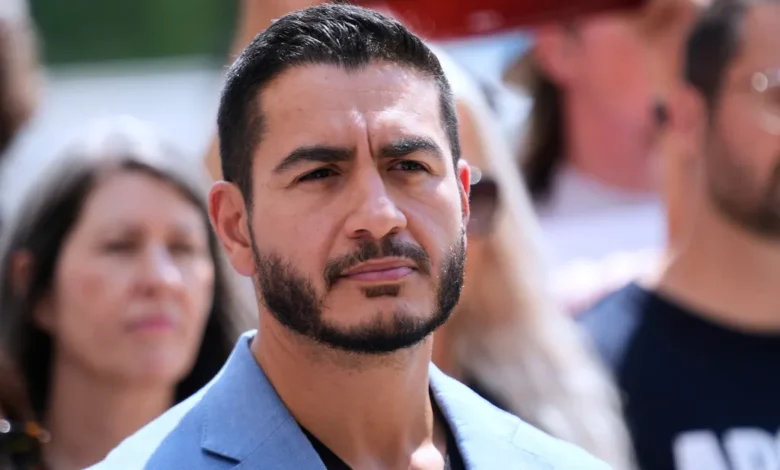
Beyond organizational communication challenges, individual candidates associated with or endorsed by progressive powerhouses are facing severe electoral headwinds. In Michigan, Democratic Senate nominee Abdul el-Sayed has found himself at the center of a national firestorm, driven by questions regarding his organizational ties, past statements, and high-profile campaign surrogates.
Although el-Sayed has publicly insisted he was not formally a member of the DSA, his campaign has proudly accepted endorsements from prominent democratic socialists, including Ocasio-Cortez and Sanders. Critics argue that el-Sayed embodies the same political vulnerabilities seen among national socialist figures, often appearing unprepared or defensive when confronted with controversial past positions.
The scrutiny intensified following a violent attack on March 12, when a gunman identified as Ayman Mohamad Ghazali rammed a vehicle into one of Michigan’s largest Jewish synagogues before opening fire while young children were present. Law enforcement officers intervened and killed Ghazali at the scene, preventing any injuries to the children inside.
In the wake of the tragedy, el-Sayed condemned the violence but added the caveat that “hurt people hurt people.” The remark drew immediate, widespread condemnation from Jewish community leaders and political opponents, who argued the statement served to rationalize or contextualize an act of domestic terrorism. The controversy was further amplified by the background of the attacker, whose family had reportedly been killed days earlier in an Israeli airstrike.
Facing intense backlash, el-Sayed was forced to issue clarifications and backtrack on his comments, embarking on a series of community outreach efforts to repair relations with local religious and civic leaders, including an appearance and apology at Temple Israel. However, political analysts note that spending the closing weeks of a campaign playing defensive politics severely hampers a candidate’s momentum.
The Hasan Piker Controversy and Campaign Surrogates
Compounding el-Sayed’s challenges are his past associations with controversial internet personalities and political influencers. Chief among them is Twitch streamer Hasan Piker, who actively campaigned alongside el-Sayed prior to the primary elections.
Piker, a prominent online commentator with a massive following among younger demographics, has a history of inflammatory remarks that have drawn bipartisan condemnation. Among his past statements, Piker infamously asserted that the United States “deserved” the September 11 terrorist attacks. More recently, he suggested that American Jews who are vocal supporters of Israel were inviting violence upon themselves.
During his campaign, el-Sayed welcomed Piker’s involvement, utilizing the influencer’s massive digital reach to mobilize youth voters. However, as public backlash mounted, the Michigan Senate nominee attempted to distance himself from the streamer. When pressed by reporters regarding their past partnership, el-Sayed dismissed the inquiries, stating he was “not interested in a conversation about a social media person in California.”
Critics have rejected these attempts at separation, arguing that the association was a calculated strategic move to court radical progressive factions. Concha and other commentators have emphasized that el-Sayed was fully aware of Piker’s online history, including statements regarding terrorist organizations like Hamas, prior to inviting the streamer to headline campaign events.
“Abdul el-Sayed knew all about these comments, knew all about [Piker’s] comments about Jews… and still had him campaign with him,” Concha remarked, characterizing Piker’s role as that of a campaign mascot.
Broader Political Implications for the Democratic Party
The convergence of DSA communication struggles and candidate controversies poses a significant strategic dilemma for the broader Democratic Party as it looks toward future electoral cycles, including the 2028 presidential primaries.
Moderate Democrats have long warned that the ideological purity tests and radical policy planks championed by the democratic socialist wing threaten to alienate crucial suburban and working-class voters. Incidents where high-profile left-wing figures stumble on basic fiscal explanations or fail to disavow controversial surrogates provide Republican opponents with potent ammunition to paint the entire Democratic Party as extreme.
Conversely, progressive organizers argue that grassroots enthusiasm and bold policy visions—such as the Green New Deal and aggressive wealth redistribution—are essential for driving voter turnout among young people and marginalized communities. They contend that mainstream media outlets and conservative commentators deliberately focus on fringe elements or isolated gaffes to delegitimize popular progressive economic goals.
As the political establishment navigates these internal ideological fault lines, the ability of progressive leaders to maintain message discipline and vet campaign associations will likely prove decisive. Whether the democratic socialist movement can mature from a loose coalition of ideological book clubs into an effective, professionalized political force capable of governing will depend heavily on how its standard-bearers handle the mounting glare of the national spotlight.