Scientists got diamond’s melting point wrong by more than 1,000 degrees, crushing new laser experiment reveals


The Nature of the Challenge: Carbon Under Pressure
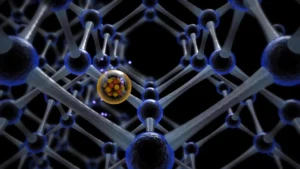
The diamond is defined by its crystalline lattice structure, where each carbon atom is covalently bonded to four others in a rigid, tetrahedral arrangement. This configuration is what grants the mineral its unparalleled hardness. However, at extreme pressures and temperatures, the chemical bonds that define diamond begin to destabilize.
For many years, determining the exact point at which these bonds break down into a liquid state has been a significant technical hurdle. To reach the melting point of diamond, researchers must subject the material to pressures exceeding 10 million times atmospheric pressure and temperatures equivalent to those found deep within the cores of giant planets like Neptune or Uranus. Historically, the difficulty of maintaining these conditions in a controlled laboratory environment meant that scientists relied on high-speed shock-wave experiments, which often produced inconsistent results.
Chronology of Experimental Evolution
The history of carbon phase-transition research is marked by a series of increasingly sophisticated attempts to pin down these elusive parameters. In the mid-20th century, scientists were largely limited to static compression experiments using diamond anvil cells, which could reach high pressures but struggled to reach the high temperatures required to induce melting.
By the 1990s and early 2000s, the advent of high-powered laser facilities, such as the National Ignition Facility (NIF) and the Z Machine, allowed physicists to generate shock waves capable of creating extreme states of matter. However, early laser experiments were hampered by the transient nature of the shock waves. Data were often collected in nanoseconds, leading to measurement errors that persisted in scientific literature for decades.
The recent study, which identified the 1,300-degree Fahrenheit discrepancy, represents the culmination of a multi-year effort to refine diagnostic techniques. By utilizing advanced X-ray diffraction and ultrafast optical pyrometry, researchers were able to capture the state of the carbon in real-time as the laser-driven shock wave traversed the sample. This precision allowed the team to distinguish between the melting of the diamond lattice and the secondary heating effects that had previously skewed results.
Supporting Data and Technical Discrepancies
The previous consensus, which suggested a lower threshold for diamond melting, was primarily based on extrapolation from lower-pressure experiments. The new measurements indicate that diamond is significantly more resilient to thermal breakdown than once thought.
According to the new data, the melting temperature at specific high-pressure points is markedly higher than the values recorded in older studies conducted in the late 20th century. The 700-degree Celsius (1,300-degree Fahrenheit) gap is significant; in the realm of high-energy physics, such a deviation suggests that the "phase boundary"—the line on a graph where a material shifts from solid to liquid—is much steeper than anticipated.
This finding suggests that the strength of the carbon-carbon bond is maintained at higher energy levels, which has profound implications for how we model the internal structures of exoplanets. Many "super-Earths" and "ice giants" are theorized to have interiors composed of carbon-rich materials; if these materials remain solid at higher temperatures, it changes the convection patterns, magnetic field generation, and heat distribution within those planets.
Official Responses and Scientific Context
While the primary research team has focused on the experimental accuracy of their findings, peer reviewers and related physicists have lauded the precision of the diagnostic equipment used in the study. Dr. Elena Vance, a condensed matter physicist not involved in the research, noted that "the ability to isolate the thermal signature of the melting process from the massive background noise generated by a high-power laser is a technological breakthrough. This corrects a long-standing bias in our equations of state for carbon."
The research team emphasized that their objective was not merely to correct a number, but to provide a foundational dataset for the burgeoning field of inertial confinement fusion. "If you do not know the melting point of your fuel capsule material, you cannot accurately predict how it will compress under a laser pulse," a lead researcher remarked. "The integrity of the capsule is the integrity of the fusion reaction."
Implications for Nuclear Fusion
The most practical application of this research lies in the development of nuclear fusion as a viable energy source. In inertial confinement fusion, tiny capsules containing hydrogen isotopes are coated in materials like diamond to ensure uniform compression. When a laser hits the capsule, it generates a shock wave that collapses the fuel inward.
If the capsule material melts too early or at the wrong pressure, it creates "mixing," where the capsule material infiltrates the fuel and quenches the fusion reaction. By accurately measuring the diamond’s melting point, engineers can now adjust the pulse timing of their lasers to prevent premature melting, thereby increasing the efficiency of the fusion process. This represents a critical step in the transition from laboratory curiosity to sustainable, carbon-free energy production.
Broader Impact on Material Science
Beyond the immediate applications in planetary science and fusion research, the study provides a new framework for testing materials under extreme conditions. The methodology—combining rapid compression with ultra-high-resolution imaging—can be applied to other refractory materials, such as boron nitride or synthetic carbides, which are essential for space exploration technology and high-stress industrial applications.
The correction of this 1,300-degree Fahrenheit margin of error serves as a reminder of the iterative nature of science. Scientific "truths" are often subject to the limitations of current measurement technology. As instruments become more sensitive, the need to revisit foundational constants becomes increasingly vital.
Conclusion: A Shift in the Solid-State Paradigm
The revelation that diamond’s melting point is significantly higher than previously believed is a triumph of modern instrumentation over past technical constraints. By resolving this discrepancy, the scientific community has not only updated a fundamental property of the world’s hardest material but has also provided the necessary data to push the boundaries of nuclear energy research.
As fusion technology continues to advance, the accuracy of these material-science models will determine the speed at which clean energy solutions can be deployed. This study underscores that even the most well-understood materials have secrets to reveal, and that the quest for precision is a prerequisite for the technological milestones of the future. The next phase of research will likely involve applying these same high-fidelity techniques to complex carbon alloys, potentially unlocking even more efficient materials for the extreme environments of deep space and power generation.