Tesla Teases October 1 Reveal for the Long-Awaited Roadster After Nearly a Decade of Delays

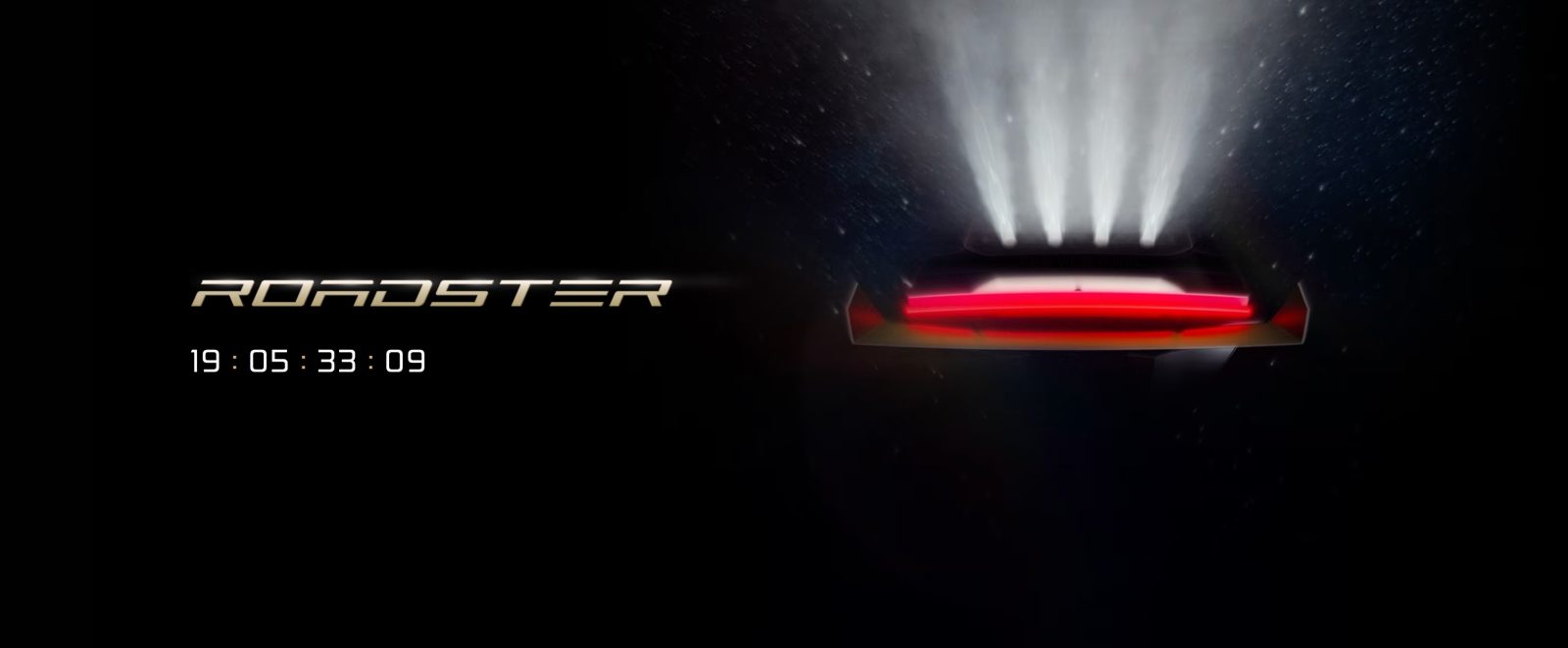
Nearly nine years after first pulling the wraps off a sleek, high-performance prototype, Tesla has officially signaled that its next-generation Roadster is finally ready for a major spotlight. The electric vehicle manufacturer released a striking promotional image on Friday bearing the phrase "Go for launch" alongside the date "10.01," set against a backdrop of dramatic rocket-pad illumination. A matching countdown timer on the official Tesla Roadster product page confirms that an event is scheduled for October 1.
While the provocative imagery strongly hints at the long-rumored integration of aerospace-grade thrusters, the announcement also revives intense scrutiny over a vehicle development cycle defined by repeated postponements. For early reservation holders who committed significant capital nearly a decade ago, the upcoming date represents another critical milestone in an unusually protracted journey toward production.
A Decade of Shifting Timelines and Broken Promises
The saga of the second-generation Tesla Roadster began in November 2017 during a surprise product unveiling at the company’s design studio in Hawthorne, California. At the time, Chief Executive Officer Elon Musk presented the electric hypercar with staggering performance metrics: a base price of $200,000, a $250,000 price tag for the limited-run Founders Series, an unprecedented 620-mile driving range, a 0-to-60 mph acceleration time under two seconds, and a top speed exceeding 250 miles per hour. Initial production was officially slated to begin in 2020.
However, those ambitious delivery windows quickly dissolved. As Tesla prioritized the scaling of higher-volume vehicles like the Model Y, navigated global supply chain disruptions, and focused on autonomous driving software, the Roadster was repeatedly pushed down the corporate priority list. Over the subsequent years, the production timeline shifted at least eight times, moving through targets in 2022, 2023, 2024, and windows such as 2025 and 2026.
During a shareholder meeting in late 2024, Musk suggested that production might not realistically commence until 2027 or 2028. Throughout 2026, various promotional demonstrations—including a heavily anticipated summer debut utilizing aerospace technology—were sequentially delayed, fueling skepticism from automotive analysts and industry observers alike.
Financial Commitments and Reservation Holder Frustrations
The prolonged development cycle has taken a toll on the vehicle’s early supporters. Securing a spot in the production queue required substantial financial deposits upon the vehicle’s 2017 debut: $50,000 for the standard model or the full $250,000 upfront for the Founders Series. While some superfans have maintained their reservations, high-profile technology figures and automotive commentators, including Marques Brownlee and OpenAI CEO Sam Altman, have publicly confirmed that they ultimately canceled their orders and requested refunds after years of silence from the automaker.
The financial outlay required by Tesla for these reservations effectively amounted to an interest-free loan from its customer base, drawing criticism from consumer advocates who argue that extended automotive development cycles should not rely on prolonged consumer-funded capital without guaranteed delivery timelines.

Engineering Challenges and the SpaceX Thruster Integration
What separates the modern Roadster narrative from traditional vehicle development is the planned integration of technology from sister company SpaceX. For years, Tesla executives have teased that the hypercar would feature a "SpaceX package," which purportedly includes cold gas thrusters designed to drastically improve acceleration, braking, and cornering capabilities.
Reports from industry insiders indicate that the engineering reality of incorporating rocket thrusters into a road-going passenger vehicle has necessitated significant compromises. Initial concepts—which allegedly included maneuvers such as ascending magnetized ramps and operating upside down—have reportedly been scaled back due to safety regulations, structural engineering limits, and extreme acoustic output.
According to recent technical assessments, the thruster system is exceptionally loud, requiring any physical demonstration to keep spectators hundreds of feet away to prevent potential hearing damage. Consequently, the vehicle slated for the October 1 debut is expected to function primarily as a specialized, non-street-legal engineering showcase rather than a consumer-ready production prototype. Industry analysts suggest that if such a vehicle is sold at all, it will likely be distributed in extremely limited quantities through an exclusive, high-end track program akin to Ferrari’s specialized client offerings.
Strategic Timing and Corporate Synergy

Financial analysts observing the upcoming October 1 reveal point to broader corporate strategies beyond traditional automotive marketing. The timing coincides with an ongoing strategic initiative to align Tesla and SpaceX more closely, with potential restructuring or merger conversations circulating among institutional investors.
Market observers note that Tesla has frequently utilized product showcases—such as the re-introduction of older concepts like the Tesla Semi and long-awaited autonomous vehicle platforms—to maintain high stock valuations and sustain consumer enthusiasm ahead of major shareholder votes. Staging a high-profile, rocket-assisted demonstration at the conclusion of a major promotional cycle fits a well-established pattern of corporate communication designed to capture public attention and energize retail investors.
Broader Industry Implications and the Path Forward
The impending October 1 event will undoubtedly draw intense global media coverage, but automotive experts emphasize a critical distinction between marketing spectacles and commercial manufacturing reality. Until Tesla establishes a concrete, reliable supply chain for the vehicle and delivers certified, street-legal units to paying customers, the Roadster remains more of an experimental technology showcase than a viable commercial product.
For the automotive industry, the Roadster project highlights both the extraordinary potential and the commercial perils of merging aerospace engineering with high-end electric mobility. While the incorporation of cold gas thrusters represents a fascinating engineering crossover, it remains to be seen whether such exotic features can be successfully translated into a reliable, homologated production vehicle that fulfills the bold promises made nearly a decade ago. As the countdown clock on Tesla’s official portal ticks toward October 1, the automotive world waits to see whether the company can finally deliver a concrete step forward for a project that has defined the outer limits of electric vehicle ambition.