Avengers Doomsday Shatters Pre-Sale Records With 50 Million Dollars in Domestic Ticket Sales

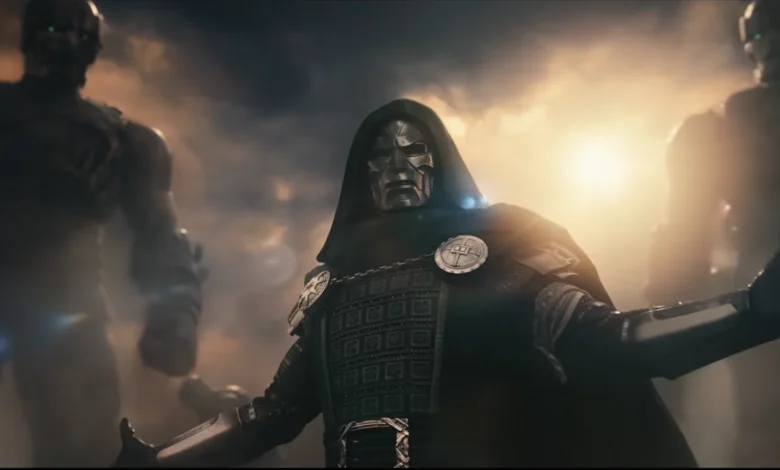
While the term "Doomsday" traditionally carries an ominous connotation, for Marvel Studios and the Walt Disney Company, it has become synonymous with unprecedented commercial momentum. With the highly anticipated release of Avengers: Doomsday scheduled for December 18, Disney has officially confirmed that the film has already generated a staggering $50 million in domestic pre-sale tickets. This figure is particularly remarkable given that the milestone was reached three months ahead of the theatrical premiere, signaling a potential box-office juggernaut that could redefine the post-pandemic landscape for tentpole cinema.
The data, unveiled by Walt Disney Company senior executive vice president and Chief Financial Officer Hugh Johnston at the Goldman Sachs Communacopia + Technology Conference, underscores a significant shift in consumer behavior. Notably, over 70% of these early ticket sales are specifically for "Infinity Vision" screenings, the studio’s premium large-format (PLF) offering. This preference highlights a growing audience demand for immersive, high-fidelity cinematic experiences, suggesting that viewers are increasingly prioritizing quality and spectacle over traditional viewing methods when engaging with major franchise IP.

The Return of the Russo Brothers and a Multiversal Threat
Avengers: Doomsday represents a pivotal turning point for the Marvel Cinematic Universe (MCU). Directed by Anthony and Joe Russo—the duo responsible for the record-shattering Avengers: Infinity War and Avengers: Endgame—the film serves as a massive convergence of several disparate narrative threads that have been cultivated since the conclusion of the Infinity Saga.
The central conflict of the film involves a historic assembly of Marvel’s most iconic heroes. The roster is set to include the Avengers, the Fantastic Four, the Thunderbolts, and, for the first time in the current MCU continuity, the original X-Men. This ensemble cast is being assembled to face Victor Von Doom, a character widely regarded as the most formidable antagonist in Marvel Comics history.
The casting of this villain has become the most discussed element of the production. Robert Downey Jr., whose tenure as Tony Stark/Iron Man defined the first decade of the MCU, is returning to the franchise. However, rather than reprising his role as the armored Avenger, Downey Jr. will portray Victor Von Doom. This casting choice has generated immense intrigue, as it bridges the emotional weight of Downey’s previous performance with the narrative necessity of a new, overarching threat capable of challenging the combined might of the multiverse’s greatest heroes.

A Chronology of the MCU’s Evolutionary Arc
To understand the scale of the anticipation surrounding Avengers: Doomsday, one must look back at the trajectory of the MCU following the climax of 2019’s Avengers: Endgame. The film, which earned over $2.7 billion globally, concluded a 22-film narrative arc that saw the original Avengers sacrifice their status quo to defeat Thanos.
Between 2019 and 2024, Marvel Studios transitioned into a phase characterized by narrative experimentation and the introduction of the Multiverse Saga. While films like Spider-Man: No Way Home and Doctor Strange in the Multiverse of Madness found immense financial success, other entries faced a more polarized reception from critics and audiences alike. The strategy of balancing Disney+ streaming series with theatrical releases led to what some analysts described as "superhero fatigue."
The announcement of Avengers: Doomsday, coupled with the return of the Russo brothers, serves as a strategic pivot. By consolidating the disparate heroes introduced across the last five years into a single, high-stakes event, Marvel is attempting to recapture the cultural dominance it held during the peak of the Infinity Saga. The current pre-sale figures suggest that this strategy is resonating with the core demographic, effectively revitalizing interest in the interconnected nature of the MCU.

Analyzing the Market Impact and Financial Implications
The $50 million pre-sale figure is not merely a number; it is a barometer for the health of the theatrical exhibition industry. Since the theatrical shutdowns of 2020, cinema chains have struggled to maintain consistent attendance levels. While films like Top Gun: Maverick and Avatar: The Way of Water proved that audiences would return for high-concept spectacles, the industry has lacked a consistent flow of billion-dollar hits.
Industry analysts suggest that the emphasis on "Infinity Vision" tickets—the premium large-format screens—indicates a broader trend in theatrical economics. As home entertainment systems become more sophisticated, the value proposition of the cinema experience must rely on superior audio-visual technology. By focusing on PLF screens, Disney is effectively maximizing the revenue per seat, a strategy that could yield significantly higher margins than traditional 2D screenings.
Furthermore, the three-month lead time for these sales indicates that the marketing campaign has effectively built a high level of "event status" for the film. In the current media landscape, where content consumption is increasingly fragmented, the ability to create a "must-see" cultural moment is a rare commodity. Avengers: Doomsday appears to be positioned as that moment, potentially setting the stage for a record-breaking holiday season for the Walt Disney Company.

Official Responses and Industry Outlook
While Disney has not provided a detailed breakdown of the international pre-sale numbers, the domestic figure alone positions the film to challenge the opening weekend records of its predecessors. During the Goldman Sachs conference, Hugh Johnston emphasized that the studio’s focus remains on delivering high-quality, long-term franchise value.
"We are seeing a level of engagement that surpasses our internal projections for this stage of the pre-sale cycle," Johnston noted. While he stopped short of offering specific revenue forecasts for the total theatrical run, the sentiment from the executive suite is one of guarded optimism. The studio is aware that the success of Avengers: Doomsday is critical not only for the current fiscal year but also for the long-term viability of the Marvel brand as it prepares to integrate the Fantastic Four and the X-Men into its core narrative tapestry.
Critics and industry observers have noted that the challenge for Marvel will be to maintain this momentum through the holiday season. The film will be entering a crowded marketplace, but its current lead in pre-sales provides a significant "cushion" against competition. If the film performs according to current projections, it could provide a substantial boost to the stock performance of the Walt Disney Company heading into the new year.

The Road to the Multiverse Finale
As the December 18 release date approaches, the focus of the industry will shift toward the marketing rollout and the critical response. The return of the Russo brothers, who have proven their ability to balance large ensembles with grounded character development, provides a degree of stability that has been absent in recent Marvel projects.
The integration of Victor Von Doom—a character who historically represents the intersection of science and mysticism—offers the studio a chance to move away from the "villain of the week" formula and toward a more sustained, character-driven antagonist. For fans who have followed the MCU since its inception, the return of Robert Downey Jr. is the final piece of a puzzle designed to draw back lapsed viewers and satisfy long-term loyalists.
In conclusion, the initial success of Avengers: Doomsday in the pre-sale market is a testament to the enduring power of the MCU brand when aligned with a clear, high-stakes narrative direction. With $50 million already secured, the studio has demonstrated that there is still a massive, eager appetite for the superhero genre, provided the scale and the stakes match the audience’s expectations for theatrical spectacle. As the countdown to December continues, the eyes of the entertainment world remain fixed on whether this "Doomsday" will indeed be the catalyst for a new era of box-office dominance.