OpenAI Unveils Micro Keypad Amidst Expanding Hardware Ambitions and Legal Challenges

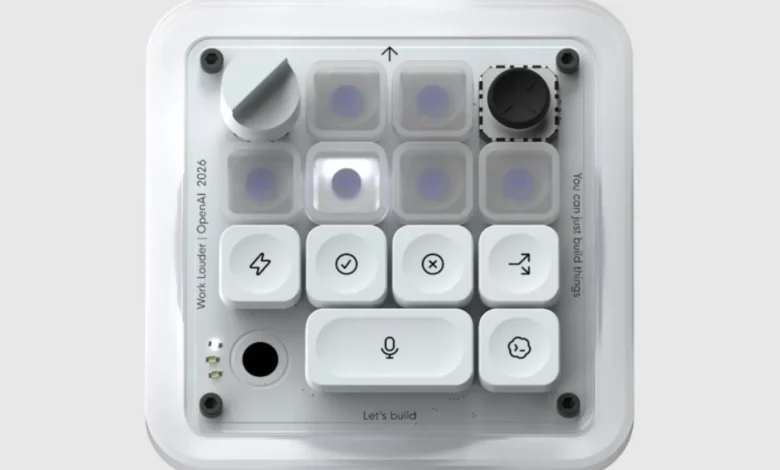
OpenAI, the vanguard of artificial intelligence research and deployment, marked a significant milestone last week with the introduction of its inaugural piece of consumer hardware: the Micro keypad. Developed in a strategic collaboration with Work Louder, a renowned designer of specialty keyboards, Micro is an intricately crafted, compact device engineered to seamlessly integrate with ChatGPT and its agentic coding counterpart, Codex. While positioned as an artisanal workplace novelty, designed to captivate a niche segment of tech enthusiasts and developers, its unveiling has been met with a spectrum of reactions, ranging from intrigue to outright skepticism, particularly among the very "code monkeys" it purports to serve. This foray into hardware is not merely a product launch but a strategic pivot, occurring amidst a backdrop of escalating legal disputes and whispers of more ambitious AI-powered devices on the horizon, hinting at a broader ecosystem vision for the AI giant.
The Micro keypad itself presents a study in minimalist design and robust construction. Upon initial handling, its substantial weight and solid build quality are immediately apparent, prompting observations that it could easily serve a dual purpose as a high-end paperweight should its AI accessory utility not fully materialize for every user. This tactile impression is complemented by its packaging—an immaculate white box with a sleek, clean aesthetic—which has notably drawn comparisons to Apple’s signature product presentation. Such parallels are particularly salient given the contemporaneous legal drama unfolding between OpenAI and Apple, alongside revelations about OpenAI’s future hardware endeavors being spearheaded by former Apple engineers, suggesting a deliberate or coincidental adoption of design philosophies and talent streams from the Cupertino titan.
At its core, Micro is designed to streamline interactions with OpenAI’s sophisticated AI models. The keypad features a meticulously arranged layout comprising twelve distinct keys. The upper half is dedicated to six "agent" keys, frosted for a refined look, each fully customizable to execute specific, complex tasks within ChatGPT or Codex. Below these are six command keys, providing intuitive control over the activated programs and agents. Connectivity options offer flexibility, allowing users to pair the Micro with their computer either through a stable Bluetooth connection or a reliable USB-C cable. This dual connectivity ensures broad compatibility and user preference accommodation, whether prioritizing a wireless desktop or a wired, low-latency setup.
Perhaps the most compelling feature for many users is the integrated voice dictation button. This functionality transforms the interaction paradigm, enabling users to simply hold down the button, articulate their request or command to the AI, and then tap the adjacent "send" button to initiate the process. This hands-free input method promises a considerable boost in efficiency, particularly for users accustomed to verbose prompts or iterative command sequences, potentially mitigating the friction often associated with text-based AI interactions. Further enhancing its utility, the Micro keypad is deeply customizable directly within the ChatGPT interface through a dedicated "Micro" tab. This intuitive control panel allows users to fine-tune various aspects, from the brightness of the key backlighting to the precise commands and projects assigned to each individual key, empowering users to tailor the device to their unique workflow and preferences.
OpenAI’s decision to venture into hardware is indicative of a broader industry trend where leading AI firms are increasingly exploring physical interfaces to make artificial intelligence more accessible, tangible, and integrated into daily life. For years, AI has predominantly existed within the confines of software, accessed through screens and keyboards. However, as AI capabilities advance, there’s a growing recognition that specialized hardware can unlock new interaction paradigms, moving AI beyond the desktop into more natural, intuitive, and ubiquitous forms. Companies like Amazon with Alexa-enabled devices, Google with its smart home ecosystem, and even Apple with Siri and its array of connected products, have long understood the strategic advantage of controlling both the software and hardware layers to deliver a cohesive user experience. OpenAI’s move with Micro, and the rumored smart home product, signals its intent to carve out a similar integrated ecosystem, aiming to embed ChatGPT’s intelligence directly into the user’s physical workspace and environment.
The collaboration with Work Louder is strategic, leveraging the latter’s expertise in crafting high-quality, specialized input devices. Work Louder has a reputation for producing niche mechanical keyboards and macropads that cater to enthusiasts seeking enhanced tactile feedback, customization, and ergonomic benefits. By partnering with such a specialist, OpenAI likely aimed to ensure that its first hardware offering met the demanding quality and design expectations of the tech-savvy audience it targets, rather than attempting to build hardware capabilities entirely from scratch. This partnership underscores a pragmatic approach to entering a new market segment, focusing on core AI development while outsourcing hardware design and manufacturing to proven experts.
However, Micro’s debut has not been without its share of turbulence, primarily overshadowed by significant legal and competitive developments. Just weeks prior to the Micro launch, on July 10, 2026, Apple initiated a lawsuit against OpenAI, alleging "trade secret theft." While the specifics of the allegations remain under judicial review, such claims typically involve the illicit acquisition or use of proprietary information, potentially encompassing everything from confidential development processes and product designs to customer data or strategic business plans. This lawsuit immediately cast a shadow over OpenAI’s expansion plans, raising questions about the ethical acquisition of talent and intellectual property in a fiercely competitive AI landscape. The legal battle is widely anticipated to be protracted and complex, potentially influencing OpenAI’s operational focus, financial resources, and public image.

Adding another layer of intrigue, reports surfaced on July 14, 2026, detailing another advanced hardware product under development at OpenAI: a screenless speaker device capable of movement, also designed to pair with ChatGPT. Crucially, these reports highlighted that this mysterious device was being developed by a team largely comprising former Apple engineers. This revelation, following closely on the heels of Apple’s lawsuit, has significantly "raised eyebrows" across the industry. It suggests a more aggressive talent acquisition strategy by OpenAI, potentially targeting individuals with specific expertise in consumer electronics and integrated hardware-software ecosystems, areas where Apple is a recognized leader. The convergence of a lawsuit alleging trade secret theft and the development of a competing product by former employees of the plaintiff creates a complex narrative, fueling speculation about the intensity of competition and the potential for further legal skirmishes in the rapidly evolving AI sector.
Initial market reception for the Micro, particularly among its ostensible target audience of hard-core coders and Reddit communities dedicated to artificial intelligence, has been largely critical. Online forums quickly filled with negative commentary, with one Reddit user dismissing it as "a prank and not a real product," while others asserted that "serious coders won’t touch it." These critiques often stem from the perspective of experienced developers who have already optimized their workflows using existing software shortcuts, custom scripts, and specialized keyboards. For them, a dedicated macropad, especially at a $230 price point, might seem redundant or offer insufficient additional value to justify its cost and the investment in learning a new interface. The independent tech outlet Aftermath delivered an even harsher assessment, titling its review: "OpenAI’s expensive macropad feels engineered to piss me off specifically," and explicitly stating that the $230 price tag was difficult to justify against numerous cheaper DIY or off-the-shelf macro pad alternatives that offer similar, if not greater, customization.
Despite these initial criticisms, the reviewer’s personal experience with the Micro suggested a more nuanced reality. Acknowledging a definite learning curve, particularly in memorizing the color-coded feedback system (white for idle, blue for thinking, green for task complete, and red for error) and the specific projects assigned to each key, the device eventually proved to be "pretty fun" and "considerably more efficient and enjoyable" once programmed to personal preferences. The ability to assign various ChatGPT sessions to specific keys, allowing for seamless toggling between diverse projects, combined with the dictation button, created a workflow that, for a power user, could genuinely enhance productivity. This suggests that while the barrier to entry might be high for casual users or those resistant to change, dedicated ChatGPT users willing to invest the time could find substantial value.
The fundamental question Micro faces is whether its functional advantages truly outweigh the effort required to integrate it into an existing workflow and justify its premium price. In an age where most users are adept with standard computer mice and keyboards, the proposition of spending a week to learn a new specialized input device must offer a compelling return on investment. For the average user who sparingly interacts with AI, the Micro might remain an intriguing but ultimately unnecessary gadget. However, for the burgeoning community of "ChatGPT power users"—individuals who leverage AI extensively in their daily professional or personal lives—and who appreciate well-engineered, vintage-looking hardware with satisfyingly clicky buttons, the Micro could indeed be a worthwhile purchase, potentially adding a touch of delight and efficiency to their AI-driven tasks.
The broader implications of OpenAI’s hardware strategy are multifaceted. For the company itself, venturing into hardware represents a significant diversification beyond its core software offerings. It’s a calculated risk to test the waters of physical product development, potentially opening new revenue streams and strengthening its brand presence in the consumer tech market. This move also serves to build a more comprehensive AI ecosystem, moving towards a future where OpenAI’s intelligence is not just a digital service but an integrated part of users’ physical environments. However, this expansion also brings increased complexity, including manufacturing challenges, supply chain management, and the intensified scrutiny that comes with direct competition in consumer electronics.
For the AI hardware market as a whole, Micro’s launch contributes to a growing trend of specialized AI-centric devices. As AI becomes more sophisticated and ubiquitous, there will likely be an increasing demand for dedicated tools that simplify interaction and optimize specific AI tasks. Micro, despite its mixed reception, could be seen as an early iteration in a new category of AI controllers, paving the way for more advanced and intuitive interfaces. The involvement of former Apple engineers and the evident "Apple-coded" design philosophy also highlight a potential convergence in design aesthetics and user experience principles between traditional tech giants and emerging AI powerhouses. This could lead to a future where AI hardware prioritizes sleek design, intuitive interfaces, and seamless integration, mirroring the high standards set by companies like Apple.
In conclusion, OpenAI’s debut of the Micro keypad is more than just a product launch; it is a declaration of intent, signaling the company’s ambitious pivot towards hardware and a broader vision for AI integration. While Micro itself appears to be a niche device, best suited for dedicated ChatGPT power users willing to navigate its learning curve and justify its $230 cost, its significance lies in what it represents. It is a tangible first step into a physical world for OpenAI, occurring amidst a complex landscape of intense competition, high-stakes legal battles with industry titans like Apple, and the promise of even more innovative AI-powered devices on the horizon. The success of Micro, and indeed OpenAI’s broader hardware ambitions, will ultimately hinge on its ability to demonstrate compelling value, overcome user skepticism, and skillfully navigate the intricate legal and market dynamics of the rapidly evolving artificial intelligence frontier.
Related posts: