The Unseen Surge: THC Beverages Flood New York Shelves Amidst Regulatory Confusion and Growing Health Concerns

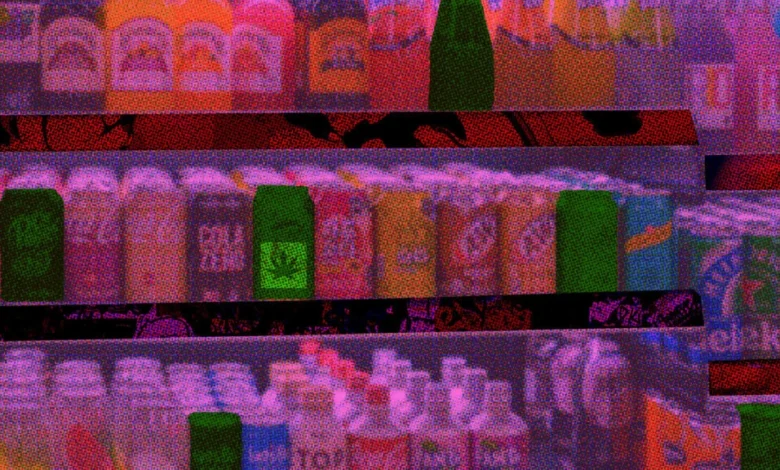
NEW YORK – In the bustling retail landscape of New York City, a subtle yet significant shift is underway, one that is increasingly blurring the lines between everyday refreshments and intoxicating beverages. Tucked away in the refrigerated aisles of ubiquitous grocery stores, corner bodegas, and neighborhood delis, a vibrant array of cannabis-infused drinks now sits alongside familiar iced teas, functional sodas, and probiotic beverages. Brands like Oasis, Cann, Milonga, Cycling Frog, Tempter’s, Gigli, and Mighty Kind, adorned with colorful packaging, often present an unassuming facade. Their labels, ranging from subtly printed to boldly displayed, indicate the presence of THC, the psychoactive compound in cannabis. However, a recent investigation across ten stores in South Brooklyn, some situated mere blocks from educational institutions, revealed a stark absence of clear signage indicating these were indeed intoxicating products. Furthermore, cashiers rarely, if ever, requested identification at the point of sale, raising immediate questions about age verification and public safety.
This widespread availability stands in direct contravention of New York State law. Regulations enacted in 2023 stipulate that such beverages should contain no more than 1 milligram of THC per serving and are restricted to sale within licensed dispensaries. Yet, the investigative trip uncovered beverages containing up to 100 times that legal limit, readily available in establishments ranging from a gourmet deli on a chic Brooklyn Heights street, known for its trendy bakeries and fitness studios, to a large grocery store directly opposite an entrance to the expansive Prospect Park. While many products featured doses in the common 5- to 10-milligram range favored by casual marijuana users, higher-potency options, boasting 50, 60, and even 100 milligrams of THC – amounts likely to be overwhelming for all but the most experienced users – were also easily accessible.
"It’s not allowed, but it’s still happening," stated Christopher Lackner, head of the Hemp Beverage Alliance, underscoring the significant gap between regulatory intent and on-the-ground reality. This situation is not unique to New York; the popularity of THC drinks has surged nationwide, coinciding with a documented decline in alcohol consumption among Americans. Industry projections estimate the U.S. cannabis beverage market to reach $1.4 billion in sales by 2026, with between 500 and 750 brands vying for market share. This proliferation is largely attributed to a loophole created by the 2018 Farm Bill, which legalized hemp-derived products. This opened the door for companies to sell THC derived from hemp in retail settings, bypassing traditional cannabis regulations. While this loophole is slated to close in November, the industry remains optimistic that legislative solutions will emerge. The recent expansion of THC beverage sales by major retailers like Target, Circle K, and Sprouts further signals this prevailing optimism within the business sector.
The Shifting Landscape of Cannabis Consumption
The rise of THC beverages is intrinsically linked to evolving consumer preferences and a growing interest in alternatives to traditional alcohol. As Americans, particularly younger generations, explore various forms of relaxation and recreation, cannabis-infused drinks have emerged as a convenient and often discreet option. The appeal lies in their perceived similarity to conventional beverages, offering a palatable entry point into cannabis consumption without the combustion associated with smoking.
The 2018 Farm Bill, intended to bolster agricultural industries by legalizing hemp, inadvertently created a pathway for the widespread distribution of hemp-derived THC products. This legislative oversight has allowed products with significantly higher THC concentrations than those permitted in legal cannabis markets to enter mainstream retail environments. The upcoming closure of this loophole in November represents a critical juncture, potentially reshaping the industry’s distribution channels and regulatory framework.
Public Health Alarms and Accidental Exposures
Despite the burgeoning market and retailer optimism, a growing chorus of concern is being raised by medical professionals, researchers, and advocacy groups. They warn that the easily accessible and ambiguously labeled THC drinks pose a significant risk of accidental ingestion, particularly for children and other vulnerable populations.
Dr. Rudy Kink, a pediatric emergency physician at Le Bonheur Children’s Hospital in Memphis, Tennessee, has witnessed a marked increase in children ingesting THC drinks and other cannabis products due to their widespread availability. He estimates that his hospital encounters four to five such cases weekly. These incidents involve a spectrum of scenarios, from curious toddlers attracted by colorful packaging to teenagers intentionally experimenting with cannabis. Alarmingly, some teenagers have reportedly mistaken cannabis drinks for conventional sodas. The consequences of such ingestions can be severe, leading to lethargy, confusion, nausea, vomiting, and in some extreme cases, near-comatose states. Parents are often bewildered by their children’s symptoms until blood and urine tests reveal the presence of THC.
"I don’t think that teenagers quite understand the effects of THC and how it can cause some of the other problems medically, like vomiting and altered mental status," Dr. Kink observed. He advocates for clear, prominent labeling on these products to prevent confusion.
Data further corroborates these concerns. A 2025 survey of high school seniors indicated that 8% of females and 10% of males had consumed hemp-derived cannabis products in the preceding year. Concurrently, a survey of U.S. adults conducted the same year revealed that 14% had consumed hemp-derived THC, with users of THC drinks tending to be younger, more educated, and of higher income brackets compared to users of other cannabis products.
Jessica Kruger, a health educator at the University of Buffalo specializing in cannabis use, highlights a critical deficit in consumer understanding. "People don’t know nutrition labels. They do not understand cannabis labels or milligrams," she stated. This lack of comprehension extends to the potential risks associated with unlabeled or improperly labeled products.
Beyond accidental ingestion, another significant public safety concern centers on the unregulated nature of THC drinks sold outside state-licensed dispensaries. These products bypass the rigorous testing and quality control measures applied to cannabis sold through regulated channels. "You don’t know if there’s contaminants, you don’t know what the ratio is" of THC to CBD, noted Kruger, referring to the non-psychoactive compound in cannabis that can modulate THC’s effects. The lack of oversight means manufacturers can make unsubstantiated claims about their products.
Escalating Pediatric Poisonings and Emergency Room Visits
The surge in the availability of hemp-derived cannabis products, including THC drinks, gummies, and vapes, over the past five years has been accompanied by a documented rise in pediatric poisonings. Matthew Rossheim, an associate professor at UNT Health Fort Worth who studies retail cannabis products, points to a concerning trend. A recent study published in the Journal of Addiction Medicine found that calls to U.S. poison control centers regarding cannabis exposure in children under six years old increased by over 6,000% between 2009 and 2024. For children aged six to twelve, the increase was even more dramatic, exceeding 13,000% during the same period.
Further underscoring the severity of these exposures, a small study involving 27 children aged 14 and under who were suspected of ingesting hemp-derived delta-8 products revealed that 30% required intensive care unit admission. These children frequently presented with abnormally low blood pressure, breathing difficulties, and dehydration necessitating intravenous fluids.

Rossheim also identifies a concerning uptick in emergency room visits attributed to cannabis-induced psychosis. Research, including a large cohort study of teenagers in Northern California, has established a link between cannabis use and a significantly elevated risk of developing psychotic and bipolar disorders. Diane Carlson, co-founder and national policy director for the advocacy group One Chance to Grow Up, shared harrowing accounts of parents who mistakenly believed their children were consuming CBD, only to witness them develop psychosis.
The impact is being felt nationwide. In Ohio, the director of outpatient psychiatric services at Licking Memorial Hospital reported an increase in ER visits from patients experiencing "actively psychotic" episodes, directly correlating with the boom in THC drink sales. Online platforms like Reddit also serve as a testament to the confusion and adverse reactions, with users seeking help after mistakenly mixing THC drinks with medications or taking doses they cannot handle. Concerns about failing mandatory drug screenings for employment due to accidental consumption also surface.
Tory Spindle, an associate professor at Johns Hopkins Medicine, who studies the pharmacological and behavioral effects of cannabis, emphasizes that individuals less familiar with marijuana may mistake these products for innocuous wellness drinks. The potential for intoxication, especially if driving under the influence, represents a worst-case scenario.
Spindle’s research also highlights unique risks associated with THC beverages compared to other edibles. His studies suggest that the effects of THC drinks can be felt within 15 to 20 minutes, peaking around 30 to 45 minutes, a significantly faster onset than traditional gummies or brownies, which can take up to an hour to kick in and peak much later. Furthermore, a 10-milligram THC beverage appears to deliver a more potent effect than a 10-milligram gummy. This rapid onset can impair judgment and response times, even for individuals aware they are consuming a THC product.
Adding another layer of concern, Spindle’s research indicates that cannabis products are often inaccurately labeled, with THC concentrations sometimes under- or over-estimated. Products sold outside of state-licensed dispensaries are particularly susceptible to inaccurate labeling and potential contaminants due to the absence of regulatory oversight.
Navigating the Regulatory Maze: From Brooklyn Delis to National Retailers
The marketing and placement of THC beverages in mainstream retail environments are a significant point of contention. Christopher Lackner of the Hemp Beverage Alliance advocates for these products to be marketed, labeled, and shelved akin to other adult beverages, complete with age verification requirements. In the interim, he suggests that clear signage alerting consumers to the presence of THC is essential, even when products are shelved alongside non-alcoholic options. However, he acknowledges that in many jurisdictions, a "self-regulatory scheme" is effectively in place for reputable retailers.
State laws governing hemp-derived THC remain a patchwork, often in flux. Ohio, for instance, implemented a ban on most intoxicating hemp products earlier this spring, specifically targeting THC beverages. However, a temporary federal court injunction has allowed some of these products to return to shelves. States like Alaska and Washington have demonstrated greater success in restricting the availability of THC products outside of licensed dispensaries, although Rossheim notes that bans alone are insufficient without robust enforcement.
Major retailers are navigating this complex landscape with varying degrees of caution and proactivity. Target, for example, currently sells THC drinks in Florida, Illinois, Minnesota, and Texas. A spokesperson for Target affirmed that the retailer requires age verification for THC beverage purchases, displays them alongside other adult beverages, and implements dedicated signage in stores carrying these products, even when not mandated by state law. A recent visit to a Target store in Austin, Texas, revealed THC drinks prominently displayed on an end-cap, a premium retail space. A large sign above eye level identified them as THC-infused beverages, with a smaller, warning-stamped label below specifying THC content, age restrictions, and legal implications of driving under the influence.
In stark contrast, the retail environments observed in Brooklyn, New York, presented a less deliberate approach. At a Brooklyn Heights deli, THC drinks were interspersed with chocolate milk brands like Nesquik and probiotic sodas, with no discernible signage indicating their intoxicating nature. While some establishments displayed brand names and prices, the mention of THC was inconsistent. These beverages were predominantly stocked alongside non-alcoholic options like lemonade, energy drinks, and coconut water, rather than with alcoholic beverages. Similarly, a Minnesota co-op was found to be stocking these unmarked drinks next to cold brew coffee.
A spokesperson for the National Grocers Association emphasized that regulations for hemp-derived beverages vary significantly by state and encouraged retailers to adhere to all applicable federal, state, and local laws, collaborating closely with regulators and suppliers to ensure compliant marketing and labeling. The New York Office of Cannabis Management did not respond to requests for comment regarding the presence of THC drinks in retail stores.
The Future of THC Beverages: Regulation, Opportunity, and Uncertainty
The debate surrounding THC beverages extends to their potential as a harm reduction tool. Jessica Kruger of the University of Buffalo sees them as a potential alternative to alcohol, citing a study she co-authored where individuals consuming one THC drink daily drank less alcohol and engaged in less binge drinking. However, the long-term health impacts of daily THC beverage consumption over decades remain largely unstudied due to federal restrictions on cannabis research.
The alcohol industry itself is divided. Some manufacturers are exploring the lucrative cannabis drink market, while others advocate for the closure of the Farm Bill loophole, concerned about competition. Many liquor stores and breweries, however, view THC drinks as a vital revenue stream to offset declining alcohol sales.
Christopher Lackner of the Hemp Beverage Alliance remains philosophical about the impending November deadline for the Farm Bill loophole’s closure. He notes that numerous legislative proposals are under consideration in Congress, ranging from extensions to the creation of new regulatory pathways. The industry’s confidence, he suggests, stems from a historical tendency of Congress to act at the last minute. "The one thing Congress is good at is acting at the very last minute and kicking cans down the road," he remarked.
In anticipation of potential regulatory changes, some industry players are diversifying by launching non-THC beverage lines. Nevertheless, many continue to produce THC drinks at high volumes, driven by sustained consumer demand. The recent Hemp Beverage Expo in Austin, Texas, with over 100 distributors in attendance, signals a persistent belief in the category’s viability, even amidst regulatory uncertainty. The industry is poised at a critical juncture, awaiting legislative clarity that will ultimately determine the future of these increasingly visible, yet often misunderstood, intoxicating beverages.