The Parental Perception of Contemporary Music and the Sociological Implications of Intergenerational Lyrical Friction

The intersection of adolescent autonomy and parental oversight has long been defined by the music that occupies the domestic sphere, often serving as a primary flashpoint for cultural and generational conflict. This phenomenon, frequently characterized by a profound sense of social embarrassment or "the shadow of shame," occurs when a younger generation’s consumption of transgressive or explicit media is inadvertently exposed to an older generation with differing moral or aesthetic benchmarks. While the sensation of being caught listening to controversial audio content is a common experience, the intensity of this embarrassment fluctuates based on the specific lyrical themes, the historical context of the recording, and the evolving standards of public decency. To understand this dynamic, one must examine the progression of explicit music, the institutional reactions to it, and the specific tracks that continue to represent the pinnacle of intergenerational awkwardness.
The Evolution of Explicit Content and Parental Regulation
The history of musical "shame" is inextricably linked to the formalization of parental warnings. In the United States, the modern era of lyrical scrutiny began in earnest in 1985 with the formation of the Parents Music Resource Center (PMRC). Founded by Tipper Gore and other influential figures, the PMRC sought to increase parental control over the music children accessed, citing concerns over themes of violence, substance abuse, and sexual explicitness. This movement led to the infamous "Filthy Fifteen," a list of songs deemed particularly offensive, and eventually resulted in the "Parental Advisory: Explicit Lyrics" sticker program adopted by the Recording Industry Association of America (RIAA) in 1990.
Since the implementation of these labels, the threshold for what is considered "vile" or "disgusting" has shifted. Data from the RIAA suggests that while the number of albums carrying the advisory label increased throughout the 1990s and early 2000s, the shock value of such music has been somewhat diluted by the ubiquity of the internet. However, certain compositions remain potent enough to trigger immediate psychological discomfort when played in the presence of a parental figure, regardless of whether the listener is 15 or 40 years of age.
Case Studies in Transgressive Audio: A Chronological Analysis
The following tracks represent various tiers of potential embarrassment, ranging from socially acceptable classics to narratives so extreme they challenge the boundaries of the medium.
The Normalization of Protest: N.W.A and "Fuck Tha Police" (1988)
When N.W.A released "Fuck Tha Police" as part of their seminal album Straight Outta Compton, it was met with unprecedented institutional resistance, including a formal warning letter from the Federal Bureau of Investigation (FBI). At the time, the song represented the apex of parental and governmental fear regarding youth culture. However, decades later, the track has been recontextualized as a vital piece of social commentary and a cornerstone of hip-hop history.
From a journalistic perspective, the "shame" associated with this track has largely evaporated. It is now viewed as a historical artifact of civil unrest and artistic expression. While the language remains explicit, the sociological weight of the song provides a "classic" status that shields the listener from the raw embarrassment associated with more puerile or nihilistic content.
Sexual Agency and Pop Provocation: Divinyls and "I Touch Myself" (1990)
The release of "I Touch Myself" by the Australian band Divinyls marked a significant moment in the mainstreaming of female sexual agency. While the song’s subject matter is explicitly masturbatory, its presentation as a polished pop-rock anthem allowed it to achieve massive commercial success, reaching number four on the Billboard Hot 100.
The discomfort associated with this track is categorized by sociologists as "situational awkwardness" rather than "moral shame." Because the song is a recognized hit and lacks violent or derogatory undertones, the embarrassment of a parent overhearing it is typically fleeting. It represents a era of 90s provocation that has since been surpassed by more graphic contemporary releases.
The Peak of Shock Rap: Eminem and "Kim" (2000)
The year 2000 represented a watershed moment for explicit content with the release of Eminem’s The Marshall Mathers LP. The track "Kim," a prequel to his 1999 song "’97 Bonnie & Clyde," is a grueling, six-minute depiction of a domestic dispute that culminates in a simulated murder. Unlike other rap songs of the era, "Kim" eschews traditional rhythm and flow for a raw, screaming performance that mirrors a psychotic break.
The embarrassment associated with "Kim" is rooted in its visceral violence. Even for adult listeners, the track is difficult to defend as "background music." The psychological implication of being caught listening to such a recording suggests a level of dark voyeurism that most individuals find impossible to explain to a parent. It remains one of the most polarizing recordings in the history of major-label music, often cited in academic papers discussing the limits of the First Amendment and the psychological impact of violent media.
Satire and the "Frat-Rock" Aesthetic: Bloodhound Gang and Ween
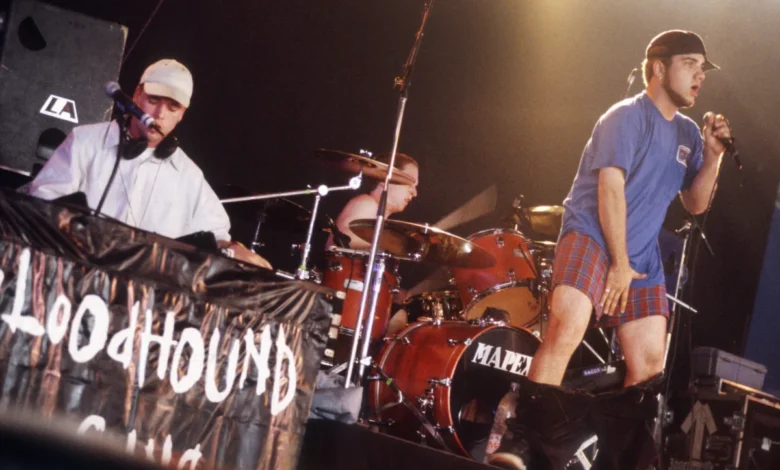
The late 1990s saw a rise in "gross-out" culture, exemplified by the Bloodhound Gang’s "The Ballad of Chasey Lain" (1999) and Ween’s "Waving My Dick in the Wind" (1997). These tracks utilize humor to deliver content that is intentionally offensive.
"The Ballad of Chasey Lain" is particularly problematic in a parental context due to its direct references to the pornography industry and its lyrical conceit of a fan writing letters to an adult film star. Similarly, Ween’s work, while often celebrated for its surrealist brilliance, frequently ventures into territory that is linguistically indefensible in a formal setting. The embarrassment here stems from the perceived immaturity of the content; to be caught listening to these tracks as an adult suggests a failure to move past the puerile humor of adolescence.
The Narrative Extremity of Immortal Technique: "Dance With the Devil" (2001)
Perhaps no song in the underground hip-hop canon carries as much "narrative shame" as Immortal Technique’s "Dance With the Devil." The track tells a harrowing story of a young man’s initiation into a gang, which involves a brutal assault that concludes with a traumatic, Oedipal revelation.
Though the song is framed as a cautionary tale with a moral core, its graphic nature is so extreme that it has become an urban legend within the music industry. The social cost of being caught with this song is high; it suggests an engagement with "horrorcore" or ultra-violent realism that is fundamentally incompatible with traditional domestic life. It is often described by critics as a "one-time listen"—a piece of art so disturbing that repeated consumption is viewed with suspicion.
Statistical Trends in Lyrical Explicitness
Research conducted by various linguistic and sociological institutions indicates a steady increase in the frequency of profanity and explicit themes in popular music over the last thirty years. A study published in the journal Psychology of Popular Media Culture found that the use of profanity in Billboard Hot 100 hits increased significantly between 1990 and 2010.
| Decade | Average Profanities per Top 10 Hit | Percentage of Explicit Labels |
|---|---|---|
| 1980s | 0.5 | ~5% |
| 1990s | 2.1 | ~18% |
| 2000s | 3.8 | ~35% |
| 2010s | 5.4 | ~48% |
This data suggests that while the "embarrassment factor" remains, the younger generation is increasingly desensitized to language that would have triggered a national scandal in previous decades.
Official Responses and Industry Implications
The music industry’s response to these "embarrassing" or controversial tracks has shifted from defensive to opportunistic. While N.W.A faced potential arrest for performing their music in the 1980s, modern artists often utilize "leak" culture and viral controversy to drive streaming numbers.
However, the psychological impact on the individual remains a constant. The "shadow of shame" described by listeners is a manifestation of the "looking-glass self," a social psychological concept suggesting that individuals shape their self-concepts based on how they believe others perceive them. When a parent—a primary source of moral social identity—encounters a child (even an adult child) consuming "vile" content, it creates a temporary fracture in that identity.
Conclusion: The Persistence of the Generation Gap
As the digital age continues to fragment the cultural landscape, the likelihood of a "universal" embarrassment decreases, yet the potency of these specific tracks remains. The evolution of music from the protest anthems of the 1980s to the visceral, narrative-driven extremes of the early 2000s reflects a broader societal push toward raw realism and the deconstruction of taboos.
Ultimately, the embarrassment of being "caught" listening to music like Eminem or Immortal Technique is a testament to the power of the medium. It confirms that music remains one of the few art forms capable of eliciting a physical, visceral reaction of shame, acting as a permanent boundary between the private world of the individual and the traditional expectations of the family unit. While the "Filthy Fifteen" may be a relic of the past, the capacity for a three-minute recording to dismantle one’s social standing in the eyes of a parent remains a definitive feature of the modern musical experience.
Related posts: