The Evolution of Global Connectivity and the Role of Holafly in the Modern eSIM Market


The landscape of international travel has undergone a radical transformation over the last two decades, moving from a reliance on physical maps and printed guidebooks to an era defined by ubiquitous digital connectivity. In the contemporary travel environment, the ability to access high-speed data is no longer a luxury but a fundamental necessity for navigating foreign infrastructure, translating languages in real-time, and managing financial transactions through region-specific applications. Central to this technological shift is the emergence of the eSIM (embedded Subscriber Identity Module), a digital alternative to the traditional plastic SIM card that has simplified the way travelers maintain network access across international borders. Among the primary facilitators of this shift is Holafly, a telecommunications company that has positioned itself as a leader in providing unlimited data solutions for global commuters.
The Historical Context of Mobile Connectivity for Travelers
To understand the significance of eSIM technology, it is necessary to examine the chronology of mobile connectivity. In the early 2000s, international travelers were often faced with two suboptimal choices: pay exorbitant roaming fees to their domestic carriers or attempt to purchase a local physical SIM card upon arrival. The latter process was frequently fraught with logistical challenges, including language barriers at kiosks, the requirement of local identification, and the physical risk of losing the original SIM card while swapping it for a local one.
The introduction of the eSIM standard by the GSMA (Global System for Mobile Communications Association) in 2016 marked the beginning of a new era. Unlike physical SIMs, which require a dedicated slot, an eSIM is a small chip embedded directly into the device’s motherboard. This allows users to download multiple network profiles and switch between them via software settings. By 2022, the adoption of this technology reached a tipping point when major manufacturers, such as Apple, began releasing devices—most notably the iPhone 14 in the United States—that dispensed with the physical SIM tray entirely in favor of eSIM technology.
The Rise of Holafly: Corporate Profile and Service Model
Founded in 2017 in Spain and currently headquartered in Dublin, Ireland, Holafly was established to address the specific pain points of the digital-native traveler. The company operates as a Mobile Virtual Network Operator (MVNO), partnering with local telecommunications giants in various countries to provide users with access to existing cellular infrastructure.

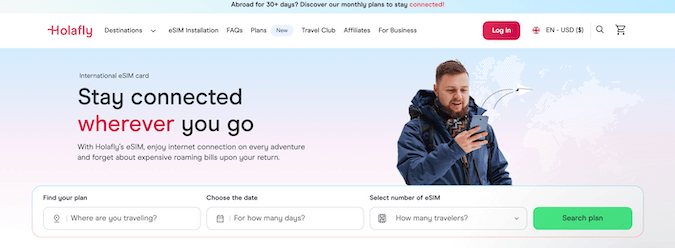
Holafly’s service model distinguishes itself from competitors through its emphasis on "unlimited data" packages. While many eSIM providers sell data in fixed increments (e.g., 1GB, 3GB, or 5GB), Holafly’s offerings in over 200 destinations are structured around the duration of the trip rather than the volume of data consumed. This approach caters specifically to high-bandwidth users, such as digital nomads, remote workers, and social media content creators, who require consistent connectivity without the threat of sudden service termination upon reaching a data cap.
Technical Implementation and Operational Logistics
The deployment of a Holafly eSIM is a software-driven process that bypasses the need for physical retail interaction. The operational workflow typically follows a standardized sequence:
- Device Verification: Users must ensure their hardware is carrier-unlocked and compatible with eSIM technology. This includes most iPhone models released after 2018 and a wide range of flagship Android devices from Samsung, Google, and Huawei.
- Acquisition and Installation: Upon purchasing a plan, the user receives a digital package via email containing a unique QR code. Installation occurs by scanning this code through the device’s cellular settings. Modern smartphones allow for the storage of multiple eSIM profiles, though typically only one or two can be active simultaneously.
- Activation and Roaming: The eSIM is usually activated upon arrival in the destination country. To initiate service, the user must enable "Data Roaming" for the specific Holafly line. It is a critical operational step to ensure the primary home SIM card has its data roaming disabled to avoid inadvertent charges from the domestic provider.
Holafly’s eSIMs are primarily data-only services. This means they do not traditionally come with a local phone number for standard cellular voice calls or SMS. However, the integration of Voice over IP (VoIP) services—such as WhatsApp, Telegram, iMessage, and Signal—allows travelers to maintain their existing contact identity while utilizing Holafly’s data for communication.
Market Data and the Economic Impact of eSIM Technology
The growth of companies like Holafly is supported by robust market trends. According to industry reports from Juniper Research, the number of eSIMs installed in connected devices is expected to rise from roughly 1.2 billion in 2021 to over 3.4 billion by 2025. This 180% growth is driven by the increasing consumer demand for flexible data plans and the desire of device manufacturers to utilize the internal space previously occupied by SIM trays for larger batteries or more advanced sensors.
The economic implications for the consumer are notable. Traditional international roaming plans from major US or European carriers can cost upwards of $10 per day for limited data usage. In contrast, Holafly’s plans often start as low as $4 per day for unlimited data, depending on the length of the contract. For longer stays, such as 90-day periods, the cost-per-day drops significantly, providing a scalable solution for long-term expatriates and "slow travelers."

Supporting Infrastructure and Customer Security
A significant factor in Holafly’s market penetration is its multilingual 24/7 customer support. In the telecommunications sector, technical glitches—such as failed network handoffs or APN (Access Point Name) configuration errors—can leave a traveler stranded without communication. The provision of around-the-clock support acts as a safety net for users who may not be technically proficient.
Furthermore, Holafly has implemented a flexible refund policy, allowing for returns within six months under specific conditions. This level of consumer protection is relatively rare in the prepaid telecommunications industry, where service is often sold on a "final sale" basis.
From a security perspective, the use of eSIMs offers an advantage over physical cards. In the event of phone theft, a physical SIM card can be easily removed and discarded, making the device harder to track via "Find My Phone" services. An eSIM, however, is embedded in the hardware and cannot be removed, meaning the device remains connected to a network as long as it is powered on, aiding in recovery efforts.
Analysis of Implications for the Travel Industry
The democratization of high-speed data through eSIMs like those offered by Holafly has profound implications for the travel industry. First, it facilitates the "de-risking" of international travel. When a traveler can instantly access GPS, translation tools, and emergency services, the psychological barrier to visiting non-English speaking or less-developed regions is lowered.
Second, it bolsters the global digital nomad economy. Cities in Southeast Asia, Latin America, and Eastern Europe have seen a surge in long-term visitors who contribute to local economies while working remotely. These individuals require "always-on" connectivity to maintain professional obligations, a need that Holafly’s unlimited data model is specifically designed to meet.
Third, there is an environmental consideration. The telecommunications industry produces billions of plastic SIM cards annually, many of which are discarded after a single trip. The transition to digital eSIMs represents a significant reduction in plastic waste and the carbon footprint associated with the manufacturing and shipping of physical components.
Challenges and Future Outlook
Despite the advantages, challenges remain. The "data-only" nature of many eSIMs can be a hurdle in countries where local services—such as ride-sharing apps or restaurant reservations—require a local phone number for SMS verification. While Holafly has begun introducing plans that include phone numbers in certain regions, such as Europe, the global rollout of full-service (voice, text, and data) eSIMs is still an ongoing process.
Additionally, network speeds are contingent upon the local infrastructure of Holafly’s partners. In rural or underdeveloped areas, even an "unlimited" plan may be limited by 3G or 4G speeds, though 5G integration is becoming increasingly common in urban centers.
Looking forward, the competition in the eSIM space is expected to intensify. As more providers enter the market, price wars and service innovations are likely. Holafly’s strategy of focusing on the "unlimited" niche and expanding its regional coverage to over 200 destinations provides it with a competitive moat, but maintaining network quality across such a vast array of local partners will be the primary operational challenge for the coming decade.
In conclusion, the shift from physical SIM cards to digital eSIM solutions like Holafly represents a permanent change in the mechanics of global movement. By removing the logistical friction of staying connected, these technologies have transformed the smartphone from a mere communication device into an essential survival tool for the modern explorer. As hardware continues to evolve and global networks become more integrated, the "simplicity" of scanning a QR code to unlock the internet may soon become the universal standard for every person crossing a border.