Proton Radius Puzzle Resolved: New High-Precision Experiments Confirm Smaller Proton Size, Bolstering the Standard Model

After more than 15 years of intense debate and conflicting experimental results, physicists believe they have finally resolved the enigmatic "proton radius puzzle." Two recent, highly precise experimental measurements, published in the prestigious journals Nature and Physical Review Letters, have tilted the evidence decisively in favor of a smaller proton radius, effectively closing the door on the tantalizing possibility of exciting new physics beyond the Standard Model. This resolution marks a significant triumph for the Standard Model of particle physics and quantum electrodynamics (QED), affirming their remarkable accuracy down to unprecedented levels of precision.
The scientific community has been grappling with a perplexing discrepancy regarding the charge radius of a hydrogen atom’s proton. For decades, the accepted value, derived from a "world average" of various electron-based measurements and theoretical calculations, hovered around 0.876 femtometers (fm). A femtometer, or fermi, is an incredibly tiny unit of length, equal to one quadrillionth of a meter (10^-15 meters), underscoring the extreme precision required for these measurements. This long-held value, while having error bars that allowed for minor future adjustments, represented a cornerstone of our understanding of atomic structure. However, in 2010, a groundbreaking experiment introduced a profound challenge to this consensus, sparking the "proton radius puzzle" and hinting at potential cracks in our most fundamental theories.
The Enduring Mystery of the Proton’s Size
The proton, the positively charged core of every atom, is not a simple, hard sphere. According to quantum mechanics, it is a dynamic entity composed of three fundamental particles called quarks (two up quarks and one down quark) held together by the strong nuclear force, mediated by particles called gluons. This internal structure gives the proton a "fuzzy" nature, akin to a cloud rather than a rigid ball. Therefore, defining its "radius" is not as straightforward as measuring a solid object. Physicists typically define the proton’s charge radius as the spatial extent of its electric charge distribution, or more precisely, the distance at which its charge density drops below a certain energy threshold. Measuring this radius provides crucial insights into the fundamental forces and particles that govern matter.
The importance of the proton radius extends beyond mere curiosity. It is a fundamental constant in physics, influencing calculations in atomic spectroscopy and quantum electrodynamics. A precise value is essential for testing the accuracy of the Standard Model, which describes the fundamental particles and forces governing the universe. Any significant deviation from theoretical predictions could signal the existence of "new physics" – undiscovered particles, forces, or even modifications to existing laws of nature. This potential for new physics was precisely why the proton radius puzzle captivated physicists for so long, offering a rare window into phenomena beyond our current understanding.
Unpacking the Proton: Quantum Mechanics and Measurement
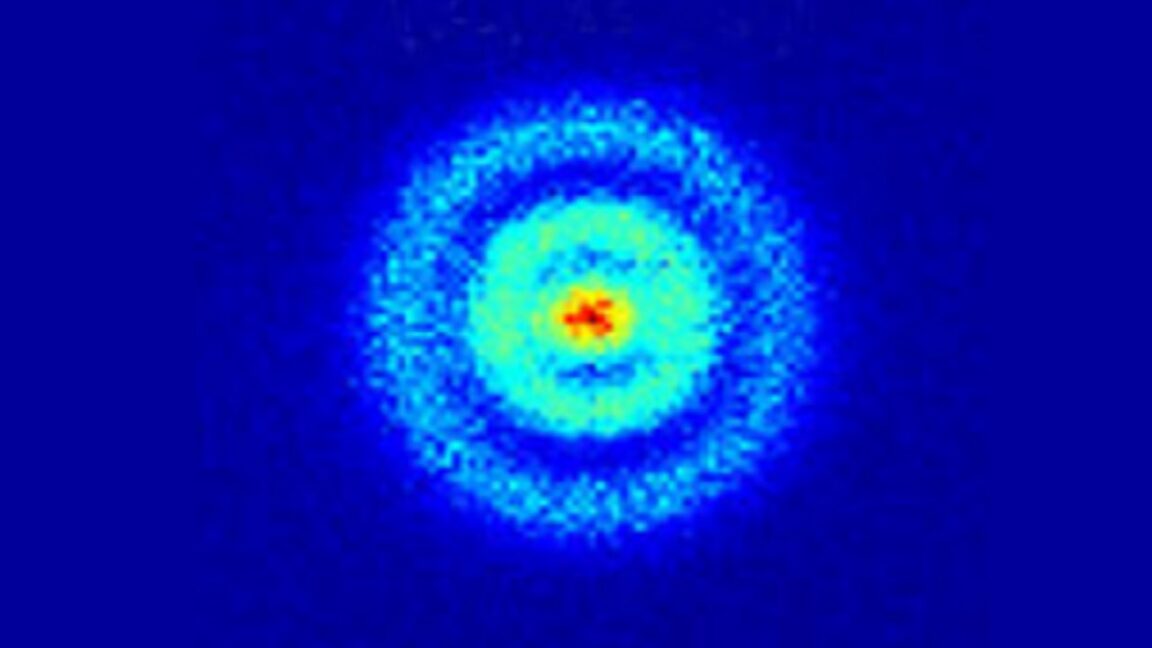
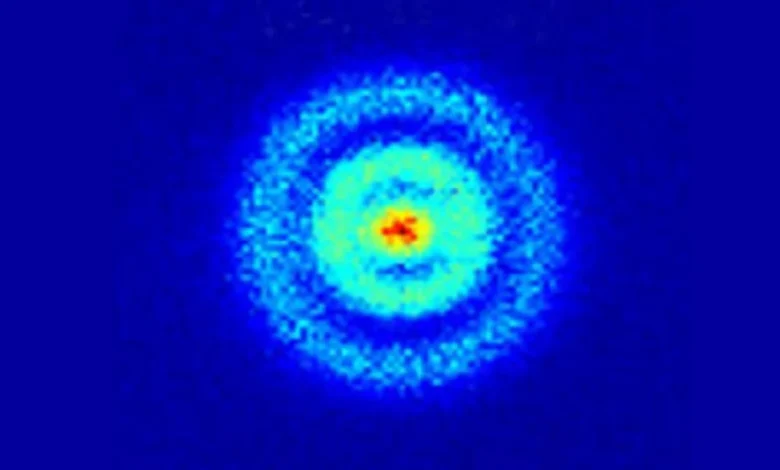
To understand the puzzle and its resolution, it’s crucial to grasp how physicists probe the subatomic world. While popular models often depict electrons orbiting the nucleus like planets around a sun (the Bohr model), quantum mechanics offers a more accurate, albeit counterintuitive, description. Electrons exist not as discrete particles in fixed orbits but as probability waves, encompassing all possible positions simultaneously in a "superposition of states." Only when a measurement is made does this wave function "collapse," yielding a specific position. Repeated measurements then reveal a fuzzy, orbit-like pattern, defining the electron’s orbital.
The proton’s charge radius is primarily measured using two main experimental approaches:
- Electron Scattering Experiments: In these experiments, a beam of high-energy electrons is directed at hydrogen atoms. By analyzing how the electrons are scattered or deflected by the proton’s electric field, physicists can infer the distribution of charge within the proton and thus its radius. This method directly probes the proton’s structure.
- Atomic Spectroscopy (Lamb Shift Measurements): This technique involves precisely measuring the energy levels of electrons within hydrogen atoms. According to quantum electrodynamics, the proton’s finite size slightly affects these energy levels, particularly the "Lamb shift" – a tiny difference between two specific energy levels (the 2S1/2 and 2P1/2 states). By measuring these energy level differences with extreme accuracy, scientists can indirectly deduce the proton’s charge radius. This method relies heavily on the precise predictions of QED.
A Decade of Discrepancy: A Chronological Journey
The seeds of the proton radius puzzle were sown in 2010 with a landmark experiment conducted at the Max Planck Institute of Quantum Optics in Garching, Germany. Researchers used a novel approach, replacing the electron orbiting the hydrogen nucleus with a muon – a particle that is essentially a heavier cousin of the electron, with identical charge but nearly 200 times its mass. This "muonic hydrogen" system offered a unique advantage. Due to its greater mass, a muon orbits much closer to the proton than an electron, significantly increasing its probability of being found inside the proton. This closer proximity made muonic hydrogen experiments approximately 10 million times more sensitive to the proton’s size than traditional electron-based methods.
The physicists anticipated measuring roughly the same proton radius as prior electron-based experiments, but with significantly reduced uncertainty. To their surprise, the muonic hydrogen experiment yielded a strikingly smaller proton radius of 0.841 femtometers. This value was not only smaller but also fell well outside the established error bars of the previous "world average" of 0.876 fm. The discrepancy was statistically significant, reaching five standard deviations (5-sigma), a threshold often considered the gold standard for a scientific discovery. This "incredible shrinking proton" immediately created a scientific conundrum, as it suggested either a flaw in the experimental setup, an error in the underlying theory of QED, or, most intriguingly, a hint of new physics that might differentiate how muons and electrons interact with protons.
The initial 2010 result was met with a mix of excitement and skepticism. The implications were profound: if correct, it could mean that the Standard Model was incomplete, requiring modifications to QED or the introduction of new particles or forces that interact differently with muons than with electrons. For instance, a hypothetical "fifth force" or a new particle could be mediating the interaction between the proton and the muon, altering the perceived radius.
Subsequent years saw a flurry of experimental efforts to either confirm or refute the muonic hydrogen result:
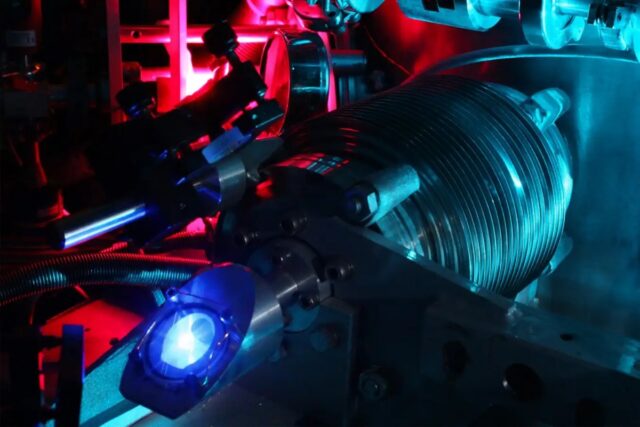
- 2013 Confirmation: The same international team from the Max Planck Institute performed another muon-based experiment, meticulously re-checking their methodology. Their new measurement confirmed the 2010 value, producing a proton radius of 0.84 fm with an even larger discrepancy of 7-sigma, further solidifying the puzzle.
- 2016 Muonic Deuterium Experiment: Researchers expanded their investigation to muonic deuterium, a heavier isotope of hydrogen containing a neutron in addition to a proton and a muon. The rationale was that the neutron’s presence might alter how electrons and muons "perceive" the proton’s charge. This experiment also yielded results consistent with the smaller muonic proton radius, reinforcing the idea that the discrepancy was not a simple experimental artifact.
- Mixed Electron-based Results (2017-2018): As the muonic results consistently pointed to a smaller proton, electron-based experiments also attempted to resolve the issue. A 2017 study using regular hydrogen confirmed the smaller, muonic value. However, a 2018 measurement, also using electron-based methods, paradoxically aligned with the larger, pre-2010 value, adding to the confusion and keeping the puzzle alive. This inconsistency among electron-based measurements highlighted the extreme difficulty and precision required for these experiments.
- 2019 Electron-based Consensus Shift: A crucial turning point came in 2019 when scientists at York University conducted a new, highly precise electron-based measurement of the proton radius. Their result, 0.833 femtometers, closely aligned with the smaller value obtained from the muonic hydrogen experiments, suggesting a potential convergence of electron and muon measurements towards the smaller radius. This experiment began to shift the balance, indicating that perhaps the problem wasn’t with muons after all, but rather with some of the earlier electron-based measurements.
The Final Nail: Latest High-Precision Experiments Confirm Smaller Radius
The culmination of these efforts arrived with the two recent papers, one co-authored by Lothar Maisenbacher of the University of California, Berkeley, published in Nature, and another co-authored by Dylan Yost of Colorado State University, published in Physical Review Letters. Both teams conducted new, independent experiments using ordinary hydrogen atoms in sophisticated vacuum chambers. They employed advanced laser spectroscopy techniques to precisely control the electrons and measure minute transitions between different atomic energy levels. By meticulously analyzing these transitions, they could infer the exact dimensions of the proton’s charge radius.
The results from both studies converged beautifully, reinforcing the smaller value. Yost et al.’s findings were approximately three times more precise than the 2019 electron-based measurement, while Maisenbacher et al.’s result achieved an even greater precision, twice that of Yost’s, reaching a coveted 5.5-sigma threshold of confidence. Critically, both experiments yielded a proton radius of approximately 0.84 femtometers, aligning squarely with the controversial 2010 muonic hydrogen measurement that initiated the puzzle.
"We believe this is the final nail in the coffin of the proton radius puzzle," stated Lothar Maisenbacher, a co-author of the Nature paper, underscoring the confidence in these new findings. Juan Rojo, a physicist at Vrije University Amsterdam, who was not involved in either experiment, commented to New Scientist, "The proton radius should be a universal property; it should give the same result no matter how you look at it. This is why these two papers are quite nice, because they provide different perspectives to the same number." This consensus from different experimental techniques using different particles (electrons in this case, echoing earlier muon results) provides compelling evidence for the smaller proton size.
Furthermore, Maisenbacher’s team utilized their precisely measured value to rigorously test the Standard Model’s predictions, achieving an astonishing accuracy of 0.7 parts per trillion. This extremely stringent test found no discrepancies, offering no hints of a new force or particle lurking in the quantum shadows.
Reactions and Implications: A Triumph for the Standard Model
The resolution of the proton radius puzzle, while perhaps "disappointing for the discovery of new physics" as Dylan Yost remarked, is a resounding triumph for the existing framework of fundamental physics. It reaffirms the incredible accuracy and predictive power of the Standard Model and, particularly, quantum electrodynamics. QED, which describes how light and matter interact, is arguably the most precisely tested theory in physics, and its ability to consistently describe phenomena across vast scales, now including the precise size of the proton, is remarkable.

The initial excitement about potential "new physics" stemmed from the possibility that muons and electrons, despite being described as fundamental particles within the Standard Model, might interact with the proton in subtly different ways, mediated by an unknown force or particle. The resolution, however, indicates that this is not the case. The difference in measurements was not due to a breakdown of theory or exotic new particles, but rather to the inherent experimental challenges and systematic uncertainties in some of the earlier electron-based measurements. Scientists now have a more robust and consistent value for the proton’s charge radius, which will serve as a more reliable input for future calculations and theoretical models.
"When the proton radius first came out, all the normal hydrogen measurements showed good agreement with each other, and muonic hydrogen was an outlier," Yost told Ars. "This gave everyone great hope that maybe there was some new physics that was really related to the difference between muons and electrons. So this is disappointing for the discovery of new physics, but it is exciting that we are performing such stringent tests of the Standard Model. We are getting results in precise agreement with theory that are reaching parts-per-trillion levels. It is a real testament to some incredible theoretical and experimental work over many decades."
This outcome highlights the rigorous self-correction mechanism of science. When confronted with conflicting data, the scientific community embarked on a comprehensive journey of re-evaluation, new experiments, and refined theoretical calculations. The eventual convergence of results, achieved through meticulous experimental design and cutting-edge technology, ultimately strengthens our confidence in the fundamental theories that underpin our understanding of the universe.
Beyond the Puzzle: Future Directions in Fundamental Physics
While the proton radius puzzle is now considered resolved, the quest for "new physics" continues unabated. Physicists are actively exploring other avenues where the Standard Model might fall short, such as the mysteries of dark matter and dark energy, the origin of neutrino masses, and the imbalance between matter and antimatter in the universe. Experiments at high-energy colliders like the Large Hadron Collider continue to search for new particles and forces. Precision measurements in other domains, such as the anomalous magnetic moment of the muon, still present intriguing discrepancies that could point to physics beyond the Standard Model.
The resolution of the proton radius puzzle serves as a powerful reminder of the importance of precision measurements in fundamental physics. Even tiny discrepancies, measured at the scale of femtometers and parts per trillion, can either reveal profound new physics or, as in this case, rigorously validate the enduring strength and accuracy of our existing theoretical frameworks. It is through this relentless pursuit of precision that humanity continues to unravel the deepest secrets of the cosmos.