Motion Picture Association Chairman Charles Rivkin Navigates the Dual Frontier of AI and Consolidation at CinemaCon

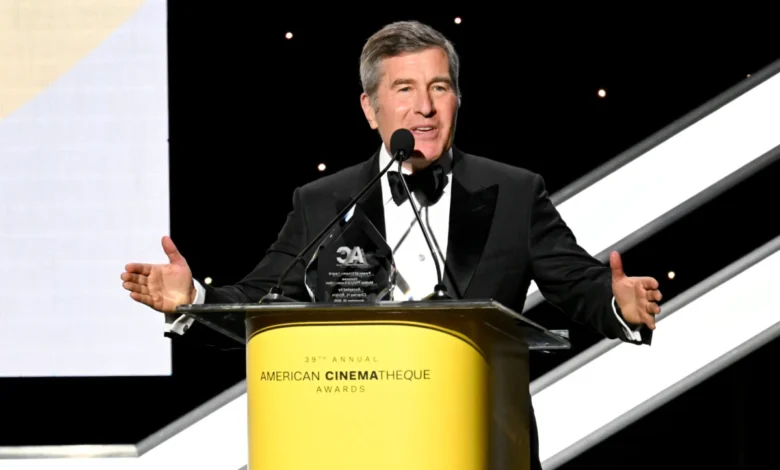
Las Vegas, NV – In a pivotal address at CinemaCon on Tuesday morning, Charles Rivkin, Chairman of the Motion Picture Association (MPA), found himself treading a delicate line, acknowledging the burgeoning concerns surrounding artificial intelligence (AI) while simultaneously championing its potential to revolutionize creative endeavors and bolster commercial viability within the film industry. Speaking to a packed audience of cinema operators, Rivkin framed the current moment as a transformative period, urging industry stakeholders to approach AI with a balanced perspective.
"We’ve entered the era of AI," Rivkin declared, setting the stage for a discussion that has loomed large over Hollywood since the dual actors’ and writers’ strikes of 2023. He cautioned against outright dismissal of AI’s potential dangers, but equally, he implored attendees not to overlook its "possibilities." Rivkin’s core message positioned AI not as a replacement for human ingenuity, but as a sophisticated tool designed to "enhance human creativity." He emphasized the imperative of developing and deploying AI "responsibly," envisioning its capacity to "improve the fan experience" and empower artists to "explore novel formats." This nuanced stance reflects the ongoing internal debate within major studios and streaming platforms, many of which are MPA members, regarding the strategic integration of AI.
The specter of AI has cast a long shadow over Hollywood, fueling widespread anxiety about potential job displacement as studios explore cost-saving production methods. The labor disputes of the previous year, which brought the entertainment business to a standstill, underscored the deep-seated concerns about AI’s impact on livelihoods. Despite this contentious backdrop, Rivkin drew a historical parallel, reminding the audience that cinema itself was once viewed as a disruptive technology that threatened established forms of entertainment.
A Legacy of Adaptation and Innovation
"Innovation is part of our DNA too," Rivkin asserted, drawing on a rich history of technological adoption within the film industry. He recounted how successive advancements, from the advent of sound to the proliferation of digital cinema, had repeatedly been met with predictions of the industry’s demise. Yet, in each instance, Hollywood had not only persisted but had "adapted," "thrived," and ultimately "embraced what technology could do in the hands of creators to bolster the art of storytelling." This historical perspective serves as a testament to the industry’s resilience and its capacity to integrate new tools to enhance, rather than diminish, its creative output.
The inherent tension in Rivkin’s address stems from the lack of a unified strategy among his member organizations – a consortium that includes giants like Warner Bros., Paramount, and Disney, as well as streaming behemoths such as Netflix and Amazon. While the allure of cost reduction through AI is undeniable, its potential to democratize high-end content creation also poses a threat to the established cultural dominance of these major players. This duality has led to significant legal skirmishes, with members like Disney and Comcast engaging in protracted battles against AI platforms accused of infringing on intellectual property by enabling the creation of content featuring their proprietary characters without authorization. Rivkin echoed these concerns, sounding a clear alarm regarding the protection of intellectual property.
Upholding Core Principles in the Age of AI
"But no matter what, no matter how AI might change the game, we will remain clear about our core principles," Rivkin affirmed, underscoring the MPA’s unwavering commitment to safeguarding intellectual property. He articulated these principles as the bedrock of the industry: "Protecting copyright as the engine of free expression" and "Defending intellectual property as the driving force of our creative community." Rivkin directly addressed the burgeoning argument that copyright laws should be relaxed to maintain a competitive edge in the global arena, labeling it a "false choice." He passionately advocated for a dual approach, asserting that "At our best, what sets our industry, and our country, apart is our fidelity to the rule of law, matched by our openness to change. We can and must do both." This statement highlights the MPA’s stance that technological advancement and robust legal protections are not mutually exclusive but rather complementary forces.
Cinema United’s Counterpoint: The Peril of Consolidation
While Rivkin navigated the complex landscape of AI, Michael O’Leary, chief of Cinema United, presented a starkly contrasting perspective, reiterating his firm opposition to the proposed merger between two MPA member entities, Paramount and Warner Bros. O’Leary, a prominent lobbyist for the exhibition industry, articulated concerns that such a consolidation would inevitably lead to a contraction in the number of films produced for theatrical release, directly impacting his constituency. "Further concentrating marketplace power in the hands of a smaller group of distributors that dictate the terms, windows, scheduling, screen-placement of movies, and access to historic film catalogs will have a real and lasting impact on Main Street and millions of movie fans around the world," O’Leary stated.
The proposed Warner Bros. and Paramount merger, which is anticipated to receive approval from the Trump administration, faces significant opposition from Cinema United. O’Leary has been actively lobbying state attorneys general and international legal bodies to scrutinize the economic ramifications of the deal, with the aim of delaying or even preventing its completion. His arguments are bolstered by historical precedent, citing Disney’s 2019 acquisition of 20th Century Fox as an example of how consolidation can result in a reduction of theatrical film output. "Unfortunately, history shows us that consolidation results in fewer films being produced for movie theaters," O’Leary emphasized, concluding that the transaction would be "harmful to exhibition, consumers and the entire entertainment eco-system." This highlights a fundamental divide between the major content creators and the entities responsible for their distribution and exhibition to the public.
Defending the Integrity of MPA Ratings
In a separate but significant announcement during his CinemaCon address, Rivkin proudly highlighted the MPA’s recent legal victory against Meta, the parent company of Instagram. The dispute centered on Meta’s attempt to leverage the MPA’s well-established "PG-13" rating terminology for its teen-focused Instagram accounts. Rivkin underscored the MPA’s commitment to protecting its intellectual property and the trust it has cultivated with families. "It’s not very often that the MPA takes on a $1.6 trillion company. But in this case, in defense of our ratings, and your theaters, and the trust we’ve built with families together – we knew it was the right thing to do," he remarked. He reiterated the crucial distinction between the curated experience of a movie theater and the vast, often unfiltered landscape of online content: "there’s something very distinct about what’s discovered in a theater from what users find online."
The conflict escalated last October when Meta announced plans to implement filters on Instagram restricting content for users under 18, employing terminology that mirrored the MPA’s PG-13 classification. The MPA contended that this constituted copyright infringement and threatened the integrity of its rating system, which has been a trusted guide for parents for decades. In a significant concession in March, Meta agreed to "substantially reduce" its references to the PG-13 rating and to incorporate a disclaimer clearly differentiating its own content moderation system from that of the MPA.
"Instagram and Meta agreed to the limits we demanded. Which keeps our ratings focused where they belong – on films you can see on the big screen," Rivkin declared, emphasizing the importance of maintaining clear distinctions in the media landscape. He issued a resolute promise: "on my watch, no one will confuse movies shown in your theaters with user-generated content people watch on their phones. We will always fight to defend the integrity of our ratings, no matter the adversary. We will always fight to preserve the trust we have forged with parents. We will always fight to protect theaters as trusted places of entertainment for everyone."
Rivkin, whose distinguished career includes a prior role as U.S. Ambassador to France under President Barack Obama, concluded his remarks by citing the remarkable public approval rating of the MPA’s ratings system, standing at an impressive 91%. "Nobody in politics gets those numbers," Rivkin observed, highlighting the profound trust and recognition the MPA’s classification system enjoys among the public, a trust he is committed to safeguarding in an increasingly complex media environment. This victory underscores the MPA’s ongoing efforts to protect the value and distinctiveness of theatrical filmgoing experiences in the face of digital proliferation and evolving content platforms.