The Architect of the Texas Round-Up
The success of Buc-ee’s barbecue program is inextricably linked to the expertise of Randy Pauly, the company’s Director of Barbecue. Pauly’s journey into the world of smoked meats began long before he joined the corporate ranks of the "Beaver Kingdom." Growing up in North Central Texas, Pauly was immersed in the meat industry from a young age; his grandfather was a butcher, and his father also worked in the meat business. This foundational knowledge of anatomy and cut quality provided Pauly with a technical advantage that would later define his professional career.
Before becoming the face of Buc-ee’s barbecue, Pauly served as a firefighter in Houston, a profession that has a long-standing cultural connection with the art of slow-cooking meat. However, his competitive drive led him to the barbecue circuit, where he quickly became a formidable force. At just 20 years old, Pauly secured his first world championship, a feat that signaled the arrival of a major talent in the industry. He later founded and led the Holy Cow Cookers, a competitive barbecue team that has amassed nine Grand Championship titles.
Pauly’s reputation for excellence eventually caught the attention of the Food Network. He was selected to compete in the second season of "Chopped Grill Masters," a specialized iteration of the popular cooking competition that focuses on outdoor cooking and smoke profiles. His appearance on the national stage cemented his status as a master of the craft, making him the ideal candidate for Buc-ee’s when the chain decided to institutionalize its barbecue offerings for a massive, multi-state audience.
A Chronology of Expansion and Culinary Evolution
Buc-ee’s was founded in 1982 by Arch "Beaver" Aplin III and Don Wasek, with its first location opening in Lake Jackson, Texas. For the first two decades of its existence, the company functioned as a high-quality but relatively standard chain of convenience stores. The shift toward the "travel center" model—massive facilities designed for long-haul travelers—began in 2003 with the opening of the Luling, Texas, location. It was during this period of upscaling that the food program became a central pillar of the brand’s identity.
As Buc-ee’s began to plan its expansion beyond the borders of Texas, leadership recognized that the brand’s "Texas-ness" was its most valuable asset. Nothing represents Texas culinary culture more than brisket. To scale this traditionally artisanal product, the company brought Pauly on board to bridge the gap between small-batch competition quality and the high-volume demands of a travel center that sees thousands of customers daily.
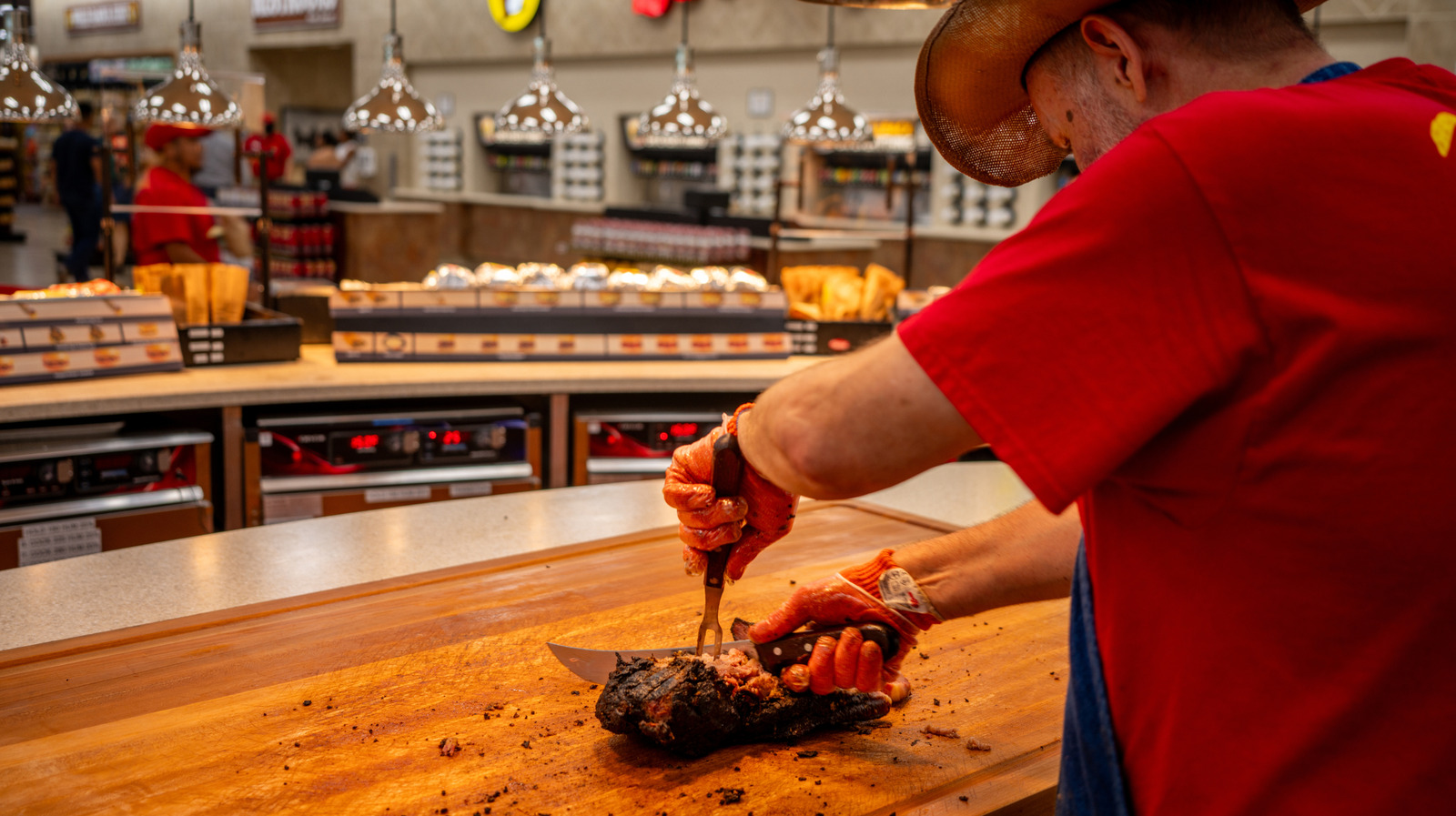
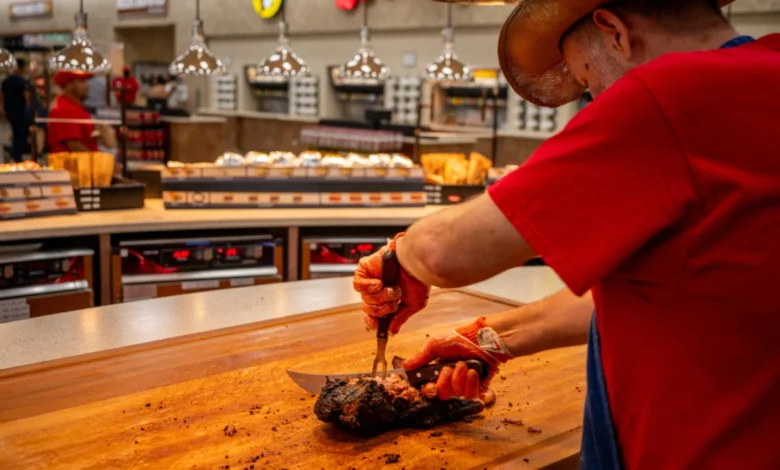
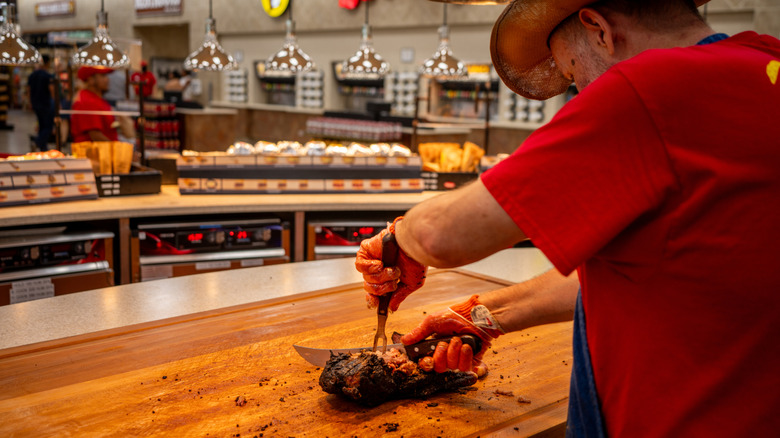
In 2019, Buc-ee’s opened its first location outside of Texas in Baldwin County, Alabama. This marked the beginning of an aggressive expansion strategy that has since seen the brand move into Georgia, Florida, Kentucky, South Carolina, Tennessee, Missouri, Colorado, and Wisconsin. In every new market, the central attraction remains the "Texas Round-Up" station, a circular butcher block where employees in signature aprons slice steaming briskets in full view of the public.
The Technical Rigor of the Buc-ee’s Brisket
One of the most significant challenges in the barbecue industry is maintaining quality at scale. Traditional barbecue is a labor-intensive process that relies on "feel" and environmental variables. Pauly’s primary contribution to Buc-ee’s has been the development of a standardized system that replicates the "low and slow" philosophy of a world-class smokehouse within a retail environment.
Unlike many national chains that utilize liquid smoke or electric ovens to mimic the flavor of barbecue, Buc-ee’s utilizes a traditional smoking process. The briskets are seasoned with a proprietary rub developed by Pauly—one that mirrors the flavor profiles used in his award-winning competition entries. These briskets are then smoked for up to 18 hours. This extended cook time is essential for breaking down the collagen in the tough brisket muscle, resulting in the tender, rendered fat and "bark" that customers expect.
The commitment to "no shortcuts" is a mantra Pauly has instilled in the staff. Each new location requires a rigorous training period where employees are taught the specific mechanics of the "Texas Round-Up." This includes the proper way to trim a raw brisket, the exact temperature management of the smokers, and the theatrical but functional art of slicing the meat to order. The "Texas Round-Up" station is designed to be a sensory experience; the sound of the rhythmic chopping and the shout of "Fresh brisket on the board!" are calculated elements of the Buc-ee’s atmosphere.
Supporting Data: The Economics of the Brisket Sandwich
The scale of Buc-ee’s food operations is reflected in its sales data. Within a store that can stock upwards of 50,000 unique items—from home decor to outdoor grills—the brisket sandwich consistently ranks as the number one selling item across the entire chain. The sliced brisket, sold by the pound, holds the number two spot.
Industry analysts point to several factors that contribute to these high volumes:
- Accessibility: Buc-ee’s provides a "middle ground" for barbecue. While legendary Texas BBQ joints often have four-hour waits and sell out by noon, Buc-ee’s offers a high-quality alternative available 24/7 (though the slicing station typically operates during peak daytime and evening hours).
- Consistency: Through Pauly’s training protocols, a customer in Sevierville, Tennessee, receives a product that is nearly identical to one purchased in New Braunfels, Texas.
- Volume-Based Pricing: By leveraging its massive footprint, Buc-ee’s can offer premium smoked meats at a price point that is often lower than boutique barbecue restaurants.
For customers requiring even larger quantities, the chain offers the ability to purchase whole briskets. While the sandwiches are the primary driver of foot traffic, the sale of whole briskets (which can weigh between 8 and 12 pounds after cooking) highlights the store’s role as a catering resource for local communities.
Broader Impact and Industry Implications
The "Pauly Effect" at Buc-ee’s has had a ripple effect across the convenience store and quick-service restaurant (QSR) industries. The success of the brisket program has forced competitors to re-evaluate their food service models. The "gas station food" stigma, once defined by shriveled hot dogs and pre-packaged sandwiches, is being dismantled by the "travel center" evolution.
Market analysts suggest that Buc-ee’s has successfully tapped into "culinary tourism." Travelers frequently plan their routes specifically to include a stop at a Buc-ee’s, not just for fuel, but for the specific purpose of eating. This has turned the convenience store into a "destination brand," a status usually reserved for theme parks or major landmarks.
Furthermore, the involvement of a high-profile figure like Randy Pauly illustrates a growing trend of "chef-driven" convenience food. By hiring a pitmaster with a Food Network pedigree, Buc-ee’s signaled to the market that it treats its food program with the same seriousness as a standalone restaurant. This move has validated the idea that high-quality, artisanal food can be successfully commodified and scaled without losing its soul, provided the technical fundamentals remain uncompromised.
Future Outlook
As Buc-ee’s continues its march across the United States, with planned locations in states as far-reaching as Arizona and North Carolina, the role of Randy Pauly and the barbecue program will remain central to the brand’s expansion. The challenge will lie in maintaining the supply chain for high-quality beef and ensuring that the 18-hour smoking process is strictly adhered to in regions where barbecue culture is less ingrained.
However, the foundation laid by Pauly appears robust. By combining the discipline of a firefighter, the precision of a competition pitmaster, and the reach of a corporate giant, Buc-ee’s has redefined what is possible in the realm of roadside dining. The brisket, backed by Food Network-level expertise, remains the crown jewel of the Beaver Nuggets empire, proving that even in the fast-paced world of interstate travel, there is still a massive market for things done the slow, traditional way.