Indiana’s Political Earthquake: Trump’s Redistricting Revenge Ignites Fierce GOP Primary Battles

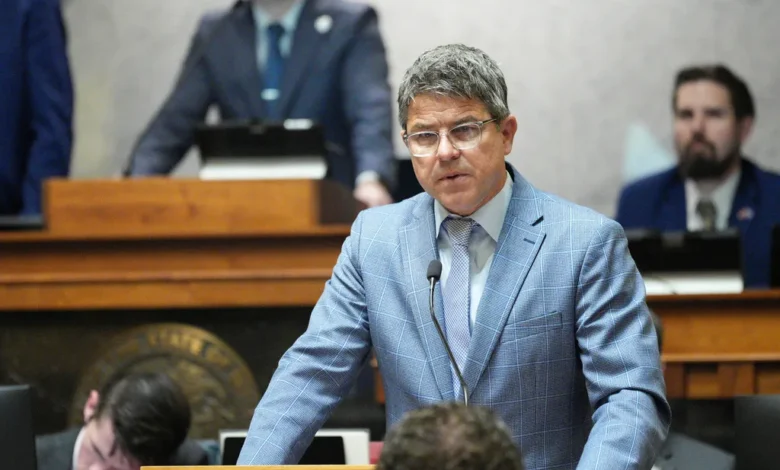
The political landscape of Indiana is currently experiencing an unprecedented upheaval, as a battle initiated by former President Donald Trump over congressional redistricting has transformed traditionally quiet state Senate primaries into a high-stakes arena of national political warfare. At the heart of this conflict stands State Senator Greg Walker, a figure whose own political rise was predicated on challenging established Republican power, now finding himself ironically targeted by a similar narrative orchestrated by powerful national conservative forces. The saga encapsulates a broader struggle within the Republican Party, pitting loyalty to the Trump agenda against the independence of state-level governance, all while a projected $10 million in outside spending threatens to redefine "Hoosier nice" politics.
For nearly two decades, State Senator Greg Walker (R-Columbus) has been recognized as a formidable force within the Indiana Republican Party, known for his willingness to challenge the status quo. His most notable achievement came in 2006 when he orchestrated a stunning upset against long-serving state Senate leader Bob Garton, whom Walker famously branded a "RINO" (Republican In Name Only). Garton had been an entrenched figure, serving in office since 1970 and helming the Senate GOP since the early 1980s. Walker’s campaign, characterized by his touring of the Columbus-centered state Senate district in a refurbished orange 1970 Slant-6 Plymouth Valiant, where supporters scrawled messages in permanent marker, galvanized anti-establishment sentiment. He argued passionately that it was time to "trade in" Garton, akin to an old car past its prime. On May 2, 2006, Walker clinched victory by a mere 611 votes out of 13,573 cast, a narrow but decisive outcome that sent shockwaves through the state’s political establishment. This seismic shift ultimately cleared a path for the ascent of current state Senate leader Rodric Bray, setting the stage for a future confrontation that would echo Walker’s own past.
The Genesis of Conflict: Trump’s Redistricting Imperative
The current conflagration has its roots in December 2025, when Indiana found itself at the epicenter of a national political drama. Former President Donald Trump and his allies launched an aggressive, months-long campaign to compel Indiana lawmakers to redraw congressional maps. The objective was clear: extract two additional Republican House seats from the Hoosier State, aiming to transform its 7-2 Republican majority into an unprecedented 9-0 shutout. This move was deemed "eminently doable" in a state where Trump had decisively defeated his 2024 Democratic rival, Kamala Harris, by a margin of 58% to 40%. The proposed redistricting plan specifically targeted House districts held by Democrats in Indianapolis and northwest Indiana, areas typically considered Democratic strongholds.
From Trump’s perspective, securing more House seats was not merely about expanding Republican power but about erecting a crucial "bulwark" against potential Democratic control in the upcoming November 3, 2026, midterm elections. With House Republicans projected to hold a precarious 220-215 edge over Democrats, every seat gained through redistricting was viewed as vital. The White House repeatedly warned that a Democratic-controlled House could lead to renewed impeachment efforts and endless investigations, potentially undermining Trump’s second term. As Tony Samuel, Indiana co-chairman of Trump’s 2016 campaign, articulated, "Anyone naive enough to believe that Democrats won’t use the majority in Congress to obstruct and impeach the president and attempt to bring back policies that will hurt the U.S is sadly mistaken." Samuel further emphasized what he saw as the state legislators’ "national responsibility" to secure these seats, questioning why Republican lawmakers would "vote to tie his hands behind his back two years later" if they supported Trump in 2024.
Defiance in the Statehouse: Rodric Bray and the "Hoosier Nice" Backlash
Despite intense pressure from the Trump White House and its surrogates, the effort to force mid-decade redistricting in Indiana met unexpected resistance. State Senate leader Rodric Bray, himself the son of a longtime state legislator, Richard Bray, and grandson of Congressman William G. Bray (who served from 1951 to 1975), emerged as a central figure in this defiance. Bray, first elected to the state Senate in 2012, rallied a significant bloc of Republicans against the plan. Twenty-one of the state Senate’s 40 Republicans joined forces with the chamber’s 10 Democrats, forming a unified front that ultimately sank the Trump White House’s redistricting proposal on December 10, 2025.
The opposition was not without its internal struggles. Governor Mike Braun (R-IN) initially expressed reservations about the mid-decade redistricting but eventually relented to White House pressure, calling lawmakers back to the state Capitol for a special session in December 2025. However, Bray and other state senators had already communicated their concerns to both Braun and the White House, advising against the measure. Public sentiment in Indiana largely mirrored the lawmakers’ skepticism. Multiple polls conducted in the months leading up to the December vote consistently showed that a majority of Hoosiers opposed mid-decade redistricting, preferring lawmakers to focus on everyday challenges. A notable poll from Christine Matthews of Bellwether Research even warned legislators that supporting the new map could jeopardize their reelection prospects. This widespread opposition underscored a deeper cultural resistance to national political interference in state affairs, a sentiment often encapsulated by the notion of "Hoosier nice" – a preference for collegiality and local focus over aggressive, partisan tactics.
A Broader National Context of Redistricting Efforts
Indiana’s redistricting battle was part of a larger national "political arms race" following the 2024 elections. Republicans had seen varied success in their efforts to redraw maps across the country. In Texas, a new map was anticipated to yield up to five additional House seats for the GOP, representing a significant political jackpot. North Carolina and Missouri also passed more favorable Republican maps, though the Missouri map faced potential rejection by voters in a special election. Ohio’s bipartisan commission, in a rare compromise, approved a new map that could gain Republicans one or two seats. Florida Republicans were also slated to take up redistricting in an April 20-24, 2026, special session, with Governor Ron DeSantis, who had a famously contentious relationship with Trump during the 2024 primaries, at the helm.
However, the Republican redistricting agenda faced setbacks elsewhere. Democratic efforts in California aimed to overrule independent commission-drawn maps, and Virginia voters might approve a similar measure if the state Supreme Court signs off. A new court-ordered map in Utah was expected to allow Democrats to pick up a seat. Even in strongly Democratic states, some leaders resisted aggressive gerrymandering; Maryland’s Democratic state Senate president, for instance, appeared likely to block a map designed to eliminate the state’s lone remaining House Republican, Rep. Andy Harris. Yet, no state’s defiance seemed to enrage Trump as much as Indiana’s, and no group of Hoosiers drew his ire more directly than the state Senate Republicans who blocked his plan.
The "Political Revenge" Campaign: National Forces Descend on Indiana
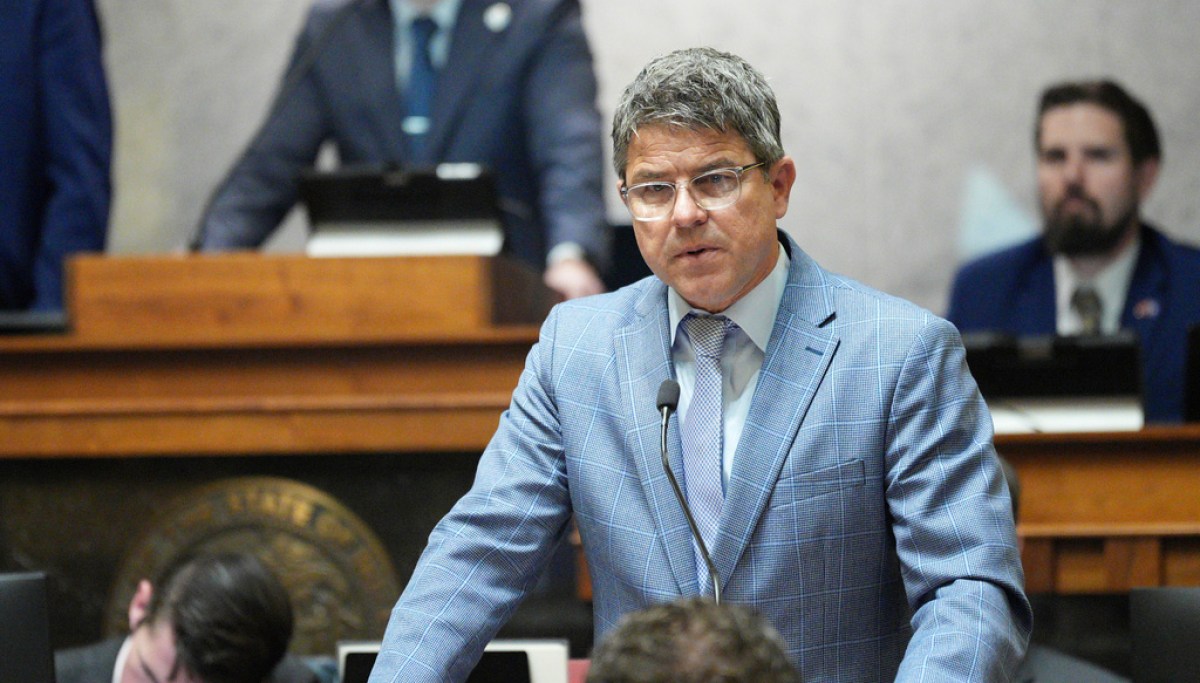
Thwarted in their redistricting efforts, Team Trump wasted no time in orchestrating a campaign of "political revenge" against the state legislators who had defied the White House. With the May 5, 2026, GOP primaries looming – elections that often effectively determine general election outcomes in deep-red Indiana – six incumbent Republicans, including Greg Walker, became prime targets for defeat. Walker, in a stark twist of fate, was now being painted as a "RINO" who had been in office too long, an ironic echo of the very charge he leveled against Bob Garton two decades prior.
The difference, however, was the scale of the opposition. This was no longer a lone insurgent in a refurbished Plymouth Valiant. An estimated $10 million in promised funding from the nation’s most powerful Republicans began to pour into Indiana, aimed at unseating the recalcitrant state senators. A powerful trio of Indiana state Senate alumni – Senator Jim Banks (R-IN), Representative Erin Houchin (R-IN), and Trump 2024 Indiana co-chairman Carlin Yoder – worked closely with the White House to guide endorsements for six challengers in districts where incumbents had voted against the White House map.
National conservative organizations quickly joined the fray. The Club for Growth, under the direction of veteran Indiana politician David McIntosh, committed $1.5 million to the cause. Veteran Republican election lawyer Jim Bopp, known for his work with Citizens United and his long tenure as a Republican National Committee member, began working the courts from his native Terre Haute. Turning Point USA deployed field organizers across the state, mirroring the grassroots tactics once employed by Tea Party groups. Americans for Prosperity, another influential conservative advocacy group, engaged in other races against long-standing incumbents who, while not facing formal Trump challengers, were perceived as not sufficiently aligned with the national conservative movement. Even former GOP titan Mitch Daniels, who had previously flirted with a 2024 Senate run and famously took a "vow of political celibacy" during his time as president of Purdue University after serving as Indiana governor (2005-2013), broke his silence to support the reelection bid of his former aide-de-camp, state Senator Spencer Deery. Conspicuously absent from this all-out GOP war was Trump’s own former vice president, Mike Pence, who remained notably quiet.
Erosion of Decorum: Threats and Intimidation
The political intensity brought by the national intervention had a chilling effect on Indiana’s traditionally more genteel political culture. Veteran lawmakers expressed shock and dismay as the "swatting," death threats, and "feral rage" that had permeated national politics for a decade began to pierce their Indianapolis sanctum. State senators, much like their federal counterparts, typically expect a high level of decorum, often chastising lobbyists for personal insults during committee hearings. As Jacob Stewart, a former press secretary for Indiana Senate Republicans and now deputy opinion editor at The Indianapolis Star, noted, "These people are all very involved in their communities outside of the Senate. A lot of them are older, and I think they feel they have earned that respect." Indiana, like most states, operates with a "citizen legislature," meaning lawmakers hold other careers outside the Capitol and are deeply integrated into their local communities.
The threats were not merely rhetorical. In mid-November 2025, the Terre Haute Police Department and the Vigo County Sheriff’s Office responded to a fake report of a domestic violence emergency at the home of state Senator Greg Goode. Officers arrived to find Goode, his wife, and children rushing out, only to be met with apologies from the police who realized it was a "swatting" incident – a dangerous prank designed to elicit a large armed law enforcement response. Similarly, longtime conservative state Senator Jean Leising, 77, who first entered the state Senate in 1989 and is known for her annual proposals to mandate cursive teaching in schools, reported on December 1, 2025, that her home was the target of a bomb threat. She directly attributed the incident to Indiana’s brewing redistricting battle.
Greg Walker himself experienced such intimidation. After the state Senate Republicans voted against the White House map, someone left a wrapped box on his doorstep with his name scrawled in magic marker. He immediately called Columbus police, who dispatched their bomb squad. They worked until past midnight before determining the package was a hoax. The incident, though terrifying, proved to be a turning point for Walker. Having served nearly 20 years, with his children grown and his wife having passed away two years prior, he had not planned to seek reelection. However, the attempt to bully him reignited his resolve. "That’s what bullies do, they make empty threats," Walker stated. "Do I want to see Indiana legislators responding to empty threats from Washington?" He re-entered the race, vowing not to be intimidated into submission. The Indiana State Police confirmed they are still investigating the threats against lawmakers, with no public updates available yet.
The Hoosier Throwdown: Unpredictable Primary Outcomes
As the May 5 primary Election Day approaches, the outcome of the "Hoosier throwdown" over redistricting remains highly uncertain. State Senate primaries in Indiana are typically low-turnout affairs, often decided by hundreds, sometimes a few thousand, votes, with most races seeing little over 10,000 primary voters. This dynamic makes them particularly susceptible to well-funded, targeted campaigns.
Trump allies are confident in their strategy. One individual close to the White House campaign operation, spearheaded by Banks, Houchin, and Yoder, highlighted the political team’s "vaunted data operation," which was prominently displayed during the 2024 campaign, as a key tool in identifying and supporting challengers. Furthermore, a longtime Indiana Republican observed that targeting races in cities like Lafayette, near Purdue University, and Terre Haute could maximize the efficiency of advertising spending, as these cities have their own modest media markets, allowing campaign cash to go further than in larger, more expensive markets like Indianapolis or the Chicago exurbs of Lake County.
Conversely, many veteran lawmakers and their supporters believe that decades of dedicated service, regular appearances at Veterans of Foreign Wars halls, parades, and other community events should provide enough insulation against outside interference. These deep-rooted local connections, they argue, are invaluable in traditionally low-vote battles. Greg Walker himself recalled that it was "conservative diehards" who showed up to propel him to victory two decades ago. The critical question now is whether enough of these veteran Republicans will mobilize to protect Walker and other targeted incumbents, or if they will become the latest "big game" bagged by a new wave of angry Trump-aligned voters. The unprecedented influx of national money and the accompanying aggressive tactics signal a fundamental shift in Indiana’s political landscape, potentially forever altering the state’s famed "Hoosier nice" political culture and setting a precedent for national intervention in local electoral contests.