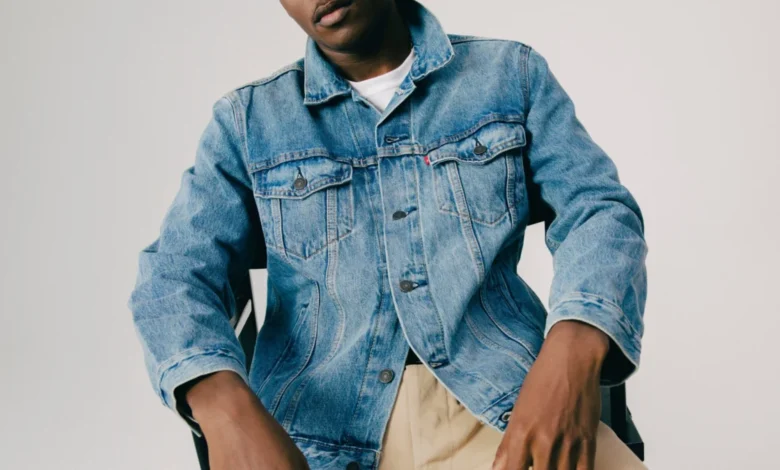
The men’s denim jacket, alternatively known as the trucker jacket or jean jacket, remains a foundational pillar of the American wardrobe, transcending its utilitarian origins to become a versatile staple of modern menswear. Originally designed as rugged outerwear for laborers, miners, and cowboys, the denim jacket has undergone a century-long evolution, shifting from a pragmatic uniform to a high-fashion statement. Today, the market for these garments is stratified across various price points and styles, ranging from mass-market heritage brands like Levi’s to artisanal Japanese labels such as Kapital and The Real McCoy’s. As consumers increasingly prioritize durability and timeless aesthetics, the denim jacket’s ability to develop a unique patina through years of wear has solidified its status as an investment piece that, much like fine wine, improves with age.
The Historical Evolution of an American Icon
The lineage of the denim jacket is inextricably linked to the development of blue jeans in the late 19th century. While denim trousers gained popularity following the 1873 patent by Levi Strauss and Jacob Davis, the accompanying outerwear followed shortly after. The historical chronology of the denim jacket is typically defined by three distinct iterations popularized by Levi Strauss & Co., which set the standard for the entire industry.
The Type I (Early 1900s – 1953)
The first official denim jacket, known as the Type I (506XX), was introduced around 1905. It was characterized by a single chest pocket, a cinch-back strap for fit adjustment, and vertical pleats along the front placket intended to allow for expansion. This was a purely functional garment designed for physical labor.
The Type II (1953 – 1962)
In 1953, the Type II (507XX) was launched, reflecting a post-war shift toward more balanced proportions. It removed the cinch back in favor of waist-adjustment tabs and added a second chest pocket, creating a symmetrical appearance that remains a favorite among vintage enthusiasts and contemporary designers like Ralph Lauren and The Real McCoy’s.
The Type III (1962 – Present)
The most ubiquitous version of the denim jacket, the Type III or the "Trucker Jacket," was introduced in the early 1960s. It featured a slimmer, more tapered fit and distinctive "V" seams running down the front. This silhouette has become the blueprint for the modern denim jacket, adopted by nearly every major apparel brand in the world.
Market Analysis: The Contemporary Denim Landscape
The global denim market, valued at approximately $70 billion as of 2023, has seen a resurgence in heritage and "slow fashion" movements. Consumers are increasingly moving away from disposable fast fashion in favor of garments with proven longevity. This shift has created a diverse marketplace where technical specifications—such as denim weight, weave type, and origin—drive consumer value.

Data suggests that "raw" or unwashed denim has seen a significant uptick in interest among enthusiasts. Raw denim allows the wearer to create personalized fade patterns, a process that can take years. Conversely, the "vintage wash" market remains dominant for the general consumer who seeks the aesthetic of a decades-old jacket without the initial stiffness of raw fabric.
The Rise of Japanese Artisanal Denim
Following World War II, Japanese manufacturers began obsessively replicating American denim production methods, often utilizing vintage Toyoda looms that produce "selvedge" denim. This artisanal approach has made Japan the epicenter of high-end denim. Brands like Kapital and The Real McCoy’s utilize these labor-intensive methods to create garments that command prices exceeding $3,000, catering to a "grail-seeker" demographic that views clothing as collectible art.
Categorizing the Best-in-Class Offerings
The current market offers a spectrum of denim jackets tailored to different lifestyles, from the rugged workwear enthusiast to the avant-garde fashion follower.
The Heritage Standard: Levi’s Trucker Jacket
Levi’s remains the industry benchmark. The brand’s Type III Trucker Jacket is widely considered the best overall option for its balance of price, durability, and iconic silhouette. Retailing for under $100, it provides a midweight denim suitable for year-round layering. Industry experts often cite the Levi’s Trucker as the most accessible entry point into the genre, offering a fit that has remained largely unchanged for over 60 years.
The Workwear Alternative: Alex Mill Work Jacket
While the trucker silhouette is dominant, the "chore coat" or work jacket offers a more relaxed, boxy alternative. Alex Mill has emerged as a leader in this category, utilizing 100% cotton Japanese denim to create a garment that bridges the gap between a traditional blazer and a rugged outer layer. The inclusion of functional elements, such as multiple patch pockets and a hidden phone pocket, emphasizes the utilitarian roots of the fabric.
The Artisanal Reproduction: The Real McCoy’s Lot. 001XXJ
For the "vintage fiend," The Real McCoy’s offers an uncompromising reproduction of the 1950s Type II jacket. Based in Japan, the brand is renowned for sourcing specific vintage looms to recreate the "slubby" texture characteristic of mid-century denim. These jackets are often produced in limited quantities, leading to high resale values and "sold out" statuses at global retailers.
The Luxury Avant-Garde: Kapital Boro Jacket
At the highest end of the spectrum is the Kapital Boro jacket. Utilizing the Japanese "Boro" technique—a method of patching and repairing textiles—each jacket is a patchwork of distressed scraps. This labor-intensive process results in a garment that feels like a vintage artifact. Despite its shredded appearance, the interior is often lined with premium satin, highlighting the intersection of rough workwear and high luxury.

Technical Specifications: What Defines Quality?
When evaluating a high-quality denim jacket, industry analysts and tailors point to several key metrics:
- Denim Weight: Measured in ounces (oz) per square yard. Most standard jackets range from 12oz to 14oz. Lighter weights (under 10oz) are more comfortable but less durable, while "heavyweight" denim (over 16oz) provides superior protection and longevity but requires a painful "break-in" period.
- Weave and Twill: "Right-hand twill" is the most common and results in a flatter surface. "Left-hand twill," famously used by Lee, tends to be softer and creates more vertical fading patterns.
- Hardware: High-quality jackets utilize brass or copper rivets and shanks. Brands like RRL and Lee 101 often use embossed hardware that reflects historical accuracy, such as the "Cowboy" buttons on premium ranch-hand lines.
- Construction: Double-needle stitching and chain-stitching at high-stress points (like the armholes and hem) are indicators of a garment built to withstand years of tension.
Broader Impact and Cultural Implications
The enduring popularity of the denim jacket reflects a broader cultural desire for authenticity and ruggedness in an increasingly digital world. The garment serves as a "blank canvas" for the wearer; a jacket worn by a mechanic will develop grease stains and abrasions that tell a different story than a jacket worn by a city dweller.
Furthermore, the denim jacket has played a pivotal role in subcultural movements. From the 1950s "greaser" aesthetic and 1970s punk rock to the 1990s grunge movement, the jacket has symbolized rebellion and working-class pride. In the 2020s, the "double denim" look—pairing a denim jacket with matching jeans—has moved from a fashion faux pas to a celebrated "Canadian Tuxedo," embraced by celebrities and runway designers alike.
Conclusion and Market Outlook
The market for men’s denim jackets shows no signs of contraction. As sustainability becomes a core concern for the textile industry, the denim jacket’s inherent durability makes it an ideal candidate for the circular economy. Repair services and the second-hand vintage market for denim are thriving, with rare Type I and Type II jackets from the early 20th century fetching tens of thousands of dollars at auction.
For the modern consumer, selecting the "best" jacket is a matter of identifying where they sit on the spectrum of utility versus fashion. Whether it is a $48 Gap classic or a $3,000 Kapital masterpiece, the denim jacket remains one of the few items in a man’s wardrobe that is guaranteed to never go out of style. As long as denim continues to be the fabric of the people, the denim jacket will remain the MVP of menswear, providing a reliable, durable, and increasingly beautiful layer for generations to come.