Tensions Boil Over on the Ohio Campaign Trail as Amy Acton and Vivek Ramaswamy Clash Over Debates and Personal Attacks

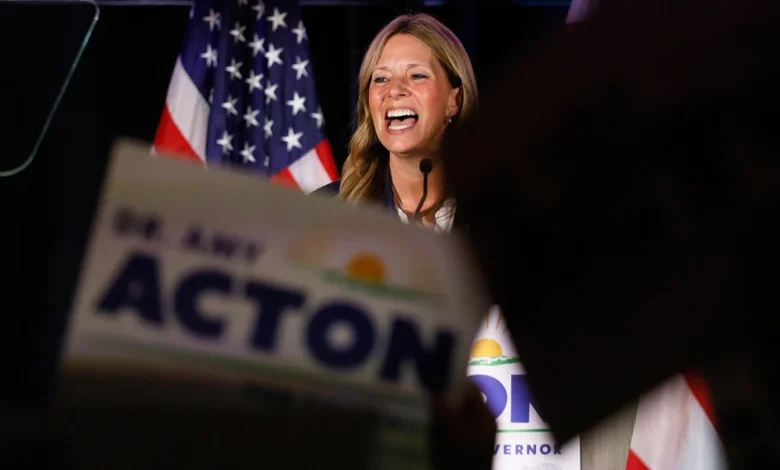
The race for the Ohio governorship has entered a volatile phase, marked by escalating tensions, sharp rhetoric, and physical altercations on the campaign trail. As the November 3 general election approaches, the contest between Democratic nominee Dr. Amy Acton and Republican nominee Vivek Ramaswamy has intensified significantly. What began as a traditional policy disagreement over debate scheduling has devolved into a multi-front political battle characterized by aggressive campaign tactics, digital warfare, partisan finger-pointing, and a recent physical confrontation involving campaign staff and a political activist.
The latest flashpoint occurred on a Saturday afternoon in Harrison, Ohio, during a scheduled campaign stop for Acton, the state’s former health director. The incident highlights the toxic atmosphere permeating high-stakes midterm elections nationwide, where the boundaries between public discourse, digital activism, and physical security continue to blur.
The Harrison Confrontation: A Clash on the Campaign Trail
The confrontation in Harrison unfolded as Acton was navigating a crowd of supporters and local residents. A Republican political activist, wielding a camera and operating in the style of independent digital trackers common in modern politics, approached the Democratic gubernatorial candidate.
The cameraman bypassed perimeter boundaries to confront Acton directly, pressing her on a central controversy of the race: her ongoing refusal to participate in scheduled debates against Ramaswamy.
"Dr. Amy Acton, why do you refuse to debate your opponent, Vivek Ramaswamy?" the interviewer asked repeatedly as the candidate walked briskly away.
Instantly, Acton’s campaign personnel moved to intercede. Security and staff members physically blocked the cameraman, demanding he cease recording. "No photos, no videos," staff members repeated forcefully. "I said—no pictures, no interviews."
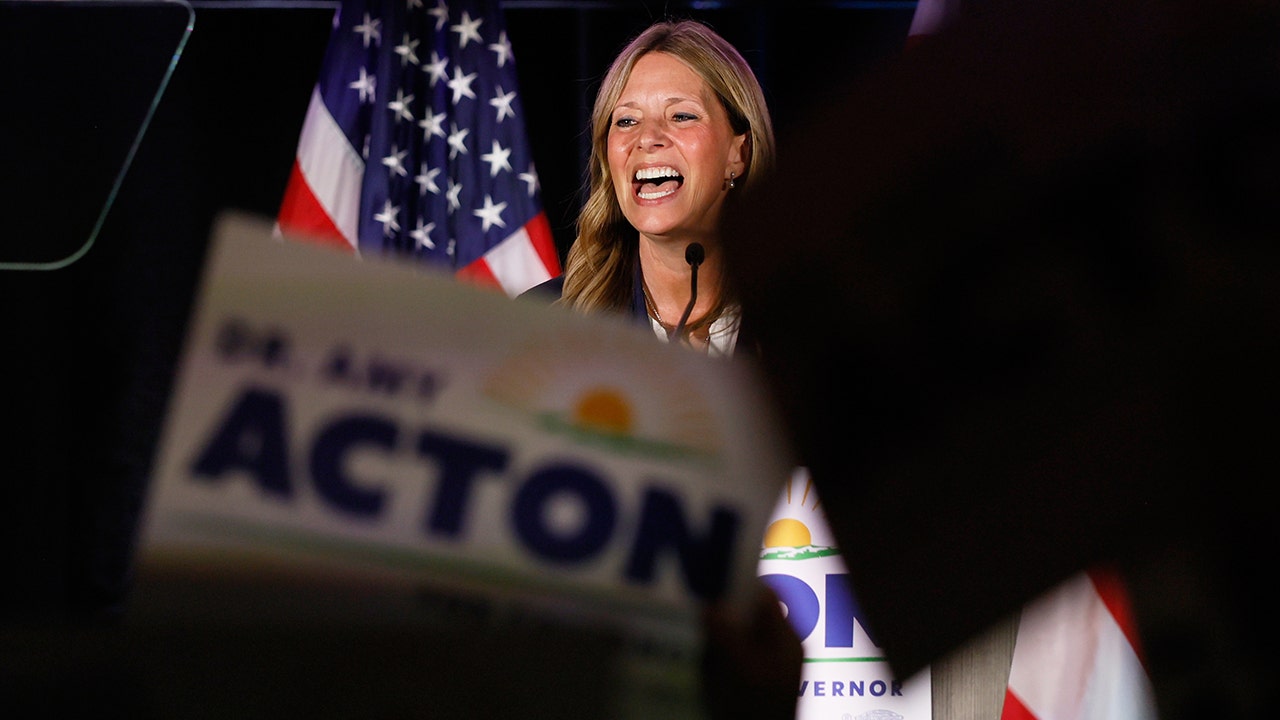
During the scramble, a staff member collided with the cameraman, jolting his equipment violently out of frame and prompting a warning from the operator to be "careful." Acton herself maintained silence throughout the exchange, refusing to acknowledge the questions before being escorted into a secure vehicle.
Videos of the interaction circulated rapidly across social media platforms, providing fodder for both campaigns. Ramaswamy’s team seized on the footage as evidence of what they describe as a pattern of evasion by the Democratic candidate, while Acton’s defenders argued that the incident was an example of targeted harassment and aggressive stalking designed to provoke a reaction.
The Debate Stalemate: Core Disagreements and Refusals
At the heart of the current political standoff is the question of debates. Earlier in the month, Ramaswamy formally accepted a debate invitation extended by CNN, aiming to put his opponent on the spot in a high-profile, statewide forum. Acton’s campaign swiftly rejected the invitation, asserting that a debate would only serve to amplify what they characterized as bad-faith tactics from the Republican camp.
The refusal to debate has become a central narrative of Ramaswamy’s campaign. The wealthy entrepreneur and political newcomer, who made waves on the national stage during the 2024 presidential primaries, has poured unprecedented financial resources into his bid for the Ohio executive mansion. Ramaswamy recently shattered state fundraising records by pumping $25 million of his own cash into his campaign, bringing his total haul to an astonishing $50 million.
With a heavily financed operation behind him, Ramaswamy has used his financial advantage to blanket Ohio airwaves and digital platforms, constantly hammering Acton over her refusal to share a debate stage.
Escalating Retaliation and Digital Warfare
The animosity between the two campaigns extends far beyond scheduling disagreements. It is rooted in a series of deeply personal attacks and controversial political strategies that have defined the latter half of the gubernatorial race.
Acton’s campaign issued a blistering statement explaining her rationale for avoiding a debate platform with Ramaswamy, accusing the Republican nominee of running a campaign predicated on personal vitriol and disinformation.
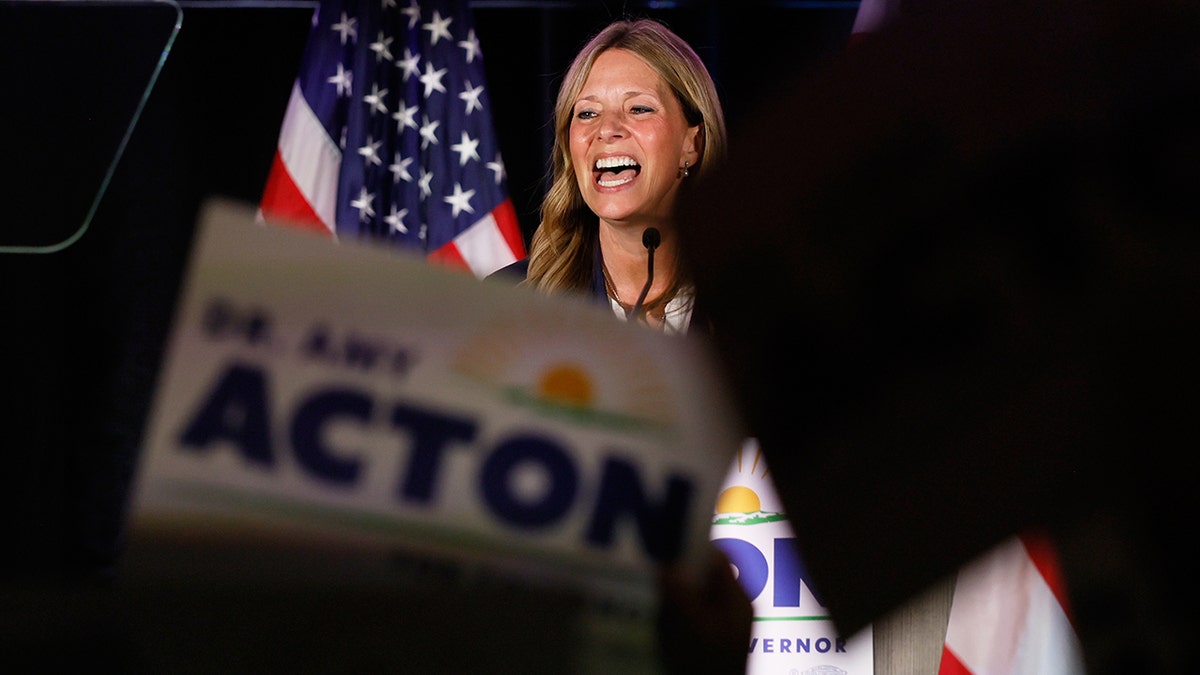
"Dr. Acton’s focus is on talking with Ohioans, not platforming a scam artist who spreads baseless lies about her and her family, uses AI to falsely paint her as someone with a substance abuse problem, and shames Dr. Acton for being sexually abused as a child while Vivek stands with predators and abusers," a campaign spokesperson said in a sharp statement released on September 2.
This statement laid bare the underlying grievances driving the Democratic campaign’s defensive posture. The remarks referenced several bruising episodes from the campaign cycle, including Republican attacks centering on Acton’s tenure as Ohio’s health director during the COVID-19 pandemic—a period that earned her both praise from public health advocates and intense ire from conservative voters over lockdowns and mandates.
Furthermore, the campaign’s reference to substance abuse pointed to a widely publicized verbal domestic dispute from 2019 involving Acton while she was intoxicated, details of which resurfaced through police reports unearthed by political opponents. The controversy was further inflamed by the deployment of advanced artificial intelligence in campaign advertising. Rival political actors released AI-generated commercial spots that digitally altered Acton’s vehicle license plate to read "drunk mom," touching off a fierce debate over the ethical boundaries of generative AI in modern elections and prompting calls for stricter regulatory frameworks similar to pioneering laws enacted in states like New York.
Ramaswamy, for his part, has largely deflected these accusations, choosing instead to focus his public messaging on questions regarding Acton’s fitness for office and her refusal to face voters in unscripted, open debates.
"It’s too bad for Ohio voters that Acton won’t take voter questions, won’t debate, quit after failing as Ohio’s health director, and has some serious issues now surfaced in multiple police reports," Ramaswamy posted on social media.
Broader Implications for the Ohio Gubernatorial Race
The escalating conflict in Ohio’s gubernatorial race carries significant implications not only for the state’s political future but also for the broader landscape of American midterm elections. Ohio has historically served as a bellwether state, though its recent electoral shifts have leaned increasingly Republican.
The matchup pits two distinct political archetypes against one another: Acton, a technocratic physician and public health bureaucrat whose prominence soared during the pandemic, and Ramaswamy, an outsider capitalist emphasizing populist economic nationalism, disruption of bureaucratic norms, and aggressive media utilization.
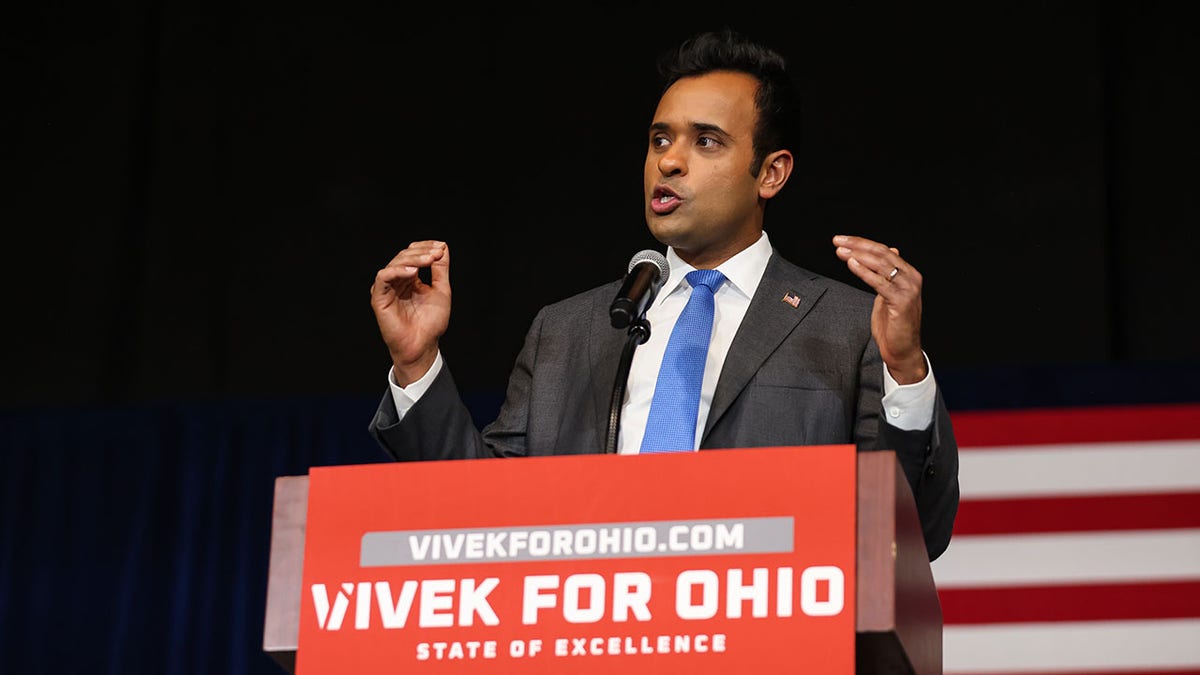
Political analysts note that Acton’s strategy of avoiding debates carries both risks and rewards. By refusing to share a stage with Ramaswamy, she attempts to deny him a major media platform to amplify attacks and frame the narrative. However, the strategy opens her up to continuous accusations of cowardice and transparency issues, vulnerabilities that opponents can exploit through relentless digital advertising and grassroots campaigning.
Conversely, Ramaswamy’s heavy financial investment and aggressive tracking strategy reflect a campaign confident in its momentum. By keeping the pressure high on the debate issue and highlighting past personal controversies, the Republican campaign aims to define Acton negatively before undecided and independent voters can form a favorable impression.
Timeline of Key Events in the 2026 Ohio Gubernatorial Race
- May 5, 2026: Dr. Amy Acton wins the Democratic primary election, securing her party’s nomination for governor of Ohio.
- Late February 2025 – Early 2026: Vivek Ramaswamy ramps up his campaign operations, ultimately shattering state fundraising records with a $50 million war chest, including $25 million of his own capital.
- Early September 2026: Ramaswamy accepts a debate invitation from CNN. Acton’s campaign formally rejects the invitation, citing personal attacks, AI-generated smear ads, and alleged bad-faith tactics from the Republican nominee.
- September 2, 2026: Acton’s campaign releases a scathing statement condemning Ramaswamy and explaining her refusal to participate in debate forums.
- Mid-September 2026: A confrontation occurs in Harrison, Ohio, when a Republican activist filming with a camera approaches Acton to question her debate refusals, leading to a physical tussle with campaign security staff.
- November 3, 2026: Scheduled date for the Ohio gubernatorial general election.
Conclusion and Outlook
As the calendar moves closer to November 3, the Ohio governor’s race stands as one of the most contentious and bitterly fought contests in the country. The confrontation in Harrison is symptomatic of a broader political climate where civility is frequently sidelined in favor of viral confrontation and maximalist political warfare.
With millions of dollars continuing to pour into media markets across the Buckeye State and both candidates locking into hardened strategic positions, voters are left navigating an increasingly polarized environment. Whether the debates ultimately happen or remain a casualty of modern campaign strategy, the outcome on November 3 will reshape the political trajectory of Ohio for years to come.