California’s Car Culture Is Codified With Passing Of Leno’s Law And New Lowrider License Plate Design

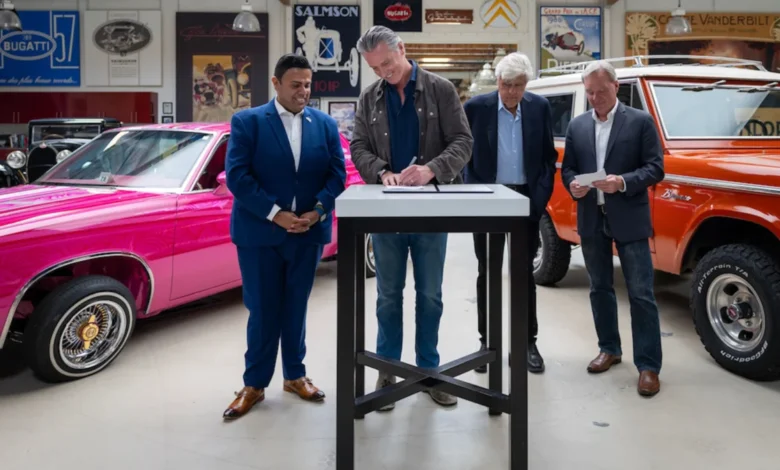
In a significant legislative victory for the automotive community, California Governor Gavin Newsom has officially signed a trio of bills—SB 1392, AB 2541, and SB 1069—that fundamentally alter the regulatory landscape for vehicle collectors, cultural enthusiasts, and the aftermarket parts industry. These measures represent a delicate balancing act, attempting to preserve the state’s historic and vibrant car culture while maintaining its position as a global leader in environmental oversight and emissions control.
The legislative package, signed during a visit to the renowned garage of television icon and car collector Jay Leno, marks a rare moment of alignment between environmental regulators, traditional enthusiasts, and the specialized automotive industry. By easing certain burdens on low-mileage collector vehicles and streamlining the path for specialized aftermarket parts, the state government is acknowledging that car culture is a fundamental component of California’s social fabric, rather than just a logistical nuisance.
The Evolution and Passage of Leno’s Law
The most high-profile of these measures, SB 1392, is the culmination of a protracted legislative struggle to grant smog-check exemptions to specific collector vehicles. The concept first gained traction as SB 712, a broader proposal that would have exempted most vehicles older than 35 years from biennial smog inspections. However, that version faced significant opposition from environmental advocates and legislative committees, ultimately being defeated in August 2025 due to concerns that it could lead to an increase in harmful pollutants from older, less efficient engines.
The refined version, SB 1392, represents a targeted compromise. Under the new statute, the smog exemption is restricted to gasoline-powered vehicles from model years 1976 to 1985. Crucially, to satisfy environmental concerns, the bill mandates that these vehicles must be registered as collector cars and driven fewer than 1,000 miles per year. By limiting the scope to a narrow, low-usage class of automobiles, policymakers have successfully mitigated the risk of a widespread increase in tailpipe emissions while granting relief to owners of preserved historical vehicles.
Historically, California has maintained strict cut-off dates for emissions testing. Prior to this legislation, only gasoline-powered vehicles from 1975 or earlier were entirely exempt from smog checks, alongside diesel-powered vehicles from 1997 or earlier. SB 1392 effectively extends this period of relief for a specific subset of the "modern classic" era, a segment of the car market that has seen skyrocketing interest from enthusiasts and investors alike.
Validating the Lowrider Tradition through AB 2541
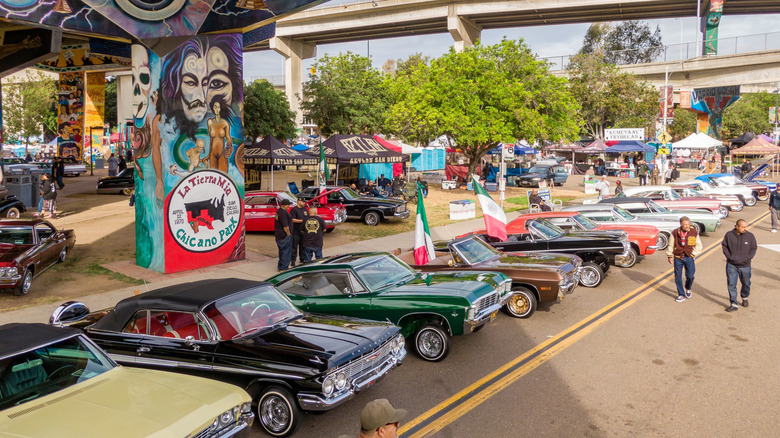
The passage of AB 2541 serves as a symbolic and practical acknowledgment of the Chicano community’s contribution to California’s automotive heritage. Lowrider culture, which originated in the Mexican-American barrios of Southern California in the mid-20th century, has historically faced systemic scrutiny and discriminatory policing. For decades, many California municipalities enforced "anti-cruising" ordinances, which were often used to target lowrider gatherings and suppress a form of cultural expression that authorities erroneously conflated with gang activity.
The legislative shift began in earnest in 2023 with the passage of AB 436, which effectively legalized cruising across the state. AB 2541 builds upon this foundation by mandating the creation of a specialized license plate featuring imagery that reflects lowrider heritage. The program, which requires at least 7,500 paid applications by January 1, 2032, to become operational, is more than a vanity plate initiative. Revenue generated from these plates will be deposited into the newly established Lowrider Arts and Culture Fund.
State Assemblymember Mark González, the author of the bill, emphasized that this legislation is an investment in the future of the movement. By funding arts, youth programs, and cultural preservation efforts, the state is shifting its stance from criminalization to institutional support. This move recognizes that lowriders are not merely vehicles; they are rolling canvases of artistic merit that serve as a bridge between generations of Mexican-American families.
Modernizing the Aftermarket Industry: The Impact of SB 1069
While Leno’s Law and the Lowrider license plate bill address cultural heritage, SB 1069 addresses the practical economics of the automotive industry. Sponsored by the Specialty Equipment Market Association (SEMA), the bill creates a conditional approval pathway for emissions-related aftermarket parts.
Under the previous regulatory framework, manufacturers were required to obtain a California Air Resources Board (CARB) Executive Order (EO) before a part could be legally sold, advertised, or installed on a vehicle. The testing and certification process for these EOs can often span several months or even years, creating significant barriers to entry for small-to-medium-sized manufacturers. SB 1069 allows products that have successfully passed the SEMA Certified Emissions Program to be sold on a conditional basis while they await final, formal approval from CARB.
It is important to note that this bill does not lower the state’s emissions standards. CARB retains full authority to audit, approve, or reject any part that does not meet the state’s stringent requirements. Instead, the legislation serves as a procedural improvement, designed to reduce the "red tape" that has historically stifled innovation and forced many aftermarket companies to bypass the California market entirely. SEMA officials have noted that this will provide small businesses with the certainty they need to invest in new, cleaner technologies, ultimately keeping the state’s aftermarket industry competitive on a national level.
Broader Implications and Environmental Context
The simultaneous signing of these three bills reflects a nuanced approach to one of California’s most complex challenges: balancing the state’s status as a leader in global environmental policy with its deep-seated, historically rooted car culture.
California’s relationship with the automobile is complicated. It is the birthplace of the modern freeway system and the site of some of the world’s most iconic coastal drives, yet it is also the state where air quality issues historically reached such extreme levels that residents once feared the smog was a form of chemical warfare. The California Air Resources Board has spent decades implementing some of the most rigorous emissions regulations in the world, which have significantly improved air quality but have often placed a strain on the hobbyist community.
The current administration’s decision to sign these bills signals an understanding that cultural preservation can coexist with environmental progress. By focusing on low-mileage exemptions and streamlined aftermarket processes, the state is demonstrating that the "clean transportation future" it seeks—driven largely by the rapid adoption of electric vehicles—does not necessarily require the eradication of internal combustion engine history.
Economic and Cultural Outlook
From an economic standpoint, these laws provide stability. The classic car market in California represents hundreds of millions of dollars in commerce, ranging from restoration shops and parts suppliers to event planning and tourism. By clarifying the regulations for 1976–1985 vehicles and speeding up the aftermarket supply chain, the state is effectively lowering the cost of doing business for enthusiasts and manufacturers alike.
Culturally, the impact is perhaps even more profound. By formally codifying lowrider culture into the state’s official registry through the license plate program, the government is legitimizing a movement that was once marginalized. This institutional validation provides a framework for community pride and ensures that the financial resources generated by the enthusiasts themselves are reinvested into the communities where the culture was born.
As California moves toward a future increasingly dominated by battery-electric vehicles, these legislative measures ensure that the state’s rich automotive history remains a visible and celebrated part of the road. Whether it is a restored 1980s collector car participating in a local rally or a custom lowrider cruising through a historic district, the state has signaled that there is room for the past to coexist with the future. These laws, while specific in their technical applications, represent a holistic view of the automobile: not just as a machine, but as a central pillar of California’s identity.
Related posts: