The Long Road to Recovery: Lawyer’s Near-Fatal Cardiac Arrest Highlights the Pervasive Impact of Post-Intensive Care Syndrome

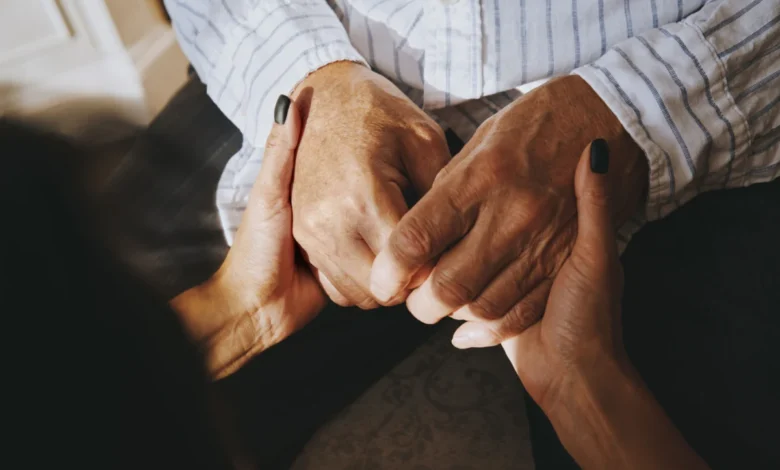
The harrowing experience of Joseph Masterson, a 63-year-old attorney on the cusp of retirement, has cast a spotlight on the often-overlooked and debilitating long-term consequences of critical care. A sudden cardiac arrest on November 16th in Pittsburgh left Masterson fighting for his life, a battle that has since transitioned into a protracted journey of recovery, marked by significant physical, cognitive, and psychological challenges. His case serves as a poignant illustration of Post-Intensive Care Syndrome (PICS), a complex constellation of symptoms that affects millions of survivors annually.
A Sudden Crisis and a Community Response
The dramatic events unfolded on a typical day when Masterson’s vehicle veered off course, colliding with a barrier. The cause was a sudden cardiac arrest, an acute medical emergency that struck as he was driving, robbing him of consciousness. Fortunately, the immediate vicinity was not devoid of help. Alert and quick-thinking fellow drivers recognized the severity of the situation. They promptly stopped their vehicles, broke into Masterson’s car, and extricated him from the wreckage, moving him to a safer location.
Adding to the fortunate chain of events, a volunteer firefighter was passing by and was able to administer cardiopulmonary resuscitation (CPR) without delay. This crucial intervention continued until emergency medical services arrived. Masterson was then swiftly transported to UPMC Mercy, a local hospital, where he immediately entered the critical care pathway.
The Ordeal in the Intensive Care Unit
Masterson’s fight for survival was far from over. He spent a significant 18 days in the Intensive Care Unit (ICU), with 14 of those days requiring mechanical ventilation. This extended period in a highly specialized and often disorienting environment led to the development of delirium, a common yet distressing condition for ICU patients. The delirium necessitated the administration of antipsychotic medications. Despite receiving nutrition through a feeding tube, Masterson experienced considerable weight loss, a testament to the physiological toll his body was enduring.
"Sincerely, we were not sure he was going to survive," recounted Ron Dedes, Masterson’s brother-in-law, reflecting the profound uncertainty and anxiety that permeated the family during this critical period. The medical team, facing a patient in such a precarious state, could offer no guarantees, underscoring the severity of his condition.
A Glimmer of Hope and the Long Road to Rehabilitation
Against considerable odds, Masterson did survive. He was discharged from the hospital on February 1st, marking the beginning of a new phase of his recovery. Upon returning home, he was met with the unwavering support of his family, who provided near-constant care and assistance.
His rehabilitation has been a multifaceted endeavor, involving a team of various therapists. Through their dedicated efforts, Masterson has regained the ability to walk, albeit with residual weakness. He is now capable of managing his personal hygiene and basic self-care routines. His speech, which had become notably slurred and difficult to comprehend during his critical illness, has shown remarkable improvement. Small victories, such as being able to prepare a simple sandwich, represent significant milestones in his arduous journey back to independence.
The Lingering Shadow of Cognitive Impairment
Despite these encouraging advancements, a significant challenge remains: Masterson’s memory. "Our biggest concern right now is his memory," stated Dedes. Patti Dedes, his sister, elaborated on the extent of this cognitive deficit, explaining that Masterson, who once managed complex legal cases, now struggles to recall conversations and events that transpired just a few hours prior. Everyday tasks that require sequential memory, such as operating a microwave or making a phone call, remain beyond his current capabilities.
During a recent interview, Masterson described his current state as "much, much better than I was," a statement that, while accurate in many respects, was tinged with a notable lapse in memory as he misstated his own age. Cognitive assessments conducted post-discharge have confirmed significant cognitive impairment and depression, both common sequelae of critical illness.
Understanding Post-Intensive Care Syndrome (PICS)
The prolonged and multifaceted challenges faced by Masterson are characteristic of Post-Intensive Care Syndrome (PICS). This condition is defined by the American Thoracic Society and the Society of Critical Care Medicine as a new or worsening health problem after critical illness that affects survivors’ physical, cognitive, and mental health. These effects can persist for months or even years following discharge from the ICU.
The prevalence of PICS is substantial. In the United States, over 5 million individuals are admitted to ICUs annually across approximately 5,000 hospitals. Research indicates that more than half of these survivors experience lingering symptoms. Factors such as advanced age can further increase the likelihood of developing PICS, making individuals like Masterson, who was nearing retirement, particularly vulnerable.
The Disconnect Between Expectation and Reality
A significant disconnect often exists between the public’s perception of recovery from critical illness and the reality of PICS. "The belief is that they will get out of the hospital and in two or three weeks, they will be back to normal," observed Dr. Brad Butcher, a critical care physician who treated Masterson and has extensively researched PICS. "That does not align with the reality." This misconception can lead to frustration and a lack of adequate support for survivors and their families as they navigate the long-term recovery process.
As ICU utilization and treatment advancements continue to improve, a growing number of individuals are surviving critical illnesses. The Society of Critical Care Medicine (SCCM) estimates that between 70% and 90% of adult ICU patients now survive their critical illness. While this is a testament to medical progress, it also means that the population facing the challenges of PICS is expanding.
Dr. Lauren Ferrante, a pulmonary critical care physician and researcher at Yale School of Medicine, emphasized this point: "Everyone is grateful that the patient survived. But that is just the beginning of a long road to recovery." Her research, including a study on patients aged 70 and older, found that only about half had regained their pre-ICU functional capacity within six months of discharge.
The Multifaceted Manifestations of PICS
The challenges confronting ICU survivors are extensive and varied. PICS symptoms span a wide spectrum, encompassing physical impairments such as weakness, pain, neuropathy (tingling in the limbs), and malnutrition. Mental health issues, primarily anxiety and depression, are also prevalent. Cognitive difficulties, akin to those Masterson is experiencing, are common and include problems with memory, attention, concentration, and language.
Dr. Butcher further noted that for many, surviving a critical illness is a life-altering experience. Even patients undergoing scheduled or emergency surgeries and requiring ICU stays often face a high incidence of new physical, mental, and cognitive problems a year after their hospitalization.
The Paradox of Life-Saving Treatments
Ironically, the very treatments that save lives in the ICU can contribute to the development of PICS. Patients admitted to the ICU are typically experiencing severe organ failure requiring immediate attention and constant monitoring. This often involves mechanical ventilation, which necessitates the use of sedatives.
"Sedation can lead to delirium, and delirium is the key driver of cognitive symptoms," explained Dr. Butcher. Beyond pharmacological interventions, the ICU environment itself can exacerbate the problem. The constant beeping of monitors, 24-hour bright lighting, and often restricted family visitation can disrupt sleep patterns and deprive patients of comforting social interaction.
Gregory Matthews, an 80-year-old retired accountant from St. Petersburg, Florida, shared his experiences after nearly a month in the ICU following a lung transplant in 2014. He vividly recalled hallucinations, including visions of mice scurrying across walls and being framed for drug trafficking. He even mistook a doctor for a murderer, prompting him to jump out of bed and pull out his IV lines, requiring him to be physically restrained for several days.
Immobility, while sometimes necessary, also has significant consequences. Patients rapidly lose muscle mass and strength. As Dr. Ferrante pointed out, "Our bodies are not built to lie down all day." This physical deconditioning further complicates the recovery process.
On a psychological level, the experience can be profoundly traumatic. Dr. Carla Sevin, a pulmonary critical care physician and director of the ICU Recovery Center at Vanderbilt University Medical Center, noted that post-traumatic stress disorder (PTSD) is common among ICU survivors, comparable to that seen in combat veterans or survivors of sexual assault. The distress is not limited to patients; families often grapple with their own anxieties and depression in parallel.
Emerging Solutions: The Rise of Post-ICU Clinics
Alarmed by the pervasive impact of PICS, medical professionals and administrators at approximately 35 hospitals across the United States have established dedicated post-ICU clinics. These specialized centers bring together multidisciplinary teams—including physicians, nurses, pharmacists, various therapists (physical, occupational, cognitive, speech), and social workers—to comprehensively assess and manage the complex needs of ICU survivors.
Vanderbilt’s ICU Recovery Center saw its first patient in 2012, while the University of Pittsburgh Medical Center’s Center for Critical Illness Recovery, founded by Dr. Butcher in 2018, now assists around 100 patients annually, including Masterson. Yale University launched its clinic in 2022, highlighting the growing recognition and establishment of these crucial services.
These clinics implement six evidence-based practices recommended by the SCCM, which have demonstrated a significant reduction in post-ICU symptoms. These include employing lighter sedation, encouraging early mobilization, conducting daily breathing assessments to expedite ventilator weaning, and relaxing restrictions on family visitation.
Holistic Support and Future Planning
Beyond clinical interventions, post-ICU clinics often provide crucial support systems for both patients and their families. Evidence suggests that keeping an ICU diary, where patients and caregivers document their experiences, and engaging in regular physical exercise and rehabilitation can significantly improve mental health outcomes after discharge.
Furthermore, these clinics facilitate important conversations about end-of-life care preferences. For patients facing another critical illness, discussions arise about whether they would opt for further intensive care, with its inherent risks of PICS, or choose palliative care, which prioritizes comfort over aggressive treatment. This is particularly relevant given that some patients are left with permanent disabilities following their ICU stay.
Dr. Butcher remains optimistic about the future of critical care, stating, "We are going to find better diagnostic tools, better prevention strategies, and better treatments." However, he acknowledges that the current reality of the ICU experience can be disorienting and traumatic.
Patient Voices and Shifting Priorities
A study conducted by Dr. Butcher at his post-ICU clinic revealed that many patients expressed a desire to limit future medical interventions. Approximately one-third of patients indicated a preference for reduced aggressive care. Of this group, nearly a quarter opted for "do not resuscitate" and "do not intubate" orders, and almost 7% stated they would never want to return to an ICU. These findings underscore a significant shift in patient priorities, emphasizing quality of life and autonomy over aggressive life-prolonging measures.
Masterson’s Ongoing Journey and Prognosis
Joseph Masterson continues his dedicated efforts towards recovery. "I haven’t been out much," he admitted, preferring the comfort and familiarity of home. His ultimate hope is to regain enough strength to resume running, a pastime he previously enjoyed several times a week, covering distances of three to four miles.
Dr. Butcher noted that the long-term prognosis for PICS patients often hinges on their pre-hospitalization physical and cognitive status. Masterson’s prior good physical condition and his intellectually demanding career as an attorney are considered positive factors in his recovery trajectory.
For his family, the journey is marked by a delicate balance of hope and apprehension. "Who knows how he will be down the line?" mused Ron Dedes. "We are taking it day by day." Their experience, shared by countless families worldwide, highlights the profound and lasting impact of critical illness, a testament to the complex and often invisible battles fought long after patients leave the confines of the intensive care unit.
Related posts: