Turbulent Skies Ahead As Soaring Jet Fuel Costs Force Major Airlines To Slash Routes And Raise Fares

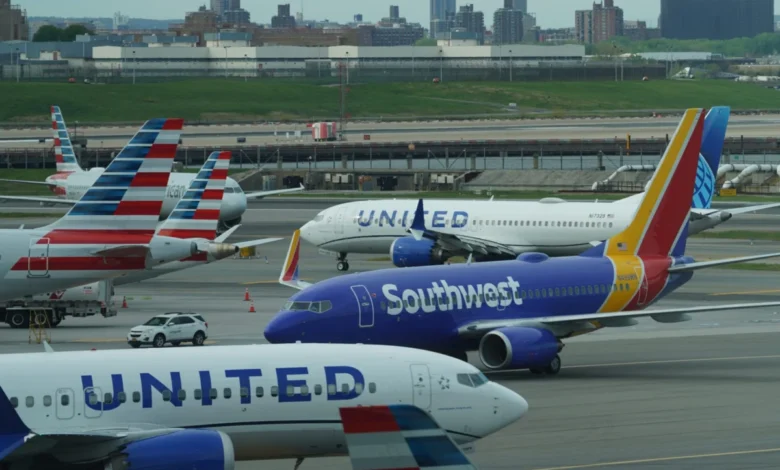
The global aviation industry is currently facing one of its most significant financial headwinds in two decades as jet fuel prices reach near-record levels. As crude oil markets remain volatile due to geopolitical instability, specifically the escalating conflict involving Iran, the cost of powering commercial aircraft has surged to $4.71 per gallon. This represents more than double the price point observed just one year ago, creating a compounding crisis for major carriers including American Airlines, United Airlines, and Southwest Airlines. As these industry giants attempt to protect their bottom lines, the fallout for the average consumer is becoming increasingly clear: fewer flight options, less convenience, and higher ticket prices.
A Chronology of the Fuel Crisis
The current instability began to manifest early in the year as geopolitical tensions in the Middle East tightened the global oil supply chain. By the spring of 2026, airlines were already reporting significant increases in their operational expenditures. By mid-summer, the financial burden had reached a critical threshold, prompting airline executives to signal a shift in corporate strategy during the September Morgan Stanley Laguna Conference.
On September 16, 2026, the industry’s leadership confirmed a pivot from growth to preservation. Executives from the "Big Three" U.S. carriers acknowledged that the original 2026 expansion plans were no longer feasible. Following this, airlines began announcing adjustments to their winter schedules, specifically targeting December, a period typically marked by high travel demand. These cuts are not merely temporary pauses but a fundamental reassessment of route viability in a high-cost environment.
The Economic Burden on Carriers
The financial disclosures from the first half of 2026 provide a stark picture of the fiscal strain. United Airlines reported fuel expenditures of approximately $8.2 billion, while American Airlines faced costs of $7.8 billion. Southwest Airlines, despite its typically lower-cost structure, saw its fuel bill balloon to $3.6 billion. For all three companies, these figures represent an increase of nearly 50% compared to the same period in 2025.
Industry analysts note that airlines operate on a "bell curve of profitability." Under normal circumstances, low-performing or "marginal" routes are subsidized by high-traffic, high-margin corridors. However, when fuel prices spike, the cost of operation on these marginal routes often exceeds the revenue generated by ticket sales. Consequently, airlines are aggressively pruning their networks to eliminate flights that no longer contribute to free cash flow. This strategy, while sound from a balance-sheet perspective, reduces the overall capacity of the national aviation network.
Official Responses and Strategic Shifts
At the Morgan Stanley conference, the rationale for these cuts was articulated clearly by airline leadership. American Airlines CFO Devon May noted that the fuel price surge added a staggering $1 billion to the carrier’s projected fourth-quarter expenses. "You’re just going to want to pull a little capacity out when we see a rise in fuel like we’re seeing right now," May explained, confirming that the airline would scale back growth plans for the coming year.
United CFO Mike Leskinen echoed these sentiments, emphasizing the necessity of the current strategy. "There’s some marginal routes that don’t make sense in a higher fuel environment, so we cut them," Leskinen stated. He further noted that while 35% of fourth-quarter tickets were already booked—precluding retroactive price hikes for those specific travelers—the industry has little choice but to pass these costs onto consumers through future pricing and secondary fees.
Southwest Airlines, often viewed as the bellwether for domestic travel, provided a slightly more measured response. CFO Tom Doxey confirmed that the company had slashed its initial capacity growth projection of 2-3% by half. A spokesperson for Southwest later clarified that while schedules are being tightened, these adjustments are "minimal" and do not involve the large-scale abandonment of major hubs or entire route networks.
The Broader Impact on the Consumer
The implications for the traveling public are multifaceted. First, the reduction in flight frequency naturally leads to a supply-demand imbalance. With fewer seats available on popular routes, carriers are empowered to maintain or increase ticket prices. Data from the Bureau of Labor Statistics indicates that airfares in August 2026 were 23.4% higher than the previous year, a stark contrast to the general inflation rate of 3.4%.
Second, the loss of non-stop routes forces travelers to opt for itineraries involving layovers, increasing the total travel time and the likelihood of logistical disruptions. The "convenience factor" is rapidly disappearing, as airlines consolidate their schedules to ensure that every flight that does take off is as close to full capacity as possible.
Third, the proliferation of "ancillary fees" is expected to continue. With base fares under scrutiny, airlines have increasingly turned to baggage fees, seat selection charges, and priority boarding costs to recoup their fuel expenditures. This "hidden" cost structure allows airlines to mitigate the impact of rising oil prices without appearing to raise base ticket prices in a way that might trigger a decline in booking volume.
Global Comparisons: The European Perspective
The crisis is not confined to the United States. Europe, which relies more heavily on Middle Eastern oil imports than the U.S., has felt the shock with equal, if not greater, intensity. Ryanair, one of the continent’s most prominent budget carriers, has already adjusted its full-year passenger forecast downward by two million passengers.
Ryanair CEO Michael O’Leary has been vocal regarding the threat that sustained oil prices pose to the budget airline model. The strategy of "famously cheap" European flights is currently under existential threat, as the fuel surcharge becomes a significant portion of the total ticket cost. The European experience serves as a preview for American consumers of what happens when fuel costs consistently outpace the ability of airlines to hedge against them.
Analysis: Is There A Ceiling?
The sustainability of this current aviation model depends heavily on the trajectory of global oil prices. If the conflict in the Middle East remains unresolved, or if production levels are not increased to meet global demand, jet fuel prices could remain elevated for the foreseeable future.
Analysts suggest that airlines will continue to shift toward "dynamic scheduling," where routes are added or subtracted with much greater frequency than in the past to respond to price fluctuations. For the traveler, this means the era of "predictable, bargain air travel" is effectively over. The industry is entering a period of forced efficiency, where the privilege of flying will increasingly be priced according to the volatile reality of global energy markets.
As the industry prepares for the winter travel season, the primary concern remains the ability of the labor force and the current airport infrastructure to handle the tightened flight schedules. With fewer flights operating, any disruption—such as winter weather or technical failures—will likely have a more severe, cascading effect on the national system. For now, both airlines and passengers must adapt to a new normal characterized by leaner schedules, higher costs, and a significantly less flexible travel environment.
Related posts: