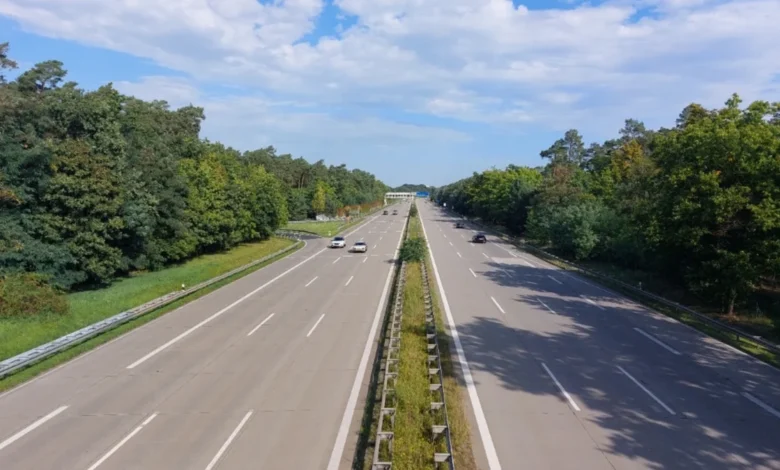
For automotive enthusiasts worldwide, the German Autobahn represents the pinnacle of motoring freedom. Often envisioned as a lawless expanse of unrestricted asphalt where speedometers can be pushed to their absolute limits, the reality of the Bundesautobahn (BAB) is significantly more complex. Far from being a chaotic "Wild West" of transportation, the German federal highway system is a highly regulated, precision-engineered ecosystem. It is sustained by a combination of rigorous driver education, strict legislative mandates, and a cultural commitment to lane discipline. For international visitors, particularly those from the United States or other regions with lower speed thresholds, entering this environment without a comprehensive understanding of its unique protocols can lead to severe financial penalties, license revocation, or catastrophic accidents.
The Myth of Universal Speed
The most pervasive misconception regarding the Autobahn is that it is entirely devoid of speed limits. In practice, the German highway network, which spans approximately 13,192 kilometers (8,197 miles), is a patchwork of restricted and unrestricted zones. Statistics from the Federal Highway Research Institute (BASt) indicate that roughly 30 percent of the network has permanent speed limits, typically ranging from 80 km/h (50 mph) to 120 km/h (75 mph). An additional 10 to 15 percent of the network utilizes dynamic speed limits controlled by overhead electronic gantries (Streckenbeeinflussungsanlagen).
These dynamic systems adjust limits in real-time based on traffic density, weather conditions, or construction requirements. Failure to adhere to these digital signs is met with zero tolerance by the Autobahnpolizei (highway police). In unrestricted sections, the German government maintains a "recommended speed" (Richtgeschwindigkeit) of 130 km/h (81 mph). While exceeding this speed is not a crime in itself, it carries significant civil implications. German case law generally dictates that if a driver exceeds the 130 km/h advisory limit and is involved in an accident, they may be held partially liable for damages regardless of who caused the initial collision, as the increased speed is viewed as an inherent "operational risk."
The Legal Mandate of Lane Discipline
The cornerstone of Autobahn safety is the Rechtsfahrgebot, or the "requirement to drive on the right." Unlike many North American jurisdictions where "lane hogging" in the left lane is a common nuisance, in Germany, it is a strictly enforced legal violation. The left lane is reserved exclusively for overtaking. Once a driver has cleared the vehicle to their right, they are legally obligated to return to the right-hand lane as soon as it is safe to do so.
This discipline is what allows the system to function safely when speed differentials between vehicles can exceed 100 mph. Consequently, "undertaking"—the act of passing a slower vehicle on the right—is strictly forbidden and carries heavy fines. If a driver in the left lane is approached by a faster vehicle, the following driver may flash their high beams once or use their left turn signal to indicate a desire to pass. While this may appear aggressive to outsiders, it is a standardized method of communication within the German driving culture. However, maintaining a dangerously low following distance (tailgating) remains illegal and is frequently monitored by bridge-mounted cameras.
Negligence and the Criminality of Running Out of Fuel
One of the more surprising regulations for foreign drivers is the legal status of a vehicle’s fuel level. On the Autobahn, stopping for any reason other than an unavoidable emergency is prohibited. This includes stopping on the shoulder (Standstreifen) for non-mechanical reasons. German law classifies running out of fuel as a preventable occurrence and, therefore, an act of human negligence.
Because a car stalled on the shoulder of a high-speed thoroughfare represents a massive safety hazard, the Autobahnpolizei treat such incidents with extreme gravity. Drivers who run dry can face substantial fines, and if the stoppage leads to an accident or a significant traffic obstruction, the legal consequences can escalate to criminal endangerment charges. This regulation underscores the German philosophy that driving at high speeds is a privilege that requires constant, proactive responsibility for the mechanical state of the vehicle.
The Mechanics of the Rettungsgasse
Germany’s approach to emergency management on the highway is characterized by the Rettungsgasse, or emergency corridor. When traffic congestion causes vehicles to slow to a crawl or come to a complete halt, drivers are legally required to form a clear path for emergency services before sirens are even heard.
The protocol is standardized: vehicles in the far-left lane must move as far to the left as possible, while vehicles in all other lanes move as far to the right as possible. This creates a "dead zone" or corridor between the far-left lane and the adjacent lane. In 2017, the German government increased the fines for failing to form a Rettungsgasse, as delays in emergency response times can be the difference between life and death in high-speed collisions. Modern traffic laws now also penalize drivers who attempt to use this corridor to bypass traffic behind emergency vehicles.
The Physics of Closing Speeds
The psychological challenge of the Autobahn lies in the perception of distance and velocity. A driver cruising at 160 km/h (100 mph) may feel they are traveling at a significant rate of speed, but they remain vulnerable to the extreme speed differentials present in unrestricted zones. High-performance vehicles, such as those from Porsche, BMW’s M division, or Mercedes-AMG, frequently travel at speeds exceeding 250 km/h (155 mph).
At these velocities, the "closing speed" is immense. A car that appears as a small dot in the rearview mirror can close a half-mile gap in less than 15 seconds. This necessitates a level of situational awareness far beyond what is required on standard highways. Drivers are trained to check their mirrors multiple times before changing lanes and to use their indicators well in advance. The margin for error is razor-thin; a sudden lane change by a slower vehicle can force a high-speed driver into a "panic brake" situation, which, at speeds above 200 km/h, can easily lead to a loss of vehicle control.
The Socio-Economic Context of German Driving
The discipline observed on the Autobahn is rooted in the rigorous process of obtaining a German driver’s license (Führerschein). Unlike many countries where licensing is relatively inexpensive and simple, a German license can cost between €2,000 and €4,000. Candidates must complete a mandatory series of theoretical lessons and a minimum number of practical driving hours, including specialized training for night driving, cross-country roads, and the Autobahn itself.
Furthermore, the maintenance of the infrastructure is a massive state undertaking. Autobahn surfaces are significantly thicker than those found in the U.S. (often up to 40 centimeters or 15.7 inches of concrete and asphalt) to withstand the kinetic energy of high-speed travel and heavy freight. This infrastructure is monitored by a network of maintenance centers (Autobahnmeistereien) that ensure the asphalt remains pristine, as a single pothole at 150 mph could be fatal.
The Future of the Unrestricted Autobahn
Despite its iconic status, the future of unrestricted speed on the Autobahn is a subject of intense political debate within Germany. Environmental groups and the Green Party frequently advocate for a universal speed limit of 130 km/h, citing potential reductions in CO2 emissions and a decrease in the severity of accidents.
Conversely, the ADAC (Germany’s largest automobile club) and various industry stakeholders argue that the Autobahn is already among the safest road systems in the world. Data often shows that the majority of fatal accidents in Germany occur on rural two-lane roads (Landstraßen) rather than the highway system. As of 2024, the "Tempolimit" remains a polarizing issue in the Bundestag, reflecting the tension between Germany’s historic automotive identity and modern environmental imperatives.
For the international traveler, the Autobahn remains a marvel of engineering and social cooperation. However, the "freedom" it offers is not the freedom of lawlessness, but the freedom provided by a highly disciplined collective. Success on these roads requires more than a fast car; it requires an unwavering adherence to the rules of the "precision-engineered ecosystem" that defines German motoring.
Related posts: