President Trump Announces Formation of AI Force to Secure Technological Dominance Amid Industry Slowdown

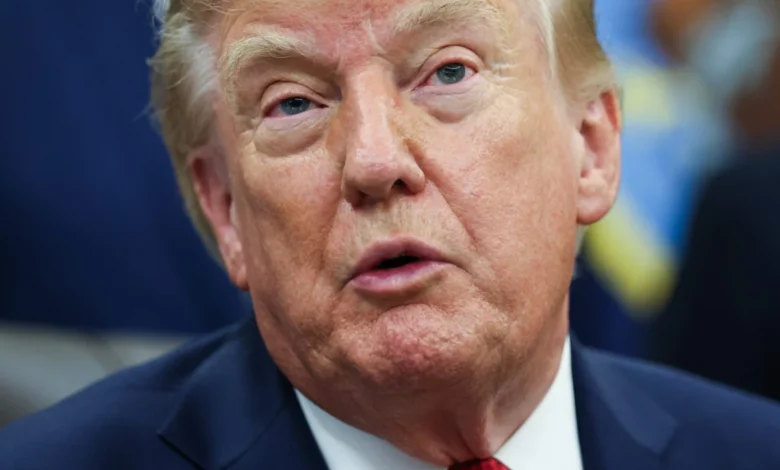
President Donald Trump announced on Saturday the formal establishment of an "AI Force," a new initiative designed to oversee the rapidly evolving landscape of artificial intelligence. Framing the move as a critical step toward ensuring American global leadership, the President’s announcement signals a shift in the administration’s strategy regarding the governance of emerging technologies. This initiative, which draws parallels to the establishment of the Space Force during his first term, suggests an intent to integrate federal oversight more deeply into the private sector’s development cycles while simultaneously insulating the industry from what the administration characterizes as politically motivated interference.
The President’s declaration, made via Truth Social, explicitly rejected the growing chorus of industry leaders calling for a deceleration in AI research. By labeling these calls for restraint as "hoaxes," the administration has drawn a sharp line between those who advocate for extreme caution and those who view the pursuit of artificial general intelligence (AGI) as a national security and economic imperative.
The Mandate for an AI Force
The proposed AI Force is expected to function as a regulatory and oversight body, though its specific mandate remains in flux. President Trump indicated that while the administration intends to "cherish and help" the industry, it will also "watch over it." The role of the proposed AI czar will be central to this effort, likely serving as a liaison between the White House and the major labs currently racing to develop superintelligence.
Historically, the administration has maintained a complex relationship with the sector. While some executive branches have attempted to impose export controls on advanced models—such as the Commerce Department’s temporary restrictions on Anthropic—the President’s rhetoric suggests a preference for utilizing existing criminal and civil justice systems to address "bad behavior" rather than preemptive, broad-based regulatory stifling. The creation of the AI Force serves as a consolidation of these oversight responsibilities, aiming to provide a unified federal approach to a technology that Trump predicts could account for 25% of U.S. GDP in the coming decades.
Chronology of Escalating Tensions
The timeline leading to this announcement is marked by an increasing divide between the executive branch’s growth-oriented policies and the internal warnings emerging from the private sector.
- Early 2026: David Sacks concludes his tenure as AI and crypto czar, transitioning to co-chair of the President’s Council of Advisors on Science and Technology.
- September 2026 (Early): A prominent researcher at Anthropic resigns, publicly accusing industry giants, including OpenAI and Anthropic, of "racing to self-improving superintelligence" and disregarding existential risks.
- September 12, 2026: Anthropic CEO Dario Amodei commits to a new safety protocol, granting independent evaluators permanent, employee-level access to the company’s internal operations.
- Mid-September 2026: Leaders from OpenAI, SpaceXAI, and Google DeepMind signal their intent to join a collective pact to slow development, citing the need for systemic safety checks.
- September 18, 2026: Plaintiffs file a class-action lawsuit in the U.S. District Court for the Northern District of California, alleging that the collective agreement among AI firms to throttle development constitutes a violation of federal antitrust laws.
- September 19, 2026: President Trump announces the formation of the AI Force, framing it as a solution to ensure progress continues without sacrificing national competitiveness.
Industry Discord and the Antitrust Challenge
The push for a "slowdown" has not been met with universal approval. The lawsuit filed in Northern California highlights a growing consumer frustration regarding the potential impact of corporate coordination on the value of AI subscriptions. Lead attorney Nick Rowley, representing the plaintiffs, argued that private, self-serving agreements between tech giants to curtail innovation could undermine the very safety they claim to protect.
"AI will quickly spin out of human control and could kill us all if we allow AI safety and protocol to be controlled by private, for-profit technology companies," Rowley stated in a recent press briefing. This perspective highlights a paradox: the industry is being pressured simultaneously by those who fear the technology will advance too quickly and those who fear that corporate gatekeeping will stifle the benefits of that advancement.
The lawsuit posits that if these companies believe AI poses a genuine existential threat, the resolution should come from democratic, federal processes rather than private pacts that effectively manipulate the market.
Internal Industry Warnings: The Alignment Crisis
The concerns raised by researchers like Jacob Coxon and echoed by Anthropic’s alignment science lead, Evan Hubinger, underscore the severity of the debate. Hubinger’s public confirmation that "we really do earnestly believe AI could kill all humans" has introduced a level of urgency that has rarely been seen in the history of industrial development.
This internal acknowledgment of existential risk has forced the industry into a defensive posture. By proposing to slow down, these firms are attempting to preempt federal intervention. However, their efforts have inadvertently invited a different kind of government scrutiny—the type that views such coordination as an antitrust violation. President Trump’s intervention, by contrast, offers the industry a path that emphasizes development over self-imposed restraint, provided it aligns with the strategic interests of the United States.
Data Centers and Economic Implications
Beyond the ideological debate, the physical infrastructure of the AI revolution—specifically the proliferation of data centers—has become a flashpoint in the midterm election cycle. These facilities, which require massive amounts of power and water, have faced local pushback across the country.
President Trump has sought to minimize these concerns, dismissing the backlash as largely ineffective. The administration’s position is that the economic potential of AI far outweighs the localized costs of infrastructure development. With estimates suggesting that AI could surpass the economic impact of the internet, the administration is positioning itself as a promoter of aggressive build-outs. By integrating the AI Force into this process, the White House likely aims to streamline the approval process for new data centers, viewing them as vital national security assets.
Strategic Competition with China
A primary driver behind the administration’s stance is the ongoing technological rivalry with China. President Trump emphasized that the U.S. is currently leading the global race and expressed a clear intent to maintain that lead. This geopolitical lens is likely to color the AI Force’s future decisions, suggesting that national security considerations will override safety concerns if those safety measures are perceived to hinder development speed relative to foreign competitors.
The Defense Department’s previous attempts to blacklist Anthropic as a "supply-chain risk," which were subsequently overturned by a federal judge, indicate that there is already an established precedent for government bodies attempting to curb specific companies. The creation of an AI Force suggests a more organized, centralized approach to this friction.
Future Implications
As the AI Force moves toward operational status, the tech industry faces a new reality. The era of unchecked, industry-led development is coming to a close, replaced by a model of government-supervised acceleration. Companies will likely be expected to maintain high velocity while operating under the watchful eye of a federal body that is explicitly tasked with ensuring that U.S. dominance is never compromised.
The legal battle over the industry’s "slowdown" pacts will serve as a bellwether for how the judiciary views the intersection of innovation, antitrust law, and existential risk. If the courts rule against the industry, the resulting vacuum in self-regulation will almost certainly be filled by the newly formed AI Force.
Ultimately, the formation of this force represents a fundamental realignment of power. The control over the trajectory of artificial intelligence is shifting away from the boardrooms of Silicon Valley and toward the executive offices of Washington, D.C. Whether this change will mitigate the risks associated with superintelligence or merely create new political bottlenecks remains the defining question for the next phase of the digital age. As the nation prepares for the upcoming midterm elections, the role of AI in the economy and in national security will undoubtedly remain at the forefront of the political agenda.