Apple won’t make a small phone so this company is stepping in to fill the market void for compact, repairable mobile hardware.

The modern smartphone landscape has long been dominated by the philosophy that bigger is better. Over the past decade, flagship devices have ballooned in size, with standard display measurements now consistently exceeding 6.1 inches. While this shift caters to the surging demand for portable media consumption, high-resolution gaming, and multitasking, it has left a vocal minority of consumers behind. For users who prioritize one-handed ergonomics, pocketability, and a distraction-free user interface, the industry’s transition toward "phablet" sizing has felt like an abandonment of a core design category.
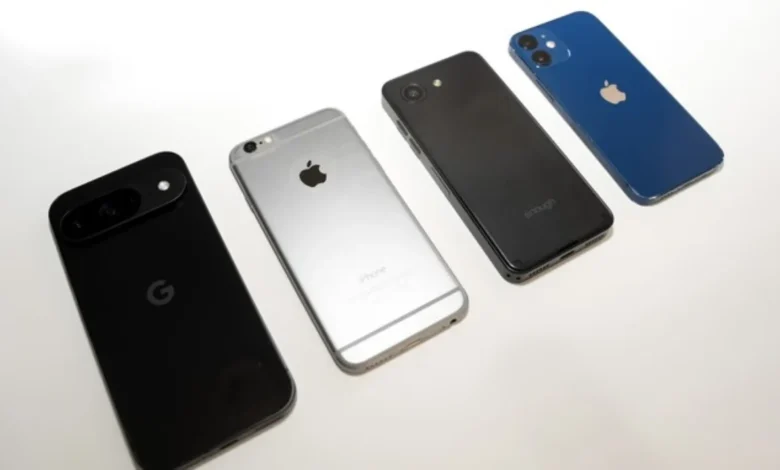
The market’s departure from compact handsets became most evident when Apple, the last major manufacturer to hold the line with its iPhone mini series, officially discontinued the form factor. The decision was rooted in lagging sales data compared to the Pro and Pro Max models, signaling that the mass market had spoken. However, the void left by these devices has created a niche opportunity for emerging players. The "Enough Phone," a new project currently seeking funding on Kickstarter, aims to reclaim the compact form factor by prioritizing user control, repairability, and minimalist software.
The Evolution of the Small Phone Movement
To understand the significance of the Enough Phone, one must look at the trajectory of smartphone hardware design. In the early 2010s, device sizes were dictated by physical constraints and the desire for ease of use. As display technology evolved, the industry pivoted toward the bezel-less, high-aspect-ratio screens that define today’s hardware. The peak of this transition was perhaps the iPhone 12 and 13 mini era, which proved that modern internals could indeed fit into a chassis measuring under 5.5 inches.
When these devices were phased out, they did not disappear from the hands of users; rather, they became "cult classics." Enthusiasts began scouring the refurbished market for these remaining compact units, highlighting a sustained demand that major original equipment manufacturers (OEMs) were no longer willing to address. This disconnect between market supply and consumer demand serves as the primary catalyst for the Enough Phone.
Technical Specifications and Hardware Philosophy
The Enough Phone is designed with a specific target demographic in mind: those who view their phone as a tool rather than an entertainment hub. At 133mm by 64mm, the device mirrors the footprint of the iPhone 13 mini. It is constructed to be a "modern" entry, though it makes distinct compromises to hit its price point and size requirements.

The device features a 5.3-inch display with a 1520 x 720 resolution. While this falls short of the pixel density found in premium flagship devices, the company argues that the screen size makes this resolution sufficient for standard tasks. Internally, the hardware is driven by a 2.4GHz MediaTek Dimensity 7500 chip, paired with 8GB of RAM and 128GB of base storage. A standout feature in an era of sealed devices is the inclusion of a microSD card slot, providing users with the flexibility to expand storage—a rarity in the current smartphone landscape.
Imaging capabilities include a 50MP Sony IMX766 sensor for the rear camera, which is a highly regarded sensor in mid-range photography, and a 32MP front-facing camera. This configuration suggests a device that intends to remain competitive in basic photography despite its unconventional size.
Repairability and Sustainability Trends
Perhaps the most significant departure from industry norms is the Enough Phone’s approach to hardware longevity. In recent years, the "Right to Repair" movement has gained significant traction, prompting companies to rethink how their devices are assembled. The Enough Phone is designed with accessible, standard screws, moving away from the proprietary adhesives and internal locks that characterize mainstream smartphones.
A central component of this strategy is the user-replaceable 3,500 mAh battery. By allowing the user to swap out a degraded power cell, the company significantly extends the functional lifespan of the hardware. This, combined with a commitment to software support through 2032, positions the device as an anti-consumerist alternative to the traditional two-year upgrade cycle. The company’s stated goal is to provide a "ten-year phone," an ambitious target that relies heavily on both hardware durability and ongoing software maintenance.
Software Flexibility: Android vs. Minimalism
One of the most intriguing aspects of the project is the choice of operating system. The phone is slated to ship with Android 17, ensuring compatibility with the vast majority of mobile applications. However, the company is also introducing an alternative: OdysseyOS. Developed by SLEKE, this "de-Googled" operating system is built for users who are seeking a "dumb phone" experience—one that emphasizes intentional usage, reduced notifications, and privacy, effectively stripping away the data-collection architecture inherent in standard Android distributions.
This dual-OS strategy acknowledges that the small-phone audience is often comprised of two distinct groups: those who want a compact smartphone that functions like any other, and those who are looking to disconnect from the "attention economy" while maintaining the essential utility of a mobile device.

Chronology and Market Outlook
The project, currently in the prototype stage, has set a roadmap that leads to a projected launch in May 2027. This timeline allows the company to iterate on its initial designs, though it also presents significant risks. Developing a smartphone is a capital-intensive and logistically complex endeavor; ensuring that supply chains, software optimization, and quality control remain consistent over the next eighteen months will be the primary challenge for the development team.
Currently, the crowdfunding campaign serves as a barometer for market interest. By offering "Early Bird" pricing at $449—a $150 discount from the projected $599 retail price—the company is building an initial user base of "founding" supporters. These early adopters are effectively funding the development of the device in exchange for a stake in the viability of a small-form-factor future.
Implications for the Mobile Industry
The emergence of the Enough Phone carries broader implications for the mobile hardware sector. If the project succeeds in reaching its production goals, it may force major OEMs to reconsider their refusal to cater to the small-phone market. While it is unlikely to displace the dominance of 6.7-inch screens, it provides a case study for the profitability of niche hardware.
Furthermore, the focus on repairability challenges the "disposable" culture of modern tech. If consumers demonstrate a willingness to pay for a device that is designed to be opened, maintained, and used for nearly a decade, it could provide the data needed to push for more sustainable manufacturing practices across the board.
However, there are significant headwinds. The Enough Phone enters a market where software ecosystem lock-in is a powerful barrier to entry. For many, the transition away from iOS or full-featured Android is not just a hardware choice, but a lifestyle shift. The lack of proprietary features, such as deep ecosystem integration with other smart devices, may limit the phone’s appeal to power users who are deeply entrenched in existing ecosystems.
Conclusion
The Enough Phone represents a rare experiment in current consumer technology: a project that seeks to solve a problem by looking backward to a design language that the industry has abandoned. Whether or not it achieves the longevity its creators envision, the project has already succeeded in articulating the frustrations of a segment of the population that feels alienated by the "bigger is better" paradigm. As it moves toward its 2027 launch, the device stands as a testament to the fact that for many, a phone doesn’t need to be a tablet to be effective—it just needs to be enough.