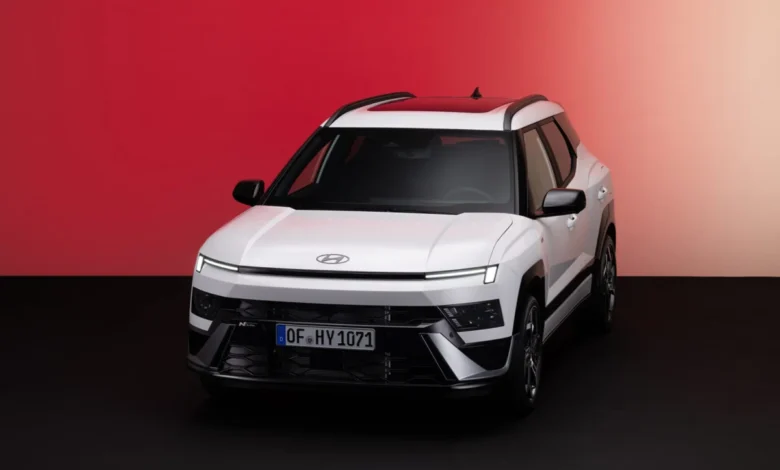
Hyundai Motor Company managed to safeguard its profit margins during the third quarter through favorable foreign exchange movements, yet underlying operational challenges persisted as both global sales volumes and overall revenue experienced noticeable contractions. According to financial disclosures released by the South Korean automotive giant, third-quarter revenue shrank by 3.4% year-on-year to reach KRW 45.1 trillion, which translates to approximately US$33.8 billion. This top-line decline was primarily driven by a steep 11.3% drop in global unit wholesales. Most concerning for the automaker’s long-term international strategy was a dramatic 68.8% collapse in sales within the Chinese market, underscoring structural difficulties that continue to plague foreign legacy manufacturers in the world’s largest automotive arena.
While currency tailwinds—specifically the relative strength of the US dollar against the South Korean won—have repeatedly cushioned Hyundai’s bottom line over recent reporting periods, industry analysts warn that relying on macroeconomic forex boosts is not a sustainable substitute for core operational growth. As aggressive local competitors, most notably China’s BYD, systematically expand their footprints and capture market share both abroad and increasingly within Hyundai’s domestic stronghold of South Korea, executive leadership faces mounting pressure to recalibrate its manufacturing, pricing, and electrification strategies.
Chronology of Third-Quarter Pressures and Market Realities
The trajectory leading up to Hyundai’s third-quarter financial report was marked by compounding headwinds across multiple international jurisdictions. Throughout the first half of the year, automotive conglomerates navigated shifting supply chain dynamics, fluctuating consumer demand caused by high interest rates, and an accelerating transition toward battery-electric vehicles (BEVs).
By the end of the second quarter, Hyundai had already noted softening demand in key Western markets and intensified price wars initiated by domestic Chinese manufacturers. As the third quarter commenced in July, inventory adjustments and slowing adoption rates for certain EV models began to weigh heavily on factory output. Wholesale shipments plummeted across major export hubs, culminating in the double-digit volume decline reported at the close of the period.
The situation in China deteriorated further during this timeframe. Once a lucrative growth engine for global automakers, the Chinese market has rapidly transformed into a hyper-competitive, domestic-led ecosystem dominated by local champions offering advanced software and highly affordable electric powertrains. Hyundai’s joint ventures in the country have struggled to retain consumer interest, resulting in the staggering 68.8% year-on-year sales contraction.
Simultaneously, the domestic South Korean market—traditionally a reliable profit anchor for Hyundai and its affiliate Kia—has begun to exhibit vulnerability. For decades, foreign entrants found it difficult to crack the loyalty of domestic consumers. However, the paradigm is shifting. Cost-competitive Chinese imports, particularly commercial vehicles and budget-friendly passenger electric vehicles, are successfully securing footholds in Korea, introducing a novel competitive threat to Hyundai’s home turf.
Comprehensive Financial Breakdown and Supporting Data
A granular examination of Hyundai’s third-quarter financial statements reveals a distinct divergence between nominal profitability and core operational volume. While the 3.4% decline in revenue to KRW 45.1 trillion reflects lower vehicle deliveries, the impact on operating income was partially mitigated by currency effects.
Global unit wholesales dropped by 11.3%, signaling that factories were operating at lower capacity utilization rates than in the corresponding period of the previous year. Lower utilization typically compresses manufacturing margins due to the inability to spread fixed plant overhead costs across a larger volume of vehicles. However, because a significant portion of Hyundai’s revenue is denominated in foreign currencies—chiefly the US dollar—the depreciation of the South Korean won artificially inflated the converted value of overseas sales when repatriated.
This macroeconomic cushion has become a recurring theme in Hyundai’s quarterly earnings calls. Over the past eight quarters, favorable foreign exchange rates have repeatedly rescued operating profit margins from the negative impacts of rising raw material costs, labor negotiations, and promotional discounting. Yet, financial analysts emphasize that forex fluctuations are inherently volatile and temporary. When currency tailwinds eventually subside, the underlying weakness in sales volume could expose vulnerabilities in Hyundai’s profit structure.
Geographically, the contraction was heavily skewed toward emerging and highly competitive markets. While North American and European operations showed relative resilience—supported by strong demand for hybrid electric vehicles (HEVs) and certain SUV lineups—the catastrophic performance in China overshadowed these regional gains. Furthermore, emerging markets in Asia and Latin America presented mixed results, constrained by local currency devaluation and tighter credit conditions for prospective car buyers.
Industry Reactions and Strategic Responses
In the wake of the earnings release, institutional investors, credit rating agencies, and automotive industry analysts have expressed cautious concern regarding Hyundai’s heavy reliance on currency benefits. Market observers point out that while Hyundai’s current product portfolio is robust and praised for its design and technological integration, the speed of the global EV transition requires massive capital outlays that depend on steady, volume-driven cash flow.
In response to the shifting landscape, Hyundai executives have signaled a strategic pivot focused on flexibility. Rather than committing solely to a rigid all-electric timeline, the company has emphasized its leadership in hybrid technology. Hybrids have served as a vital bridge for consumers hesitant to adopt pure battery-electric vehicles amid concerns over charging infrastructure and residual values. By leveraging its global manufacturing footprint to rapidly adjust the mix between internal combustion engines, hybrids, and pure EVs, Hyundai aims to protect its margins even when total unit volume fluctuates.
Furthermore, regarding the domestic threat posed by incoming Chinese brands, local industry associations and trade bodies have begun monitoring the influx of low-cost imported EVs. While free-market competition remains the baseline, domestic manufacturers are lobbying for standardized safety and battery-recycling regulations to ensure a level playing field. Hyundai, for its part, is accelerating its software-defined vehicle (SDV) roadmap and enhancing its domestic service network to reinforce customer loyalty against aggressive foreign competitors.
Broader Economic Impact and Future Implications
The challenges facing Hyundai Motor Company are emblematic of a broader structural transformation sweeping the global automotive industry. Legacy automakers are currently caught in a high-stakes transition period characterized by expensive research and development for electrification, sluggish consumer adoption in certain price segments, and the meteoric rise of agile, software-focused competitors originating from China.
For South Korea’s broader economy, Hyundai’s performance carries immense significance. As one of the nation’s largest private employers and exporters, shifts in Hyundai’s revenue and production volume directly impact a vast domestic supply chain comprising hundreds of component manufacturers, logistics providers, and technology partners. A sustained decline in global unit wholesales could trigger ripple effects throughout the domestic manufacturing sector, prompting calls for government-backed support or industrial policy adjustments to enhance the global competitiveness of Korean manufacturing.
Looking ahead to the final quarter of the fiscal year and into the medium term, Hyundai’s primary challenge will be to decouple its financial health from volatile currency markets. To achieve sustainable growth, the company must reverse the volume declines in key international markets, successfully defend its domestic market share against new entrants, and optimize its production cost structures to compete effectively in the burgeoning affordable EV segment. Whether foreign exchange movements will continue to provide a safety net remains to be seen, but management is acutely aware that operational excellence and volume recovery must ultimately drive the next phase of the automaker’s evolution.