Archaeologists discover a remarkably well-preserved Bronze Age sword in an Italian lake

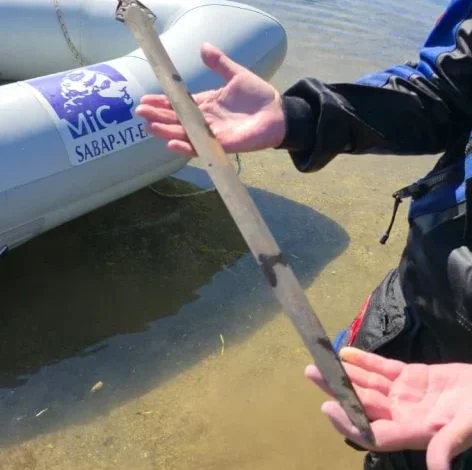
The discovery of a pristine Bronze Age sword submerged within the depths of an Italian lake has provided researchers with a rare window into the sophisticated metallurgical practices and ritualistic behaviors of European populations living over 3,000 years ago. This artifact, recovered by underwater archaeology teams working under the jurisdiction of the Superintendence of Archaeology, Fine Arts and Landscape for the Province of Viterbo and Southern Etruria, represents a significant find that challenges existing narratives regarding the deposition of high-status weaponry in aquatic environments.
The sword, which exhibits minimal signs of degradation despite centuries of submersion, was retrieved during a systematic underwater survey. Such sites, often termed "submerged contexts," are notoriously difficult to excavate due to the complex sedimentation processes and the fragile nature of materials preserved in anaerobic, or oxygen-poor, environments. The recovery process required specialized diving teams trained in underwater archaeological conservation techniques to ensure the weapon was stabilized immediately upon removal from the lakebed.
The Archaeological Significance of Bronze Age Weaponry
Bronze Age metallurgy in Italy reached a zenith during the period spanning approximately 1600 BCE to 800 BCE. The sword belongs to the "flame-bladed" or leaf-shaped category of weaponry common to the period, a design that balanced weight for cutting and piercing while maintaining structural integrity.
Metallurgical analysis is expected to determine the exact composition of the bronze—an alloy typically consisting of copper and tin. In the Italian context, the presence of specific trace elements often allows researchers to map the trade routes of the era. The ability to craft such a refined object suggests the presence of specialized artisan classes within the local community, as well as an established network for procuring raw materials. These swords were not merely tools for conflict; they were status symbols that demarcated the power dynamics of the elite, often representing the culmination of technological mastery in the ancient world.
Chronology of the Discovery and Site Context
The site of the discovery is situated within the volcanic lake systems of the Viterbo region, an area historically significant for its Etruscan and pre-Etruscan settlements. While the exact location remains protected to prevent unauthorized exploration, the site appears to have functioned as a ritual deposit point.

Archaeological timelines for the region suggest that throughout the late Bronze Age, water bodies were frequently utilized for votive offerings. This practice involved the deliberate placing of valuable objects—such as swords, jewelry, and ornate pottery—into lakes, rivers, or wells. The chronology of the artifact aligns with the Terramare culture or the subsequent Protovillanovan period, characterized by the transition toward more complex, centralized social hierarchies.
Historical data indicates that the practice of offering swords to water sources was a pan-European phenomenon. Similar finds have been documented across the British Isles, Scandinavia, and the Alpine regions. By placing these objects in lakes, Bronze Age communities were likely engaging in a complex negotiation with the sacred, perhaps intending to return the weapon to the "source" or to sanctify a site of communal importance.
Supporting Data and Comparative Analysis
Comparative studies conducted by the Superintendence emphasize the rarity of the find. Most bronze artifacts recovered from similar contexts show heavy corrosion or fragmentation caused by shifting lakebeds. The preservation of this particular sword, which appears to have retained much of its original luster and physical form, is attributed to the specific chemical composition of the lake’s silt and the lack of turbulent underwater currents.
In terms of regional data, the Viterbo area has yielded several caches of "hoard" material over the past century. However, isolated finds of high-quality weapons are statistically significant because they suggest individual acts of ritual behavior rather than the collective burial of loot or scrap metal. When cross-referenced with regional site maps, this discovery fills a gap in the understanding of how inland territories were integrated into the wider Mediterranean trade network.
Official Responses and Preservation Protocols
The Superintendence of Archaeology, Fine Arts and Landscape for the Province of Viterbo and Southern Etruria has issued statements confirming that the artifact is currently undergoing a rigorous conservation process. This involves controlled desalination—a process that removes chlorides that could lead to "bronze disease" or rapid oxidation once the metal is exposed to the atmosphere.
"The discovery is a testament to the long-term collaboration between underwater surveillance teams and regional historical authorities," a representative noted in preliminary briefs. The focus has now shifted toward long-term preservation and future exhibition. The artifact will eventually be subjected to X-ray fluorescence (XRF) and scanning electron microscopy (SEM) to identify the specific casting techniques used by the ancient metalsmiths. Such data will be crucial for the academic community to reconstruct the technological capabilities of the local populace during the transition to the Iron Age.

Broader Impact and Historical Implications
The presence of this sword prompts a re-evaluation of the social and spiritual landscape of prehistoric Italy. Historians have long debated the extent to which Bronze Age societies were organized into unified political entities. The discovery of such an exquisite weapon in a remote, possibly ritualized location supports the theory that even small, dispersed communities possessed the resources to command significant cultural and economic capital.
Furthermore, the artifact provides a counter-narrative to the idea that the Bronze Age was merely a period of incremental technical advancement. It highlights a period of intense artistic expression where the object held a dual purpose: a physical weapon and a spiritual vessel. The act of "decommissioning" a sword by placing it in a lake suggests a level of social planning and ritual adherence that was deeply ingrained in the daily lives of the inhabitants.
As researchers continue to document the find, the focus will remain on how this object fits into the wider mosaic of the Mediterranean Bronze Age. The recovery serves as a reminder of the fragility of the archaeological record; as climate change alters water levels and lake ecosystems, more such artifacts may be revealed. This necessitates a proactive approach to underwater cultural heritage management, ensuring that these submerged treasures are protected from looting and environmental degradation.
Future Research Directions
Future studies will likely focus on three core areas: the provenance of the copper ore, the comparative style of the hilt and blade, and the environmental history of the lake itself. Understanding the environmental conditions of the lake during the Bronze Age will help determine if the site was once a central hub of activity or a secluded area used exclusively for ceremonies.
The integration of GIS (Geographic Information System) mapping with existing data on surrounding terrestrial settlements will allow archaeologists to model the proximity of this ritual site to contemporary dwelling areas. This could lead to a deeper understanding of the socio-spatial relationship between the living and the sacred spaces they utilized.
In conclusion, the recovery of this Bronze Age sword is more than a mere addition to a museum collection; it is a critical data point that clarifies the cultural, technological, and ritualistic history of pre-Roman Italy. Through the continued application of rigorous scientific methods and interdisciplinary collaboration, the story of this artifact will continue to unfold, offering insights into a past that remains as compelling as it is mysterious. The commitment of the Superintendence to both the conservation and academic study of this find ensures that its historical value will be preserved for future generations, providing a foundational piece of evidence in the ongoing study of European prehistory.