From Sweet Children to Global Icons: The Genesis, Backlash, and Enduring Legacy of Green Day

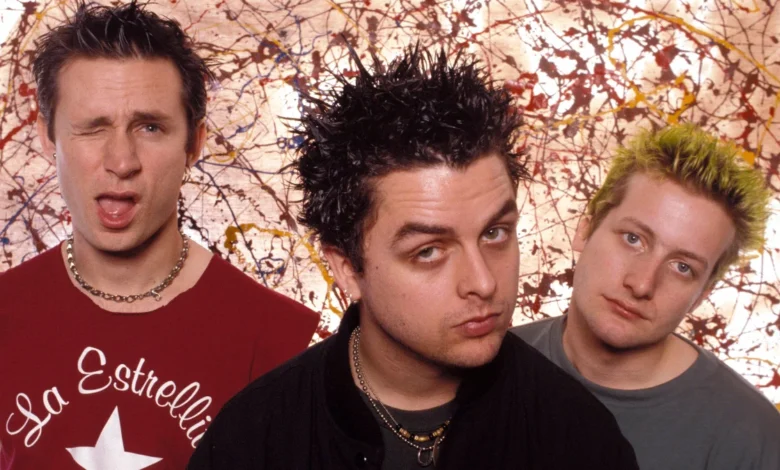
The trajectory of American rock music was irrevocably altered in the late twentieth century by a confluence of underground grit, melodic accessibility, and generational angst. At the center of this movement stands Green Day, a band that transitioned from the tight-knit, fiercely protective confines of the East Bay punk scene to global arena-dominance. The history of Green Day is not merely a chronicle of record sales and chart-topping singles; it is a complex narrative of artistic evolution, ideological friction within the punk community, and a lifelong tether to the DIY ethos that birthed them. Understanding the band’s meteoric rise requires a comprehensive examination of frontman Billie Joe Armstrong’s early musical immersion, the formative years spent at Berkeley’s 924 Gilman Street, the controversial leap to a major record label, and the cultural earthquake that was the 1994 release of Dookie.
The Formative Years: Billie Joe Armstrong and Mike Dirnt
Long before stadiums echoed with the anthems of a disaffected generation, the foundation of Green Day was laid in the unassuming suburbs and schools of Northern California. Billie Joe Armstrong displayed an affinity for music at an exceptionally young age. Raised in a working-class household, Armstrong was recording local vocal tracks by the age of five, capturing a song appropriately titled “Look For Love.”
As his musical curiosity deepened, tangible milestones marked his childhood. At age 11, Armstrong acquired his first electric guitar—a light-blue Fernandes Stratocaster affectionately and permanently christened “Blue.” To this day, “Blue” remains an iconic fixture of his rig, heavily modified with stickers and humbucker pickups, symbolizing the raw, unpolished beginnings of his songwriting career.
By the age of 14, Armstrong’s songwriting matured from youthful experimentation into structured lyrical expression. He penned his first complete song, “Why Do You Want Him?,” a composition reflecting the complex domestic dynamics between his mother and stepfather. This outlet for personal expression soon expanded into a collaborative partnership. At age 10, Armstrong crossed paths with Mike Pritchard—who would later adopt the moniker Mike Dirnt—in a school cafeteria. The two boys immediately bonded over a shared passion for music, forging a friendship that would weather decades of global touring, industry shifts, and personal growth. Interestingly, before committing fully to the bass guitar and helping anchor one of the most successful rhythm sections in rock history, Dirnt initially harbored ambitions of becoming a stand-up comedian.
Chronology of an Underground Awakening
Armed with a shared love for fast, aggressive music and melodic hooks, Armstrong and Dirnt formed a band initially christened Sweet Children. Seeking to flesh out their sound, they recruited John Kiffmeyer to man the drum kit. For the first few years, the trio operated within the vibrant, insular underground punk circuit of the San Francisco Bay Area.
By 1989, when the core members were roughly 17 years old, the group decided a rebrand was necessary to reflect their evolving identity. They officially changed their name to Green Day—a sly nod to their fondness for cannabis culture—and wasted no time entering the studio. That same year, they released their debut extended play, 1,000 Hours, through Lookout! Records.
At this juncture, the band’s physical and cultural home was 924 Gilman Street, a non-profit, all-ages punk club located in Berkeley, California. Gilman Street was more than just a venue; it was the epicenter of the East Bay punk revival, governed by a strict ideological code centered on do-it-yourself (DIY) principles, inclusivity, and an absolute rejection of commercialism. Green Day became fixtures of the club, earning the respect of local purists through relentless gigging and undeniable musical chemistry.
In 1990, the band recorded their official full-length debut album, 39/Smooth, which was met with critical acclaim across the underground music press. Capitalizing on their momentum, the band released two more EPs that same year: Slappy and Sweet Children. Recognizing the demand for their early material, Lookout! Records bundled these releases into a 1991 compilation album titled 1,039/Smothered Out Slappy Hours.
Lineup Changes and the Precipice of Mainstream Success
The year 1990 brought a pivotal personnel shift. Drummer John Kiffmeyer elected to leave the group to pursue higher education. Seeking a replacement, Armstrong and Dirnt found Frank Edwin Wright III, universally known as Tré Cool. Tré Cool stepped behind the drum kit with a ferocious technical proficiency and a theatrical stage presence that completed the definitive Green Day lineup.
With Tré Cool anchoring the rhythm section, the newly solidified trio immediately set to work on their sophomore studio album. Released on December 17, 1991, Kerplunk arrived at a time when the global music industry was undergoing a seismic shock. Just three months prior, Nirvana had released Nevermind, obliterating the hair-metal dominance of the 1980s and opening the floodgates for alternative rock and punk to enter the mainstream consciousness.
Kerplunk sold impressively for an independent release, catching the attention of major record labels scouring the underground for the next wave of commercial talent. Among them was veteran producer and A&R representative Rob Cavallo, who recognized that Green Day possessed a rare combination of punk-rock urgency and undeniable pop craftsmanship. In 1993, Cavallo successfully signed the band to Reprise Records, setting the stage for a major-label debut that would change the trajectory of their lives.
The Clash of Ideologies: The 924 Gilman Street Ban
While signing with a major label represented the ultimate validation and financial security for many developing acts, it carried a severe penalty within the dogmatic confines of the East Bay punk scene. 924 Gilman Street enforced a strict anti-corporate policy; signing to a major label was viewed by the community’s gatekeepers as the ultimate betrayal—an act of "selling out."
Knowing the inevitable backlash that awaited them, Green Day faced a difficult reckoning with their roots. Six months prior to the release of their major-label debut, the band requested and played a "farewell" show at 924 Gilman Street on September 3, 1993. Despite the sentimental send-off, the reaction from the local purists was swift and unforgiving. The band was officially blackballed from the venue, and local punk fans largely turned their backs on the trio, viewing them as corporate turncoats who had abandoned the community that nurtured them.
The Commercial Phenomenon of Dookie
On February 1, 1994, Green Day released Dookie, an album that would not only define the 1990s musical landscape but also cement itself as one of the most influential pop-punk records in history. Produced by Rob Cavallo alongside the band, Dookie balanced adolescent apathy, anxiety, boredom, and melodic brilliance across tracks like “Longview,” “Basket Case,” “When I Come Around,” and “She.”
The commercial impact was instantaneous and overwhelming. Dookie eventually peaked at No. 2 on the Billboard 200 chart and went on to sell over 20 million copies worldwide, earning the band a Grammy Award for Best Alternative Music Performance in 1995. Every single released from the album dominated the Alternative Airplay and Mainstream Rock charts, catapulting Green Day from underground darlings to international superstars. Along with contemporary acts like The Offspring and Bad Religion, Green Day successfully commercialized punk rock, paving the way for the pop-punk explosion of the late 1990s and early 2000s.
Reconciliation and Ongoing Community Support
Despite the bitterness of the initial split in 1993, time often softens ideological divides. More than a decade after being blackballed, Green Day demonstrated that their connection to the Bay Area punk community had not entirely dissolved.
On September 16, 2001, the band made a stunning, unannounced return to 924 Gilman Street. Capitalizing on a night when another band was scheduled to play, Green Day casually hopped onto the stage, borrowed the opening acts’ equipment, and delivered a short, high-energy surprise set that left the attending crowd in stunned disbelief.
The reconciliation deepened over the years, underscored by philanthropy rather than nostalgia. On May 17, 2015, Green Day performed at a highly publicized surprise benefit concert at 924 Gilman Street. The event was organized to raise critical funds for local Oakland publishing and recording spaces that had suffered catastrophic damage from a massive warehouse fire.
Broader Impact and Implications
The narrative of Green Day offers a compelling study in the tension between artistic ambition and subcultural authenticity. By refusing to let their past be defined solely by ideological purity tests, Armstrong, Dirnt, and Tré Cool demonstrated that commercial success does not inherently strip an artist of their foundational values.
Today, Green Day stands in the Rock and Roll Hall of Fame, having sold over 75 million records globally and inspiring countless musicians to pick up instruments and start bands in their garages. Yet, their willingness to return to the damp, unassuming stage of 924 Gilman Street during times of local crisis speaks volumes. The punk rock community may have initially turned its back on them for daring to dream beyond the confines of Berkeley, but Green Day proved that true loyalty is measured not by adherence to rigid underground rules, but by showing up when the community is in need.