As the cinematic landscape prepares to welcome the 4K restoration and director’s cut of Michael Mann’s seminal thriller Manhunter for a special theatrical re-release on July 24, a timely opportunity arises to re-examine a film that, despite its critical acclaim and enduring influence, has often been relegated to the shadows of its more commercially successful counterparts. This anniversary, marking four decades since its initial release on August 15, 1986, provides a crucial moment to dissect the enduring power of Manhunter and understand why it continues to captivate and provoke audiences, solidifying its status as a foundational work in the forensic thriller genre and a profound exploration of the human psyche.
A Deep Dive into the Enduring Allure of Manhunter
For cinephiles and critics alike, the experience of a film that imprints itself upon the viewer, demanding repeated engagement, is a rare and cherished phenomenon. This profound connection is often forged through a unique alchemy of compelling narrative, distinctive visual style, and unforgettable performances. Manhunter, director Michael Mann’s chilling foray into the world of serial killer profiling, stands as a supreme example of such a film. While personal admiration for a film can sometimes cloud objectivity, the enduring impact of Manhunter transcends mere subjective appreciation, revealing a work of art that continues to resonate with thematic depth and stylistic innovation.
The film, based on Thomas Harris’s 1981 novel Red Dragon, which first introduced the iconic Hannibal Lecter, has often found itself in the shadow of the critically lauded 1991 adaptation The Silence of the Lambs. However, a closer examination reveals that Mann’s vision offers a distinct and arguably more profound exploration of the genre’s core tenets. While The Silence of the Lambs garnered significant critical acclaim and widespread commercial success, including an unprecedented sweep of the Academy Awards’ "Big Five" categories, Manhunter has historically been less recognized by mainstream audiences and even by some of Mann’s most ardent admirers, who often cite Heat or The Insider as their favorite works by the director.
This underappreciation, however, does not diminish the film’s artistic merit. Instead, it highlights a particular set of stylistic and thematic choices that, while groundbreaking, may have initially positioned Manhunter as ahead of its time. The film’s visual language, its sonic landscape, and its unflinching portrayal of both the hunter and the hunted have cemented its place as a touchstone for subsequent thrillers.
The Genesis of a Forensic Thriller
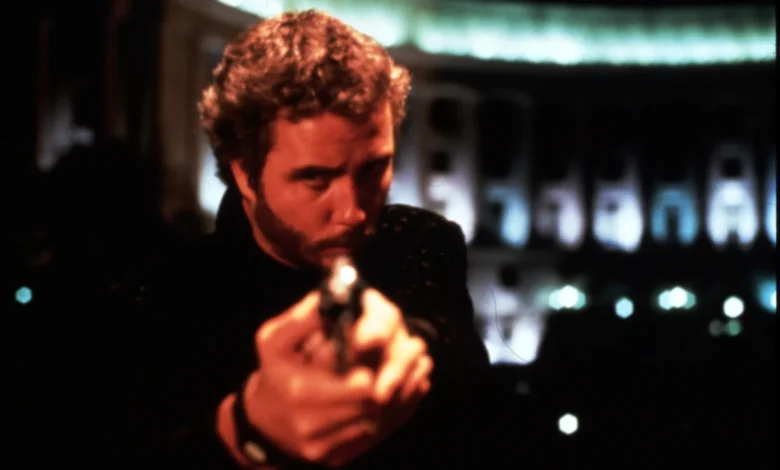
The narrative of Manhunter centers on Will Graham, a brilliant but haunted FBI profiler, portrayed with a captivating intensity by William Petersen. Graham is coaxed out of retirement to track down a terrifying serial killer known as "The Tooth Fairy," who systematically murders entire families. To catch the killer, Graham must immerse himself in the killer’s psyche, a process that forces him to confront his own inner demons.
The film’s production and release were contextualized by Michael Mann’s burgeoning reputation. Prior to Manhunter, Mann had helmed the modest success Thief (1981) and the commercial failure The Keep (1983). However, his role as executive producer and creative force behind the groundbreaking television series Miami Vice had already established him as a visionary in visual storytelling and a pioneer of "quality television." Miami Vice, with its cinematic flair, innovative use of music, and distinctive aesthetic, blurred the lines between television and film, setting a new standard for visual narrative on the small screen. This association, while elevating Mann’s profile, also cast a stylistic shadow that would influence the initial reception of Manhunter.
A Stylistic Departure and Its Reception
Manhunter‘s distinct aesthetic, characterized by its moody, neon-drenched visuals and an eclectic soundtrack featuring synth-pop and post-punk tracks, was a deliberate artistic choice by Mann and cinematographer Dante Spinotti. The film’s visual palette, described as both sensual and clinical, with its unique interplay of natural light and artificial fluorescence, created an atmosphere that was both disorienting and mesmerizing. This style, deeply rooted in the visual trends of the 1980s, led some critics and audiences to perceive the film as overly stylized or even dated.
The dialogue, peppered with lines that now evoke a strong sense of the era, such as Graham’s casual "It’s just you and me now, sport," further contributed to this perception. However, what some saw as a temporal constraint, others recognized as a timeless aesthetic. The film’s visual signature is not merely a reflection of its time but a deliberate construction that mirrors its thematic concerns. The lush, almost feverish visual style is intrinsically linked to the film’s exploration of perception, obsession, and the nature of seeing.
Deconstructing the Film’s Thematic Depth
The Dawn of the Forensic Thriller: Manhunter is widely credited as a progenitor of the modern forensic thriller. It was one of the first films to meticulously depict the scientific and psychological processes involved in criminal profiling. The film showcases a range of forensic techniques, from infrared analysis to detailed crime scene reconstruction, presenting them not merely as plot devices but as windows into the minds of both the investigators and the perpetrator. This technological immersion, however, is not presented as purely objective. Mann uses these forensic tools to illustrate how technology can both illuminate and entangle us, creating a sense of a controlled universe that is ultimately shattered by primal savagery. The film’s genius lies in its ability to translate these scientific details into poetic insights, offering a portal into altered states of consciousness.
An Unflinching Portrayal of a Serial Killer: The film’s depiction of Francis Dollarhyde, the "Tooth Fairy," portrayed by the late Tom Noonan, remains one of the most authentic and terrifying portrayals of a serial killer in cinematic history. Noonan, who tragically passed away in February 2024, delivered a performance that eschewed sensationalism for a chillingly nuanced exploration of psychopathy. His Dollarhyde is not a caricature but a deeply damaged individual, driven by a profound sense of self-loathing and a twisted desire for recognition. The film plunges the audience into Dollarhyde’s fractured consciousness, revealing the "damage" that fuels his horrific acts. This psychological depth distinguishes Manhunter from many other films in the genre, which often rely on gimmicks or superficial shock value.
Brian Cox’s Original Hannibal Lecter: While Anthony Hopkins’ portrayal of Hannibal Lecter in The Silence of the Lambs became iconic, it is essential to acknowledge Brian Cox’s mesmerizing performance in Manhunter. Cox’s Lecter, confined to a sterile white cell, is a figure of immense intellectual power and chilling charisma. His interactions with Graham are fraught with psychological tension, as Lecter manipulates and probes, offering veiled insights into the killer’s mind. Cox’s subtle yet commanding presence, his imperious yet amused delivery of lines, and his uncanny ability to project Lecter’s diabolical intellect and sensory acuity make his portrayal both terrifying and unforgettable. His Lecter, in his own way, suggests a disturbing possibility: that murder can, for some, be an expression of a higher, albeit twisted, state of being.
William Petersen’s Will Graham: A Mirror to the Modern Condition: William Petersen’s portrayal of Will Graham resonates deeply with contemporary audiences grappling with an era of misinformation and competing narratives. Graham’s quest to piece together disparate clues and restore order to a chaotic world mirrors our own daily struggles to make sense of complex realities. Petersen imbues Graham with a quiet intensity, a steely resolve, and a profound vulnerability. The film’s most moving scene, where Graham confides in his stepson about his descent into darkness after confronting Lecter, powerfully illustrates the toll of confronting the abyss. It is a poignant reminder that even good men can be irrevocably changed by exposure to the darker aspects of human nature.
A Transcendent Musical Score: The film’s soundtrack is an integral part of its atmospheric power. Michael Mann’s masterful use of music, from the haunting synth score to the carefully selected post-punk songs, elevates Manhunter beyond a mere crime procedural. The incorporation of Pink Floyd’s "Comfortably Numb" through its final chord sequence, even without direct licensing, is a testament to Mann’s innovative approach. The use of songs by Shriekback, The Prime Movers, and Iron Butterfly further enhances the film’s emotional and psychological resonance, underscoring the characters’ inner turmoil and the escalating tension of the narrative. These musical choices are not incidental; they are narrative threads that weave through the film, contributing significantly to its overall impact.
Manhunter: The Final Cut and the Integrity of Artistic Vision
The release of Manhunter: The Final Cut presents an opportunity to revisit the film, but it also raises questions about the nature of directorial intent and the preservation of artistic integrity. The "Final Cut" is, in essence, a refinement of the Director’s Cut released on DVD in 2003. While director’s cuts can offer valuable insights into a filmmaker’s vision, they can also, in some cases, detract from the original work.
In the case of Manhunter, the additions in The Final Cut, such as Graham’s more extensive explanations at the Atlanta police station and additional lines in the Lecter scenes, have been met with mixed reactions. The removal of certain visual elements, like the splattered condiments during the shootout with Dollarhyde, also represents a shift in the film’s texture. The most significant alteration is the addition of a scene depicting Graham visiting the next intended victim’s family, a scene the author of the original piece deems a misstep.
The argument against excessive tampering with a completed work of art is rooted in the understanding that a film, like a novel or a painting, possesses a distinct identity. To alter it significantly, even with the best intentions, risks diluting its original impact and potentially compromising its established artistic statement. Manhunter, in its original theatrical release and subsequent iterations, has already achieved a powerful and cohesive identity. As the article posits, "you don’t tamper with a movie like ‘Manhunter.’ It is what it is, and what it is is sacred."
A Superiority Asserted: Manhunter vs. The Silence of the Lambs
The enduring debate between Manhunter and The Silence of the Lambs often centers on their respective portrayals of Hannibal Lecter and their overall thematic impact. While The Silence of the Lambs is undeniably a classic and deserving of its accolades, Manhunter offers a more profound and disturbing experience. The film’s villain, Francis Dollarhyde, arguably presents a more terrifying and complex psychological portrait than Buffalo Bill in The Silence of the Lambs, whose character, while effective, is often seen as the weaker link in an otherwise masterful film.
Manhunter‘s strength lies in its deeper exploration of the human capacity for darkness and its intricate examination of the psychological toll of confronting evil. It is a film that not only depicts crime but also delves into the very nature of empathy, obsession, and the blurred lines between sanity and madness. In its sophisticated thematic layering, its groundbreaking visual style, and its unflinching portrayal of the human psyche, Manhunter stands not just as a remarkable thriller but as a profound cinematic statement that continues to resonate, offering a chillingly relevant reflection of our own complex world. The film’s enduring legacy is a testament to its ability to see the light that makes the darkness visible.