Apple Watch Series 12 and Ultra 4 launch marks the dawn of ambient audio intelligence amid growing privacy concerns

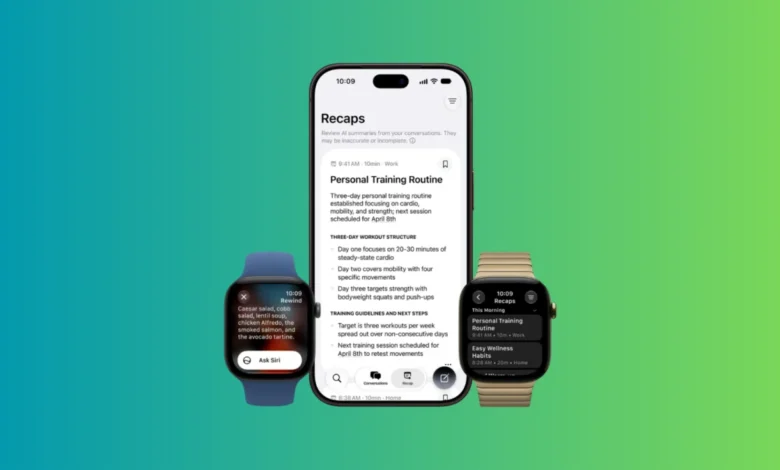
During the highly anticipated September 9 keynote, Apple unveiled the Apple Watch Series 12 and the Apple Watch Ultra 4, devices that signal a significant shift in wearable technology. Central to these new models is a suite of features branded as "Audio Intelligence." This capability allows the hardware to passively process ambient audio throughout the day, providing users with on-demand summaries of their conversations. While Apple characterizes this as a breakthrough in productivity and accessibility, the introduction of always-on, passive listening technology has ignited a firestorm of debate regarding the boundaries of personal privacy, the ethics of ambient surveillance, and the legal implications of non-consensual data capture.
The Technological Framework: How the S11 Chip Functions
The technical architecture behind Audio Intelligence is rooted in the newly developed S11 system-in-package. Unlike previous iterations, the S11 incorporates a "Secure Exclave," a hardware-isolated environment that remains inaccessible even to the device’s own operating system.
When the watch captures ambient sound, the audio is routed directly into this protected buffer. Within the Exclave, the data is encrypted before being transmitted to a matching Secure Enclave located on the user’s paired iPhone. Once the data reaches the iPhone, an on-device AI model generates a summary—typically half the length of the original conversation—while stripping away identifying markers and extraneous detail.
Crucially, the raw audio file is never saved. Apple’s technical documentation confirms that the buffer operates as a rolling, overwritable stream. Once the summary is generated, the raw audio data is overwritten. Only the distilled transcript and specific metadata, such as timestamps and generalized location data, are transmitted to Apple’s Private Cloud Compute (PCC) servers for further processing. Apple employs a third-party relay service to mask the user’s IP address during this transmission, ensuring that the cloud-based Siri AI processes the information without linking it to a specific Apple ID.
A Chronology of Apple’s AI Integration
The path to the Series 12 release was paved by several years of strategic R&D. In 2024, Apple began integrating generative AI models into its iOS ecosystem, starting with basic text and photo manipulation. By early 2025, the focus shifted toward "Personal Contextual Awareness," a project aimed at helping devices understand a user’s daily habits.
The September 9, 2026, announcement represents the culmination of this roadmap. Following the unveiling, industry analysts noted that Apple is attempting to normalize "ambient computing"—a concept where the device is no longer a tool that requires active input but a constant companion that interprets the world around it. However, the rapid deployment of this technology has caught many civil liberties organizations off guard, as they argue that the hardware’s capabilities have outpaced the development of social and legal norms.
Privacy Safeguards and the "Consent Gap"
Apple has implemented several safeguards to mitigate privacy risks. For the "Live Rewind" feature, the watch emits an audible chime and displays a visual indicator on the screen to notify those in the vicinity that active listening is occurring. Furthermore, the system is designed to be opt-in, requiring explicit user activation during the device setup process.
However, the "Siri Recap" feature presents a more complex challenge. Unlike Live Rewind, Siri Recap operates silently in the background without any real-time notification to bystanders. This disparity has drawn criticism from privacy advocates, who argue that the lack of transparency effectively turns unsuspecting third parties into subjects of data collection.
Apple’s official stance, as outlined in their September 2026 privacy white paper, maintains that because no permanent audio recording is created, the system does not constitute "recording" under standard legal definitions. "Audio Intelligence features do not create audio recordings that can be accessed by the operating system, apps, the user, or Apple," the company states. "There is no recording to share, forward, or produce if requested by any party, because no recording exists."

Legal Implications and Global Compliance
The legal landscape surrounding this technology is arguably the most volatile aspect of the launch. In the United States, 12 states—including California, Florida, and Pennsylvania—operate under "all-party consent" statutes, which generally prohibit the recording of private conversations without the knowledge and consent of all participants.
Legal scholars remain divided on whether Apple’s "buffer-to-summary" architecture successfully bypasses these statutes. If a court determines that the creation of a transcript constitutes a "record" of a conversation, users in these jurisdictions could theoretically face legal liability for simply wearing their watch in a public or private setting.
Internationally, the situation is even more stringent. The European Union’s General Data Protection Regulation (GDPR) mandates strict guidelines regarding the collection of personally identifiable information (PII). While Apple argues that its summaries are scrubbed of identifying information, the processing of ambient audio in a public space, even briefly, may violate the spirit, if not the letter, of European privacy mandates.
The Risk of Account-Level Vulnerabilities
While Apple’s server-side security is historically robust, the weakest link remains the user’s account. The integration of Siri Recap summaries into iCloud, Apple Notes, and the Journal app creates a permanent, searchable database of a user’s life.
The threat is not necessarily a breach of Apple’s servers, but a breach of the user’s digital identity. In January 2026, a significant data leak exposed approximately 900,000 iCloud credentials, highlighting the vulnerability of individual accounts to phishing and infostealer malware. If an unauthorized actor gains access to a user’s iCloud account, they would not just be accessing emails or photos, but an indexed, searchable history of months of private conversations. This potential for "conversational exfiltration" represents a new tier of cybersecurity risk for the average consumer.
Industry Analysis: The Future of Ambient Intelligence
Market research firms suggest that the success of the Series 12 will depend on public trust. "Apple is betting that the utility of having a ‘second brain’ for your daily interactions will outweigh the inherent privacy discomfort," says Dr. Elena Rossi, an analyst specializing in emerging technologies. "However, we are seeing a growing ‘privacy-first’ consumer movement. If Apple cannot prove that the social cost of these features is manageable, they may see a significant pushback, similar to the resistance Google faced with Google Glass in the early 2010s."
The broader implications are significant. If Apple succeeds in normalizing ambient audio capture, it is almost certain that competitors will follow suit, potentially turning all wearable devices into nodes in a massive, private, and decentralized audio-capture network. This shift could fundamentally change how people behave in public spaces, leading to a "chilling effect" where individuals become increasingly cautious about what they say in the presence of modern technology.
Conclusion and User Guidance
For users who decide to adopt the Apple Watch Series 12 or Ultra 4, Apple has provided granular control settings. Users can choose to enable or disable individual components of the Audio Intelligence suite. By navigating to the Settings app on the watch and selecting "Privacy & Security," users can toggle the "Audio Processing" and "Siri Recap" options.
As the technology enters the hands of millions, the debate will likely shift from the boardroom to the courtroom. Until clear legal precedents are established, users are advised to exercise discretion, particularly in professional or legal settings where privacy expectations are at their highest. Apple’s "be mindful of those around you" advisory, while legally vague, may prove to be the most practical guidance for users navigating this new era of ambient computing. Whether this feature becomes an essential utility or a privacy liability will ultimately be decided by how the public chooses to interact with the persistent, listening ear on their wrist.