President Trump Taps Stephen Miller as White House Chief of Staff as Administration Prepares for Divided Government

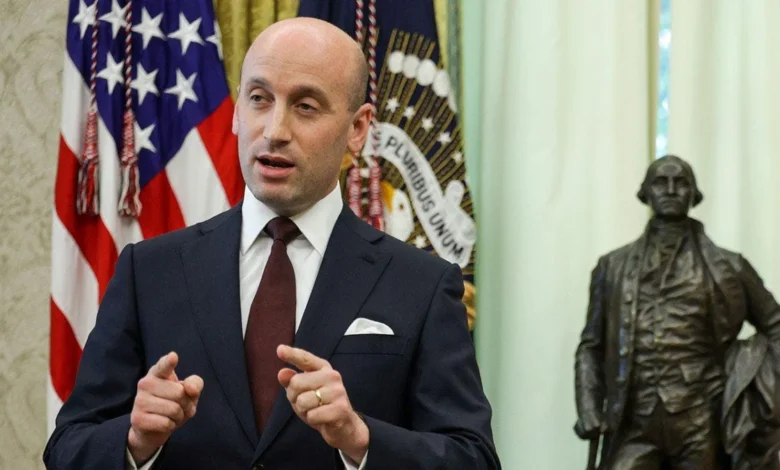
In a major shakeup at the highest levels of the executive branch, President Donald Trump has selected senior advisor and policy architect Stephen Miller to succeed Susie Wiles as White House Chief of Staff. The transition, which takes effect immediately on Monday, places one of the administration’s most hardline and influential strategists at the helm of the West Wing just as Washington braces for a dramatic shift in the balance of power following a turbulent midterm election cycle.
Wiles, who successfully managed much of the administration’s early operational machinery, is set to transition to Trump’s broader political operation. Meanwhile, Miller steps into the role of chief of staff with a clear mandate: safeguard the president’s core agenda, manage an aggressive executive action strategy, and prepare the administration for what promises to be a contentious final two years marked by divided government and likely legislative gridlock.

The Shift to Executive Power Amid Congressional Realignment
The appointment of Miller comes on the heels of major political shifts in Washington, where upcoming changes in congressional leadership will hand control of both the House and the Senate to the Democratic Party. With opposition lawmakers poised to assume committee gavels, subpoena power, and the ability to halt legislative initiatives, the Trump administration has been actively mapping out alternative routes to advance its policy goals.
For months, Miller has worked closely alongside Office of Management and Budget (OMB) Director Russell Vought and White House legal teams to identify and develop executive actions that can be implemented entirely independent of congressional approval. According to administration insiders, these preparations—underway since April—cover a wide spectrum of high-priority conservative domains, including sweeping immigration enforcement, targeted tariffs, federal spending adjustments, and housing cost initiatives.
Political analysts note that Miller’s elevation signals a clear strategic pivot. Rather than relying on bipartisan compromise in a hostile Capitol Hill environment, the administration is positioning itself to govern through unilateral executive authority, utilizing regulatory levers, administrative directives, and aggressive legal maneuvers.

Legal Foundations: The Legacy of Trump v. Slaughter
The legal framework supporting the administration’s executive-heavy strategy received a substantial boost earlier this year from the Supreme Court. In the landmark June ruling of Trump v. Slaughter, the high court expanded presidential authority by affirming that the executive possesses the constitutional power to remove certain federal commissioners—specifically targeting protections that previously restricted the firing of Federal Trade Commission (FTC) leadership.
President Trump has repeatedly pointed to the Slaughter decision as a cornerstone for his administration’s future governance. In a recent interview, Trump characterized the ruling as granting the presidency "tremendous powers that it never had before." By establishing greater direct control over independent agencies and bureaucratic leadership, the White House aims to streamline policy implementation and bypass traditional legislative bottlenecks.
In addition to leveraging executive orders and agency overhauls, Trump has signaled his readiness to use the presidential veto as a primary defensive weapon against any legislation advanced by the incoming Democratic majority. Referring to himself frequently as "Mr. Veto," the president has made clear that he is prepared to block congressional measures until opposing lawmakers come to the negotiating table on terms favorable to the administration.

Internal GOP Concerns and Strategic Divisions
While the appointment of Stephen Miller has been widely celebrated by populist conservatives and immigration hardliners who view him as an indispensable champion of the administration’s core mission, it has also sparked quiet anxiety among some traditional establishment Republicans on Capitol Hill.
The prospect of an administration leaning exclusively on executive power—combined with Miller’s influence—has generated unease regarding the legislative branch’s constitutional role. Speaking anonymously to media outlets, several Republican lawmakers expressed concerns that bypassing Congress entirely could set difficult precedents and erode the traditional checks and balances inherent in the federal system. Furthermore, some conservative figures have voiced apprehension that an increasingly executive-centric strategy might occasionally veer away from orthodox conservative economic principles in favor of populist-leaning compromises with the opposition.
Conversely, administration loyalists have robustly defended the move, emphasizing Miller’s deep policy expertise, his unwavering alignment with the president’s vision, and his proven track record on border security and immigration reform. Supporters point out that Miller commands the trust of millions of voters who view large-scale immigration reform and the dismantling of regulatory overreach as the defining political imperatives of the era.

Responses and the Path Forward
The White House has maintained a posture of firm resolve regarding its interactions with the incoming congressional majority. Administration spokespeople have reiterated that while the president remains open to working with any lawmakers willing to deliver tangible benefits to the American public, the executive branch will not hesitate to push back against what it describes as partisan overreach.
"If Democrats choose to pursue sham investigations and radical left policies, they are choosing to work against the American people," a senior White House official stated, echoing warnings issued across the administration regarding potential oversight battles and congressional subpoenas.
As Miller assumes his new responsibilities, the stage is set for a high-stakes showdown between an empowered executive branch determined to cement its legacy through aggressive administrative action and a newly energized legislative opposition eager to exercise its investigative powers. With the administrative calendar moving rapidly toward the new year, the effectiveness of Miller’s leadership will likely determine whether the Trump administration can successfully navigate the structural hurdles of a divided Washington.