Peggy King, the quintessential 1950s television icon and vocalist known to millions as Pretty Perky Peggy King, has passed away at the age of 96.

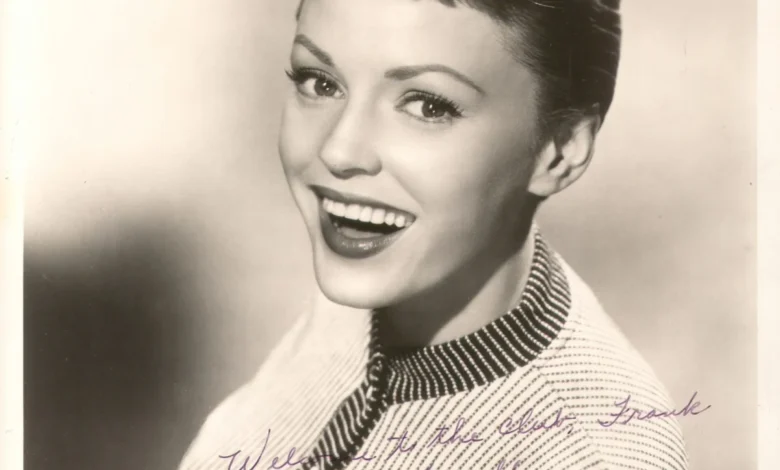
The celebrated performer, whose career spanned the golden age of live variety television, recording studios, and silver screen cameos, died on Sunday at the Saunders House Assisted Living facility in Wynnewood, Pennsylvania. Her passing, which marks the end of an era for mid-century American entertainment, was confirmed by her longtime publicist, Alan Eicher. King had been navigating a lengthy battle with Alzheimer’s disease prior to her death.
The Rise of a Television Icon
Born on February 16, 1930, in Greensburg, Pennsylvania, to Floyd Henry King and Margaret Finan, Peggy King’s journey to stardom was characterized by a rapid ascent through the ranks of the post-war entertainment industry. After graduating from Ravenna High School, she honed her craft as a radio singer in Cleveland, a medium that served as a training ground for the vocal clarity and poise that would eventually define her television persona.
Her breakthrough came in the mid-1950s when she secured a regular spot on "The George Gobel Show," a comedy-variety juggernaut that aired from 1954 to 1957. It was during this tenure that host George Gobel bestowed upon her the moniker "Pretty Perky Peggy King." The nickname was not merely a marketing gimmick; it captured the infectious, high-energy charm she brought to the screen during a decade that prioritized wholesome, vibrant, and optimistic entertainment. Her popularity was such that in 1955, she received an Emmy Award nomination for Best Female Singer, cementing her status as a premier vocalist of her generation.
A Chronology of Stardom
King’s professional trajectory is a roadmap of mid-century American popular culture. Her career can be categorized into three distinct phases: the radio-to-television transition, the peak variety show era, and the enduring legacy period.
1950–1953: The Early Years and Film Aspirations
Before becoming a household name on the small screen, King focused on the recording industry and film. In 1952, she signed a prestigious contract with MGM. This led to a memorable cameo in the Vincente Minnelli-directed classic "The Bad and the Beautiful," where her vocal contributions graced the soundtrack. Her transition into film continued with roles in productions such as "Abbott and Costello Meet the Mummy," showcasing her versatility in both dramatic and comedic environments.
1954–1959: The Variety Television Zenith
This period represented the height of King’s public visibility. Her resume during these years reads like a directory of the most significant programs in broadcast history. She was a fixture on "The Steve Allen Show," "The Perry Como Show," "The Garry Moore Show," and "The Jack Benny Program." Her presence was requested for high-profile specials, including Bob Hope’s "Chevy Show" and appearances on the culturally influential "American Bandstand."
Beyond musical variety, she proved her mettle in acting, securing dramatic roles in gritty series such as "Maverick" and "Dragnet." Her ability to transition from a lighthearted song-and-dance segment on "The Tonight Show Starring Johnny Carson" to a serious role in a police procedural demonstrated a range that many of her contemporaries lacked.
1960–2016: Longevity and Legacy
Even as the television landscape shifted in the 1960s, King remained a relevant force. She continued to perform across major cultural hubs, including Philadelphia, New York, and Los Angeles. Her commitment to the craft never waned; she released her final album, "Songs a la King," as recently as 2016, proving that her vocal acuity remained intact well into her eighties.
The "Cry Me a River" Missed Opportunity
An oft-cited anecdote in the history of pop music involves King and the iconic ballad "Cry Me a River." Composer Arthur Hamilton wrote the song specifically for King during her tenure under a long-term contract with Columbia Records. However, the label’s legendary A&R executive, Mitch Miller—known for his rigid taste in music—refused to allow King to record the track. The song was later recorded by Julie London, becoming a massive hit and an enduring jazz standard. This moment in music history serves as a poignant reminder of the control record executives exerted over artists during the mid-20th century, often dictating the trajectory of an artist’s catalog despite their creative instincts.
Cultural Significance and Industry Recognition
King’s impact on the industry was recognized early and often. She was among the inaugural group of celebrities to receive a star on the Hollywood Walk of Fame, an honor that underscores her massive influence during the formative years of the television industry. In 2010, she was inducted into the Broadcast Pioneers Hall of Fame, a recognition that solidified her legacy as a trailblazer for female entertainers in television.
Her work on the "The Mel Torme Show" for CBS and her successful, high-visibility commercial jingle for Hunt’s Tomato Sauce helped pioneer the integration of musical talent into corporate advertising—a model that remains a staple of the industry today.
The Broader Impact of Her Passing
The death of Peggy King serves as a reflective moment for media historians and fans of the "Golden Age" of television. As one of the last remaining performers from the 1950s variety circuit, her passing marks a definitive break with a period defined by live broadcasts, studio orchestras, and a specific brand of sophisticated, high-energy showmanship.
Industry experts note that King’s ability to remain "perky" and professional amidst the grueling schedules of 1950s television production—where stars often performed live multiple times a week—was a testament to her work ethic. Unlike modern entertainers who rely heavily on post-production editing, King and her peers were required to perform under the unforgiving lens of live television, where a single mistake was broadcast to millions of homes.
Official Statements and Personal Reflection
While the family has requested privacy during this time, the legacy of her impact is felt through the memories of the millions who tuned in to see her performances. Her daughter, Suzy Rudofker, and son-in-law, Dwain Goforth, remain her survivors, carrying forward the history of a woman who helped define the cultural output of an entire generation.
Reflecting on her career, colleagues often noted that King’s strength lay in her humility. Despite performing at the 1955 Academy Awards—where she sang "Count Your Blessings"—and co-hosting the Emmy Awards in 1958, she frequently spoke of her career with a sense of gratitude rather than entitlement. Her consistent presence in regional theater and local concert halls in Philadelphia well into her later years demonstrated a performer who loved the stage for the sake of the craft itself, rather than the allure of national fame.
Conclusion: A Lasting Resonance
Peggy King’s career was not just a collection of appearances; it was a testament to the versatility required of a female entertainer in the 1950s. She navigated the transition from radio to television, the complexities of film production, and the rigid structures of the recording industry with a unique brand of grace.
As the industry looks back on her life, it is clear that she was more than just the nickname George Gobel gave her. She was a professional who navigated the evolving media landscape for over six decades. With her passing, the "Pretty Perky" era of American entertainment finds its final, graceful bow. Her contribution to the American songbook and the history of television remains a permanent fixture, ensuring that while the performer may be gone, the "Songs a la King" will continue to resonate for future generations of music enthusiasts.
Related posts: