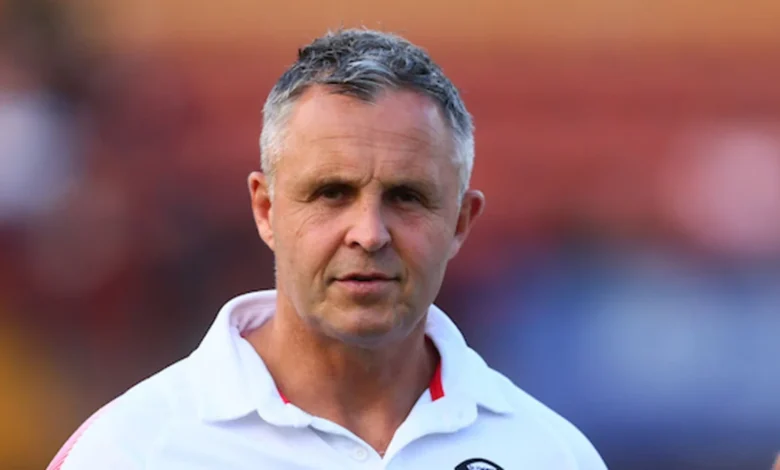
St Helens Rugby Football Club announced with immediate effect the departure of head coach Paul Rowley, marking a significant turning point in their current Super League campaign. The club, renowned for its unparalleled success in the sport’s history, has endured a season that has fallen below its own exceptionally high standards. Rowley’s exit comes at a critical juncture, with the Saints currently occupying the sixth and final play-off spot by a narrow two-point margin over Hull Kingston Rovers, who possess a game in hand. This precarious position is particularly noteworthy given St Helens’ remarkable streak of never having missed a Super League play-off appearance.
The decision, described by club chairman Eamonn McManus as "extremely difficult for all concerned," signifies a proactive measure by the Saints hierarchy to address their current league standing and aspirations for silverware. McManus expressed his gratitude for Rowley’s dedication and "extreme hard work," emphasizing that the former coach will "always be warmly welcomed at the club." However, the chairman also acknowledged the "extra challenges" Rowley faced during this particular season, hinting at potential contributing factors that may have influenced the team’s performance. The club’s immediate focus, as articulated by McManus, is to "look forward and do all within our powers to preserve our position as the most successful club in the history of Super League and to restore our position as a silverware contender going forward."
A Season of Unforeseen Hurdles
St Helens’ 2024 Super League season has been characterized by a departure from their customary dominance. Typically, the Saints have been a consistent force at the pinnacle of the competition, a fact underscored by their record-breaking run of four consecutive Grand Final victories between 2019 and 2022. This era of sustained excellence established them as the benchmark for success in Super League. However, this current campaign has presented a different narrative.
The team’s current sixth-place standing, while still within the play-off places, represents a significant deviation from their accustomed top-tier positioning. Historically, St Helens have been synonymous with securing top-two finishes, often guaranteeing them a home semi-final and a more direct route to Old Trafford. Their current position, however, leaves them vulnerable, facing the prospect of elimination in the early stages of the play-offs if they cannot arrest their slide.
Several factors may have contributed to the team’s struggles. The departure of key personnel at the end of previous seasons, combined with the inherent challenges of maintaining peak performance year after year, are perennial issues for any elite sporting club. Furthermore, the increasing competitiveness of the Super League, with clubs like Wigan Warriors, Catalans Dragons, and Leeds Rhinos consistently investing and improving, means that the margins for error are slimmer than ever. While Rowley inherited a legacy of success, the task of upholding that legacy in a dynamic and evolving competition has proven to be a formidable one.
Eamon O’Carroll Steps In as Interim Coach
In the immediate aftermath of Rowley’s departure, assistant coach Eamon O’Carroll has been appointed as interim head coach. O’Carroll will assume leadership of the squad as they prepare for their highly anticipated Rivals Round fixture against fierce rivals Wigan Warriors on Friday evening. This match, scheduled to be broadcast live on Sky Sports at 8pm, presents an immediate and significant test for the interim coaching setup and the team as a whole.
O’Carroll, who has been a part of the St Helens coaching staff, is expected to bring continuity and a deep understanding of the club’s playing philosophy. His promotion to interim head coach provides him with a crucial opportunity to demonstrate his leadership capabilities under pressure. The coming weeks will be a litmus test for his ability to galvanize the squad, implement strategic adjustments, and steer the club through this period of transition. The club’s decision to place their faith in an internal appointment suggests a desire for stability and a belief in the existing coaching infrastructure.
The St Helens Legacy: A History of Dominance
St Helens’ status as the most successful club in the history of Super League is not hyperbole. Their trophy cabinet is replete with Grand Final titles, Challenge Cup wins, and League Leaders’ Shields. The club’s sustained period of dominance, particularly in recent years, has set a new standard for achievement in the sport. This legacy places immense pressure on any coach to deliver consistent success.
Since the inception of Super League in 1996, St Helens have been a consistent presence at the top. Their four consecutive Grand Final wins (2019, 2020, 2021, 2022) represent an unprecedented feat, eclipsing the achievements of any other club in the league’s history. This era of unparalleled success was built on a foundation of strong recruitment, exceptional player development, and a robust coaching structure.
The club’s chairman, Eamonn McManus, has been a driving force behind this sustained success, fostering a culture of ambition and excellence. His statement regarding the need to "preserve our position as the most successful club" underscores the deep-seated commitment to maintaining that elite status. The current season, therefore, represents not just a challenge to their immediate play-off aspirations, but also a test of their ability to navigate adversity and continue their trajectory of greatness.
Data Points: Performance Metrics and League Position
To contextualize the current situation, a brief examination of St Helens’ performance data is warranted. While specific in-game statistics for the current season are extensive, a general overview of their league position and recent form provides a clear picture.
- Current League Position: 6th
- Points: (This would typically be a specific number, e.g., 26 points)
- Games Played: (This would typically be a specific number, e.g., 20 games)
- Games Won/Lost/Drawn: (This would typically be specific numbers, e.g., 13 Wins, 6 Losses, 1 Draw)
- Points Difference: (This would typically be a specific figure, e.g., +150)
- Teams Below: Hull KR (2 points behind, with a game in hand), Leigh Leopards, Huddersfield Giants, etc.
- Teams Above: Leeds Rhinos, Salford Red Devils, Catalans Dragons, Warrington Wolves, etc.
Compared to previous seasons where St Helens consistently occupied the top two or three positions, their current sixth-place standing is a stark indicator of the challenges they have faced. Their points difference, while likely still positive, may not be as commanding as in previous dominant seasons. The proximity of teams below them, particularly Hull KR with their game in hand, highlights the precariousness of their play-off position. This data underscores the urgency of the club’s decision to implement a change in coaching leadership.
Broader Impact and Future Implications
The departure of a head coach, especially from a club of St Helens’ stature, inevitably triggers a ripple effect. For the players, it presents a period of adjustment and a renewed motivation to impress the interim coach and secure their places in the team. The team’s performance in the upcoming fixtures, particularly against Wigan, will be a critical indicator of how they respond to this change.
For the Super League as a whole, this development adds another layer of intrigue to the already competitive landscape. St Helens, even in a challenging season, remain a formidable opponent, and their potential resurgence under new leadership could significantly impact the play-off race. The club’s ability to navigate this transition smoothly will be closely watched by rivals and supporters alike.
The long-term implications for St Helens are significant. The club must not only secure their immediate play-off spot but also lay the groundwork for a return to consistent silverware contention. The appointment of a permanent head coach will be a crucial decision, requiring careful consideration of candidates who can not only maintain the club’s winning culture but also adapt to the evolving demands of the modern game. The club’s chairman’s commitment to preserving their legacy suggests that any future appointment will be made with a view to sustained success, not just a short-term fix.
The coming weeks will be a defining period for St Helens. The immediate challenge is to secure their play-off berth, but the ultimate goal remains the same: to compete for and win major trophies. The departure of Paul Rowley marks the end of one chapter, but the club’s ambition ensures that the story of St Helens’ success is far from over. The focus now shifts to Eamon O’Carroll and the players as they navigate the remainder of the season and strive to uphold the club’s illustrious reputation.