The 64th New York Film Festival Kicks Off With High-Profile Premieres And A Slate Deeply Rooted In Contemporary Realities

The 64th New York Film Festival (NYFF) officially launches its prestigious showcase at Lincoln Center’s Alice Tully Hall, setting the stage for a multi-week celebration of global cinema that blends highly anticipated 2026 releases with high-impact world premieres. Running through October 12, the festival’s robust program features 119 films—comprising 75 feature-length projects and 44 short films—distributed across its Main Slate, Spotlight, Currents, and Revivals sections, accompanied by an extensive series of industry talks and public panels.
Under the leadership of Artistic Director Dennis Lim, this year’s festival has captured the attention of the global film industry not merely through its heavy-hitting line-up, but by virtue of its distinct connection to contemporary sociopolitical and cultural dialogues. Lim has consistently emphasized that while securing coveted global bows is a boon for the festival, the true catalyst for the event’s prestige is the discerning, deeply engaged New York City audience.
The New York audience engages with a film in a way that is meaningful to filmmakers and that creates a memorable launch for a film, Lim notes, pointing to the distinctive environment that transforms local screenings into cultural events. This year’s slate reflects that dynamic, offering an eclectic mix of major narrative features, high-stakes biographical dramas, and uncompromising documentary investigations that speak directly to the complexities of the modern world.
A Star-Studded Opening And Closing Bookend The Festival
The festival’s opening night shines a spotlight on James Gray’s Paper Tiger, setting a serious and sophisticated tone for the weeks ahead. Gray’s latest narrative feature brings a distinct cinematic voice to the Alice Tully Hall stage, anchoring a lineup that balances established auteurs with boundary-pushing newcomers.
At the other end of the calendar, the festival will close with Ava DuVernay’s 14th, a direct and anticipated follow-up to her acclaimed 2016 documentary 13th, which notably opened the NYFF that same year. DuVernay’s return to the festival’s closing slot underscores a sustained creative partnership with Lincoln Center and highlights the festival’s ongoing commitment to platforming essential non-fiction filmmaking.
In addition to DuVernay, the documentary lineup boasts heavy-hitting world premieres from celebrated directors such as Jonathan Glazer and Paul Thomas Anderson, the latter showcasing a special concert film capturing Cameron Winter’s performance at Carnegie Hall. These high-profile additions reinforce NYFF’s evolving status as a premier autumn launchpad for both narrative and documentary cinema, a reputation solidified over years of successful festival runs.
The Circuitous Routes To The Red Carpet: Artificial, Godzilla Minus Zero, and You Can See Everything
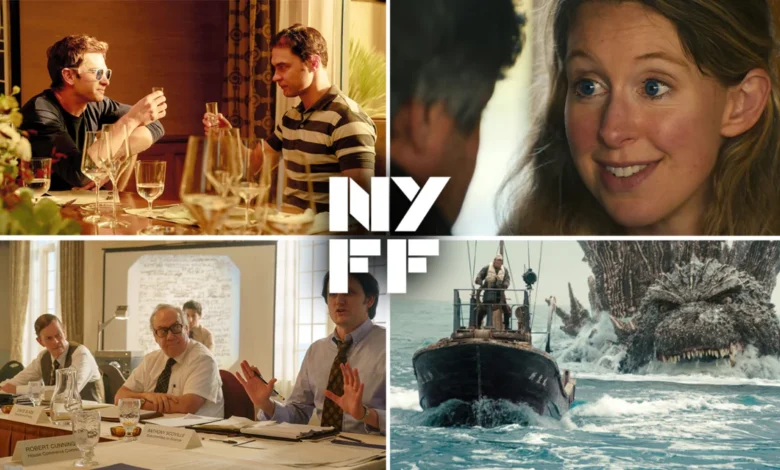
The curation of the 64th NYFF lineup required navigating complex behind-the-scenes distribution shifts, unexpected production timelines, and tightly guarded industry secrets. Among the most discussed entries in the festival is Luca Guadagnino’s Artificial, a $50 million biographical drama centered on OpenAI CEO Sam Altman.
The film’s journey to the NYFF screen was notably circuitous. Artificial faced periods of uncertainty following corporate restructuring and leadership changes at Amazon. Initially developed under the Amazon umbrella, the nearly completed project was ultimately dropped by the tech giant after the company made substantial financial investments in Altman’s OpenAI, with executives determining that the film would be better served under a different banner. In June, independent distributor Neon acquired global distribution rights, swiftly positioning the Guadagnino-directed picture within its competitive awards season slate. Lim notes that while conversations regarding the film had taken place during its time at Amazon, its transition to Neon finalized its trajectory toward a 2026 festival premiere.
Conversely, the development and placement of Takashi Yamazaki’s Godzilla Minus Zero followed a remarkably proactive timeline. A sequel to the massive international success distributed by Gkids and Toho, the new installment engaged with festival organizers early in the spring. Recognizing the immense, intricate visual effects work required for the production, festival programmers viewed an unfinished cut during the summer. Because the previous film bypassed the traditional festival circuit entirely, the filmmakers and Toho expressed a distinct interest in pursuing a different release strategy for the sequel, culminating in its prominent placement in the NYFF lineup.
Perhaps the most secretive and culturally disruptive entry in the non-fiction sector is You Can See Everything, an A24-backed documentary directed by Nathan Fielder and Lance Oppenheim. The film chronicles the final days of disgraced Theranos founder Elizabeth Holmes in her San Diego home during 2023, just before she reported to federal prison following her conviction for defrauding investors.
The project was executed under extreme confidentiality. Though Lim was aware of the film’s existence, production and distribution teams maintained strict secrecy to maximize the impact of a surprise world premiere at the Telluride Film Festival. Following its shock screening in Colorado, the documentary secured its place on the NYFF calendar.
Critics have highlighted the unprecedented access granted by Holmes, who allowed filmmakers to mic her for at least 12 hours a day while wide-angle and close-up cameras documented her movements. Fielder, making his feature film directorial debut following his acclaimed 2023 Showtime series The Curse—itself a rare television project to screen in the NYFF main slate—reportedly built a level of trust with Holmes that culminated in her asking him to accompany her on her final drive to prison.
Engaging Reality: NAZA and the Sociopolitical Lens of the 2026 Slate
Beyond biographical profiles and franchise sequels, the 2026 NYFF features works that lean directly into immediate geopolitical realities. Among them is NAZA, directed by Yuval Abraham and Rachel Szor, which arrives in New York following a celebrated world premiere at the Venice Film Festival, where it earned a reported 25-minute standing ovation.
Shot primarily at night on rooftops in Tel Aviv, NAZA presents an investigative look into the systemic destruction and loss of life resulting from military campaigns. The filmmakers conducted interviews with Israeli military intelligence officers and active-duty soldiers, examining the human and institutional toll of contemporary warfare.
Reflecting on the overarching thematic cohesion of the festival’s selections, Lim observed that the boundary between art and contemporary reality has rarely felt more porous. Films are not made in a vacuum, they are made by people, Lim remarked, emphasizing that the 2026 slate engages directly and unflinchingly with modern institutions and shared global challenges. Whether through fiction or documentary, the works selected for the 64th edition reflect an artistic community grappling head-on with the friction of the modern world.
Implications For The Fall Festival Circuit And Awards Season
The positioning of the New York Film Festival at this juncture in the calendar year underscores its strategic importance within the broader entertainment industry. As studios and independent distributors alike map out their campaigns for the autumn awards cycle, NYFF has increasingly cemented its status as a critical crucible for critical validation and commercial momentum.
The successful acquisition and placement of high-risk projects like Artificial and the unprecedented access achieved in You Can See Everything signal a shifting appetite among both creators and distributors for transparency, timeliness, and boldness in subject matter. Furthermore, the inclusion of late-breaking, politically charged investigations like NAZA demonstrates that major film festivals remain vital forums for international discourse.
As screenings commence across Lincoln Center’s venues through October 12, industry observers will be watching closely to see how audiences and critics receive these high-stakes premieres, and how the festival’s diverse offerings translate into the broader awards season conversation in the months ahead.