Madrid Five-Day Itinerary: Navigating Spain’s Capital Through Culture, History, and Culinary Arts


Home to approximately 3.5 million residents within its municipal boundaries and over 6.5 million in its broader metropolitan area, Madrid stands as the vibrant political, economic, and cultural capital of Spain. As the largest city in the country, it annually welcomes upward of 10 million international and domestic visitors. While coastal destinations like Barcelona often capture initial international media attention, Madrid offers an expansive urban landscape defined by world-class art institutions, architectural diversity ranging from medieval Habsburg layouts to modern urban planning, and a famously dynamic social fabric. Navigating a metropolis of this scale requires strategic planning to balance iconic landmarks with lesser-known cultural assets, particularly for travelers seeking an immersive, well-paced five-day itinerary.
Day 1: The UNESCO Paseo del Prado and Historic House Museums
The foundational day of the itinerary concentrates on the "Landscape of Light," a cultural and urban landscape officially designated as a UNESCO World Heritage site in July 2021. This prestigious corridor encompasses more than 40 architectural monuments and significant institutional buildings, seamlessly blending urban green spaces with historical architecture.
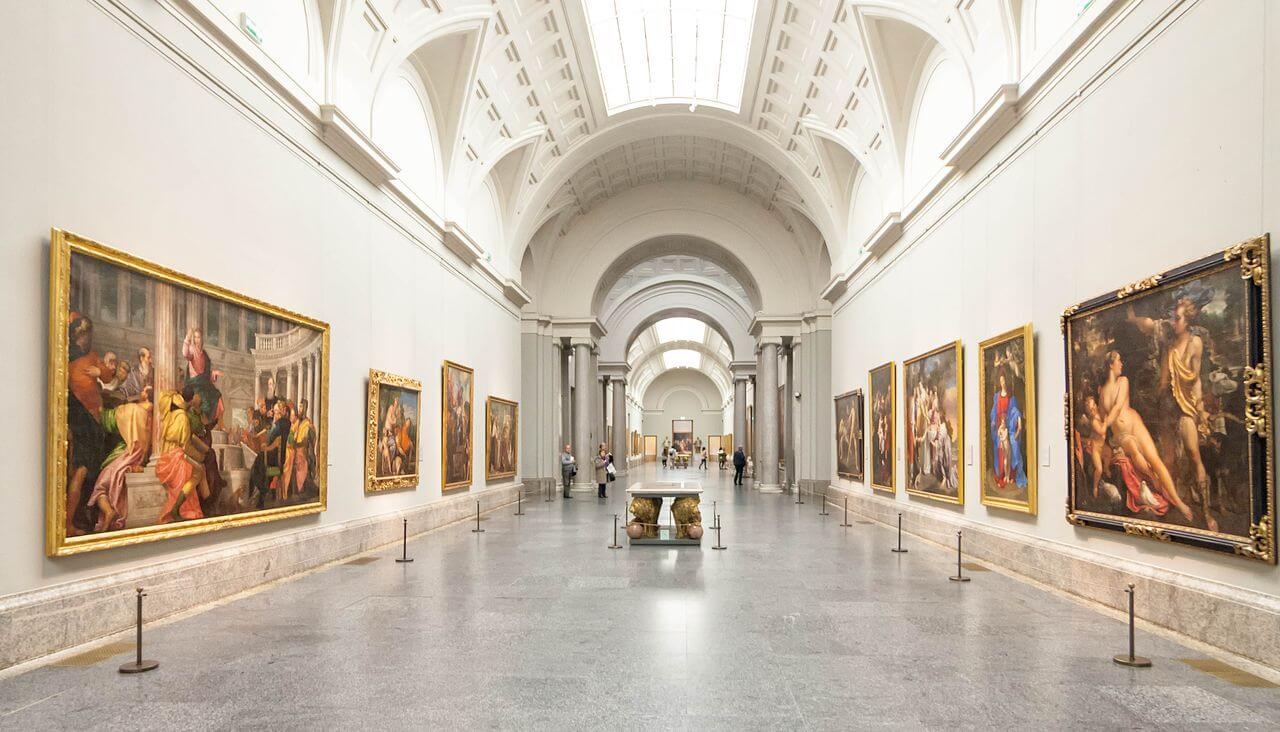
The cultural immersion begins at the Museo Nacional del Prado, widely recognized as one of the preeminent art galleries globally. Established in 1819, the museum houses extensive collections representing European art from the 12th to the early 20th century. Visitors encounter foundational works by Spanish masters such as Francisco Goya, Diego Velázquez, and El Greco, alongside international icons including Peter Paul Rubens, Sandro Botticelli, and Caravaggio. Given the sheer scale of the institution—which holds thousands of paintings, sculptures, prints, and drawings—arts sector analysts recommend allocating a minimum of three hours to navigate the primary galleries.
Ten minutes away along the Paseo del Prado lies the Thyssen-Bornemisza Museum, which bridges historical gaps by offering a comprehensive survey of Western art from the early Renaissance through Pop Art. The day’s major museum circuit concludes at the Museo Nacional Centro de Arte Reina Sofía. Dedicated primarily to 20th-century contemporary art, the Reina Sofía features masterworks by Salvador Dalí, Joan Miró, Wassily Kandinsky, and Francis Bacon. The undeniable centerpiece of the collection is Pablo Picasso’s 1937 monumental oil painting, Guernica, a globally recognized anti-war masterpiece commissioned for the Spanish Pavilion at the Paris International Exposition.
Following the morning’s museum visits, the afternoon transitions to Madrid’s architectural house museums, which preserve the private domestic environments of prominent historic figures. Among these, the Sorolla Museum—dedicated to the luminous Impressionist canvases of Joaquín Sorolla, often styled as the "painter of light"—underwent extensive architectural and infrastructural renovations ahead of its reopening. Alternatively, visitors can explore the Museum of Romanticism or the Lázaro Galdiano Foundation, the latter housing a vast eclectic collection assembled by collector José Lázaro Galdiano within a neo-Renaissance mansion.
Day 2: Habsburg Madrid and Architectural Landmarks
The second day shifts chronological focus to the medieval and Renaissance foundations of the city, historically designated as Madrid de los Austrias (Habsburg Madrid). Urban exploration typically initiates at Puerta del Sol, the bustling public square that serves as the official geographic heart of the nation. Embedded in the pavement outside the former Post Office is Kilometer Zero (Kilómetro Cero), the designated origin point from which all national radial highways are measured. Adjacent to the plaza stands the iconic bronze statue of El Oso y el Madroño (The Bear and the Strawberry Tree), which has served as the heraldic symbol of Madrid since the 13th century.
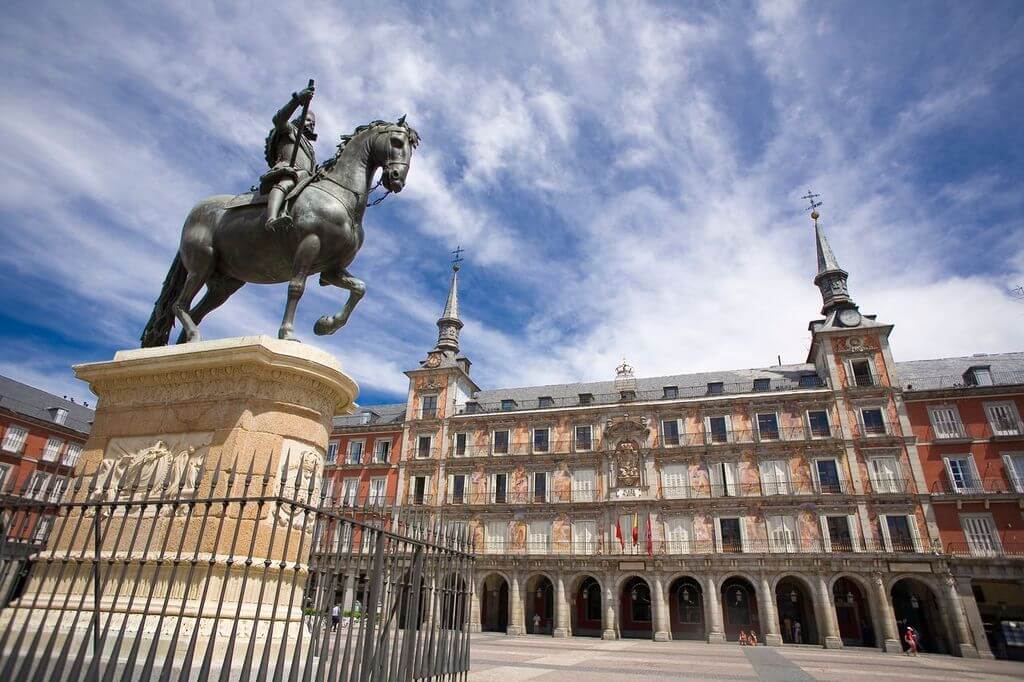
From Sol, the route proceeds to the Plaza Mayor, a rectangular public square constructed during the reign of Philip III in the early 17th century. Historically utilized for royal ceremonies, bullfights, public markets, and Inquisition trials, the porticoed square is framed by historic residential facades, most notably the Casa de la Panadería.
The afternoon is dedicated to the Royal Palace of Madrid (Palacio Real), constructed on the site of a 9th-century Muslim fortress originally built by the Emirate of Córdoba. Following a devastating fire in 1734 that destroyed the ancient Alcázar, King Philip V commissioned the current Italianate Baroque structure, which was completed in 1755. Spanning over 135,000 square meters and containing 3,400 rooms, it ranks as the largest functioning royal palace in Europe by floor area. Although it serves as the official residence of the Spanish royal family, it is exclusively utilized for state ceremonies, receptions, and official audiences, leaving its opulent staterooms, throne room, and Royal Armory open to public visitation.
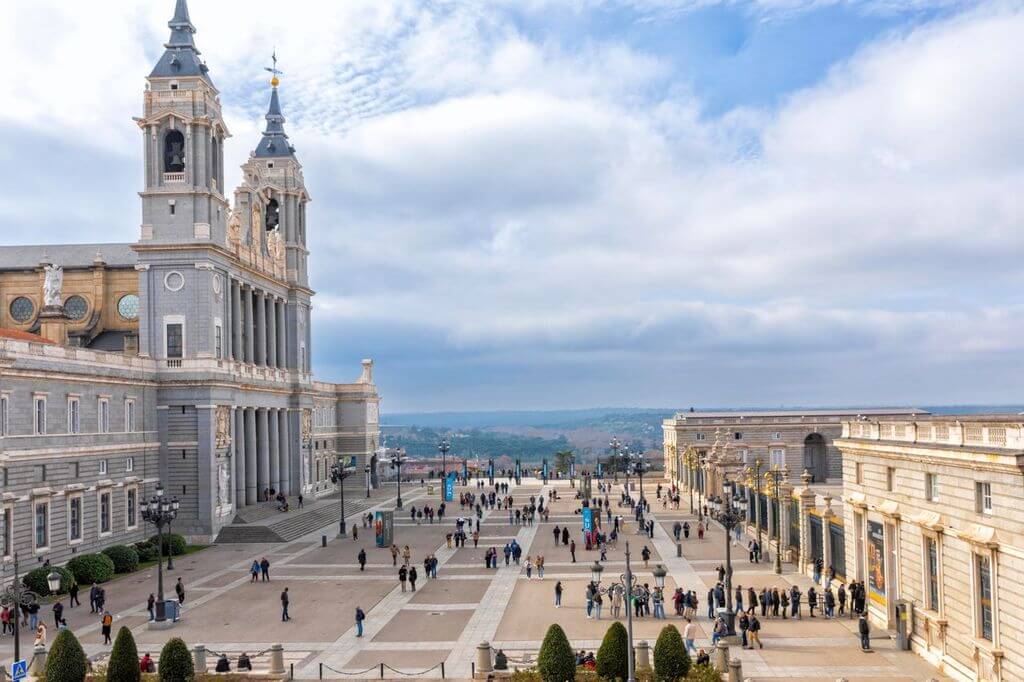
Concluding the historical tour is the Cathedral of Santa María la Real de la Almudena. Construction on the monumental neoclassical exterior and neo-Romanesque crypt began in 1879 under architect Francisco de Cubas, but due to interruptions caused by the Spanish Civil War and funding shortages, the cathedral was not consecrated until 1993 by Pope John Paul II.
Day 3: Gastronomic Heritage and Urban Rooftops
Recognized internationally as a premier culinary destination, Madrid’s food culture reflects both traditional Castilian foundations and contemporary culinary innovation. Day three focuses on the city’s robust network of historic food markets and dining institutions.
The architectural and culinary tour begins at the Mercado de San Miguel, a historic iron-and-glass market structure located near Plaza Mayor. Operating as a high-end gastronomic marketplace, it offers an array of regional tapas, seafood, and artisanal products. Additional neighborhood hubs, such as the Mercado de San Antón in Chueca and the Mercado de Vallehermoso in Chamberí, provide deeper insights into local culinary trends, local sourcing, and the integration of sustainable gastronomy.
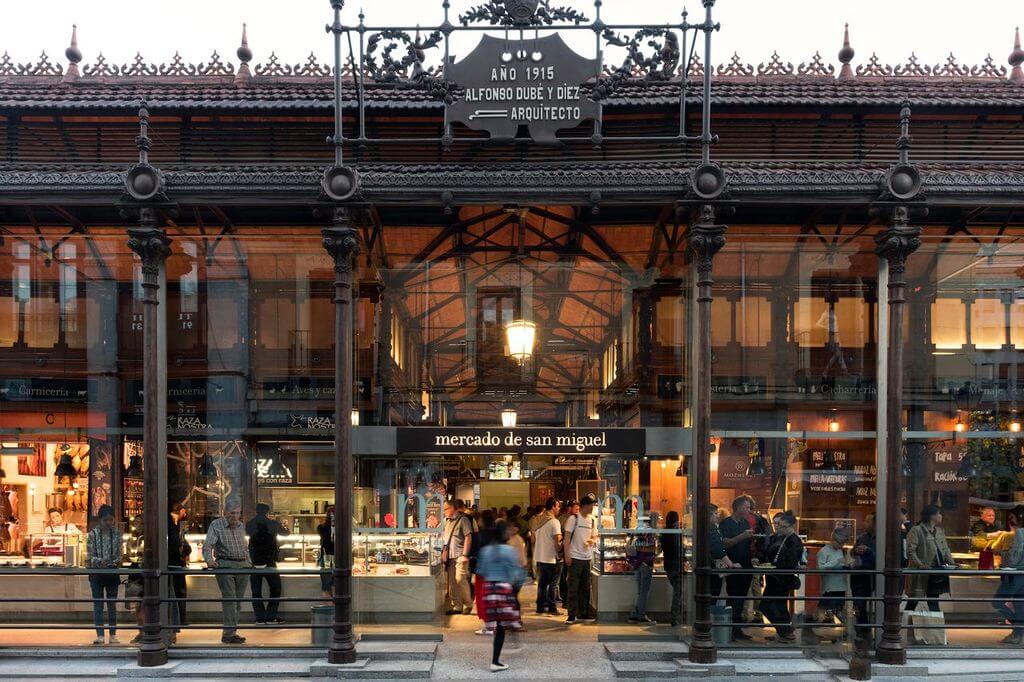
For dinner, culinary historians often direct visitors to Sobrino de Botín, certified by Guinness World Records as the oldest continuously operating restaurant in the world, having opened its doors in 1725. Renowned for its traditional Castilian roast suckling pig (cochinillo asado) and roast lamb, the establishment holds historical significance as a documented favorite of American author Ernest Hemingway.
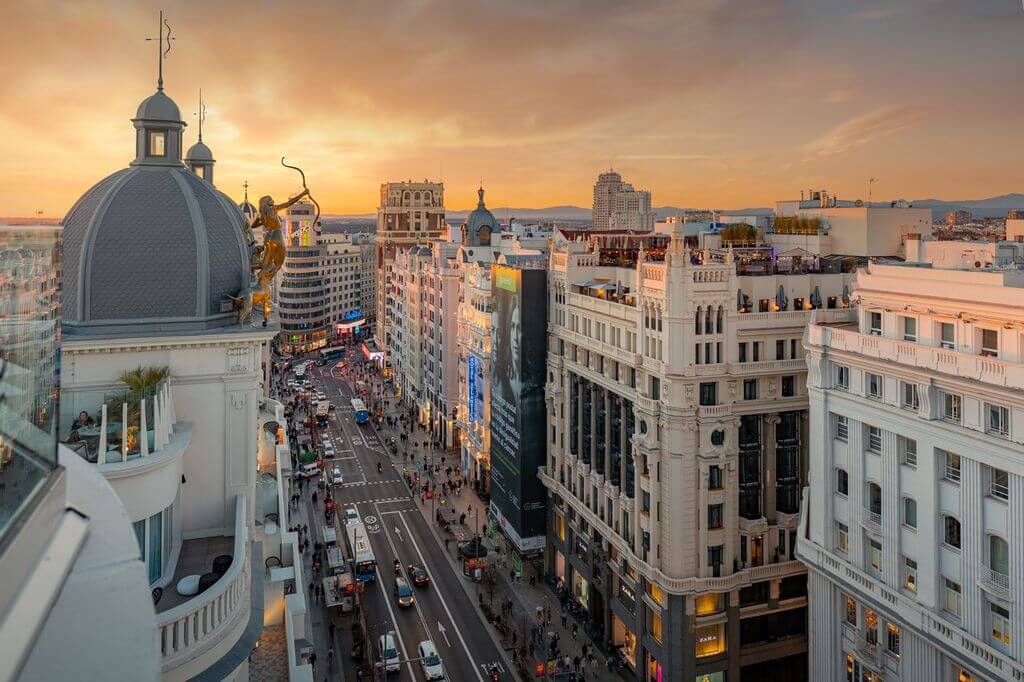
As evening approaches, the urban landscape shifts toward Madrid’s thriving rooftop culture, centered predominantly along the Gran Vía. Commercial developments featuring elevated terrace bars, such as those atop the Edificio España and surrounding hospitality venues, provide panoramic 360-degree views of the capital’s skyline, illustrating the city’s balance between preserved historic architecture and modern urban development.
Day 4: UNESCO Day Trips and Monumental Environs
Capitalizing on Madrid’s central geographic location within the Iberian Peninsula, the fourth day explores significant UNESCO World Heritage sites situated within a one-hour radius of the city center.
To the northwest, nestled against the Guadarrama mountain range, lies the Royal Monastery of San Lorenzo de El Escorial. Commissioned by King Philip II in the 16th century and completed in 1584, this sprawling architectural complex was designed by architects Juan Bautista de Toledo and Juan de Herrera to serve as a monument to the Spanish Counter-Reformation and a dynastic pantheon. Constructed from austere gray granite, the complex houses a royal basilica, a historic library containing thousands of priceless manuscripts, a monastery, and the royal crypt where most Spanish monarchs from Charles V onward are interred.
Alternatively, travelers may visit the Royal Palace and Gardens of Aranjuez, situated 50 kilometers south of Madrid along the Tagus River. Established as a royal spring residence during the Habsburg dynasty and expanded under the Bourbons, the palace complex reflects a blend of French and Italian landscape and architectural design, surrounded by expansive monumental gardens.
A third regional option is the historic university city of Alcalá de Henares, located 35 kilometers northeast of the capital. Designated a UNESCO World Heritage site in 1998, the city is celebrated for its historic medieval and Renaissance layout, its prestigious 15th-century university founded by Cardinal Cisneros, and its status as the birthplace of Miguel de Cervantes, author of Don Quixote.
Day 5: Cloistered Monasteries and Urban Green Spaces
The final day of the itinerary shifts toward secluded architectural gems and expansive natural preserves within the metropolitan area. The morning centers on Madrid’s historic royal monasteries, specifically the Monastery of Las Descalzas Reales and the Royal Monastery of La Encarnación.
Founded in 1559 by Joanna of Austria, daughter of Emperor Charles V, the Monastery of Las Descalzas Reales occupies a 16th-century Renaissance palace. Historically inhabited by women of high aristocratic lineage who entered the Order of Saint Clare, the cloistered convent accumulated significant dowries comprising fine art, tapestries, and sacred relics, preserving them largely undisturbed for centuries. Similarly, the Royal Monastery of La Encarnación, founded in 1611 by Queen Margaret of Austria, wife of Philip III, showcases an austere exterior concealing a lavishly decorated interior featuring religious sculptures, frescoes, and a venerated collection of sacred relics.
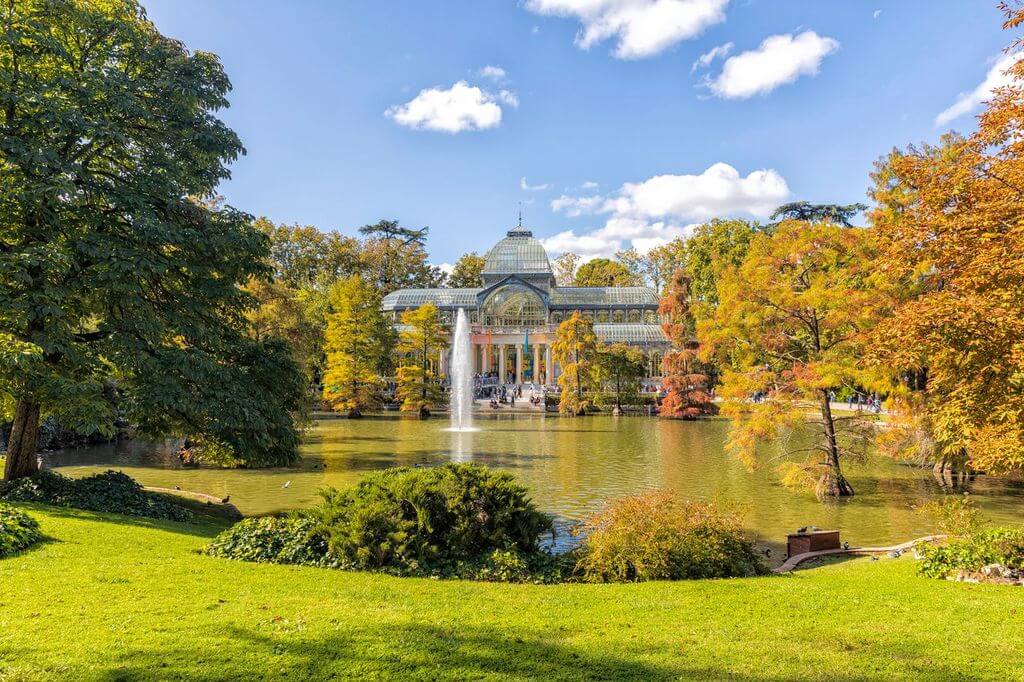
The itinerary concludes at Casa de Campo, the largest public park in Madrid. Spanning roughly 1,700 hectares (over 6.5 square miles), the park was established in 1931 following the fall of the monarchy, transitioning former royal hunting grounds into public recreational space. Featuring an artificial lake, extensive ecological reserves, and recreational facilities, the park’s lakeside terraces offer unobstructed views across the urban skyline toward the Royal Palace and Almudena Cathedral, providing a fitting conclusion to a comprehensive exploration of Spain’s historic capital.
Related posts: