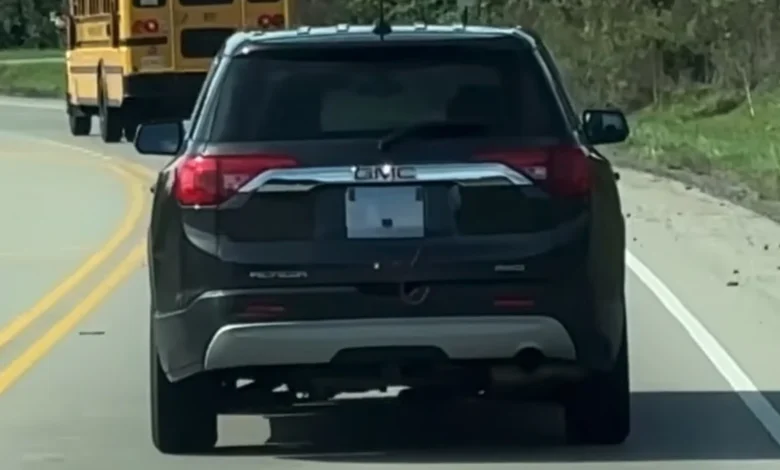
The proliferation of Automated License Plate Recognition (ALPR) technology has fundamentally transformed modern law enforcement and private security. At the forefront of this shift is Flock Safety, a company that has deployed tens of thousands of cameras across the United States. These systems capture an estimated 20 billion images of vehicles and license plates every month, feeding a massive, searchable database that tracks movement patterns across municipalities. As this digital dragnet expands, a growing segment of the driving public has sought ways to mitigate their digital footprint. The latest development in this "privacy arms race" comes from the creator behind the YouTube channel Studio Hotrods, who has engineered a sophisticated, GPS-triggered device designed to obscure a license plate only when the vehicle enters the vicinity of a known Flock camera.
The Technology Behind the Flock-O-Matic
The device, colloquially dubbed the "Flock-O-Matic," represents a significant leap in DIY electronic countermeasures. Unlike rudimentary methods—such as applying reflective tape, mud, or illegal plastic covers that obscure a plate permanently—this system utilizes "smart glass" (polymer-dispersed liquid crystal) technology.
At the heart of the system is an Arduino microcontroller, a popular open-source electronics platform. The microcontroller is interfaced with a GPS module that provides real-time location data. This coordinate information is then cross-referenced against a locally stored database of known Flock camera locations, a list likely derived from community-sourced initiatives such as the DeFlock mapping project.
The mechanism is elegant in its simplicity: when the vehicle is in a standard driving environment, the smart glass receives a constant electrical current, rendering it transparent and ensuring the license plate remains fully legible and compliant with state vehicle codes. However, once the GPS determines the vehicle has entered a pre-defined geofence—the detection radius of a recorded Flock camera—the Arduino interrupts the power supply. Without electricity, the smart glass instantly transitions to an opaque state, rendering the license plate unreadable to external optical sensors. As the vehicle exits the camera’s zone, power is restored, and the plate returns to a transparent, legal state.
The Context of Surveillance Expansion
To understand the motivation behind such inventions, one must look at the rapid scale of surveillance infrastructure in the United States. Flock Safety’s business model relies on a network effect: residential neighborhoods, private businesses, and law enforcement agencies contribute to a shared database. While proponents argue that the technology is an essential tool for solving crimes—such as locating stolen vehicles or identifying suspects in violent incidents—critics argue that the cumulative effect is a persistent, non-consensual tracking of private citizens.
The concern is not merely theoretical. There have been documented instances of "false positives" in ALPR systems, where misread plates have led to erroneous stops and, in some cases, the detention of innocent motorists by law enforcement. These incidents have highlighted the risks inherent in relying on automated systems that lack human oversight at the point of data capture. Consequently, digital privacy advocates have increasingly promoted tools like MapQuest’s camera-avoidance routes and open-source mapping projects to help drivers navigate around fixed surveillance points.
Legal and Regulatory Challenges
While the Flock-O-Matic is technically innovative, its operation faces significant legal hurdles. Under the statutes of most U.S. jurisdictions, a vehicle’s license plate must be clearly visible and unobstructed at all times while the vehicle is in operation on public roadways.
The legality of license plate covers is governed by state-level motor vehicle codes. According to industry analyses by legal monitoring groups such as Allowed Here, there is no uniform standard. Some states have issued blanket bans on all forms of license plate covers, regardless of their transparency or intent. In Illinois, where the developer behind the Flock-O-Matic is registered, the statutes regarding license plate visibility are particularly stringent. Even in states where clear covers are technically permitted, the law often mandates that no material may be placed over the plate that would interfere with its legibility by law enforcement or automated toll systems.
The core legal issue is the concept of "intent vs. effect." The designer of the Flock-O-Matic has attempted to build a system that maintains compliance for 99% of a trip, only obscuring the plate for the few seconds required to pass a camera. However, law enforcement agencies do not generally differentiate between temporary and permanent obstructions. If an officer were to pull over a vehicle with this device, the simple presence of the hardware, regardless of its current state, could be cited as a violation of traffic safety regulations. Furthermore, the potential for manual override—where a driver could force the glass to remain opaque—presents a liability that regulatory bodies are unlikely to overlook.
Broader Implications for Privacy and Law Enforcement
The emergence of this device signals a growing cultural divide regarding the role of surveillance in public life. For law enforcement, the primary goal is the hardening of public spaces against criminal activity. The ability to track a vehicle’s movement across a city in real-time is viewed as a force multiplier that compensates for shrinking police budgets and personnel shortages.
Conversely, the development of devices like the Flock-O-Matic suggests a technological backlash. If members of the public feel that the balance between security and privacy has tipped too far toward total surveillance, they will inevitably look to technology to restore a measure of anonymity. This creates a cycle where:
- Surveillance networks expand to capture more data.
- The public develops countermeasures to evade that surveillance.
- Regulators react by tightening laws and increasing enforcement against those countermeasures.
The result is a cat-and-mouse game that consumes resources on both sides. While Studio Hotrods has indicated that they are exploring a patent for the technology, the commercial viability of such a device is questionable. Any manufacturer attempting to sell such a product would face a barrage of legal challenges, not only from regulators but also from the surveillance companies themselves, who have a vested interest in maintaining the integrity of their data collection networks.
Analysis of Future Trends
Looking ahead, the tension between privacy and security is likely to intensify. Advances in artificial intelligence and edge computing mean that cameras will become even more capable. Future iterations of surveillance might not rely solely on license plates; they may utilize vehicle make, model, color, and even minor physical characteristics to maintain tracking continuity.
For the average motorist, the takeaway is clear: while the desire for privacy is a powerful motivator for innovation, the legal system remains heavily tilted toward the maintenance of plate visibility. Projects like the Flock-O-Matic serve as a fascinating case study in engineering and a poignant reflection of modern privacy concerns, but they also serve as a warning. Engaging in "technological disobedience" on public roads carries significant risks, including vehicle impoundment, fines, and increased scrutiny from law enforcement.
As of now, the Flock-O-Matic remains a prototype—an exercise in what is technically possible rather than what is legally permissible. While it highlights the fragility of our current privacy landscape, it also reinforces the reality that in the digital age, being "off the grid" while on the public road is an increasingly difficult, and legally perilous, endeavor. For now, the most effective tool for those concerned about ALPR technology remains the simple, if somewhat inconvenient, practice of manual route planning to avoid areas known for high-density surveillance, rather than attempting to physically mask one’s vehicle.
Related posts: