James Webb Space Telescope observations reveal mysterious shifts in the rings surrounding the centaur Chariklo

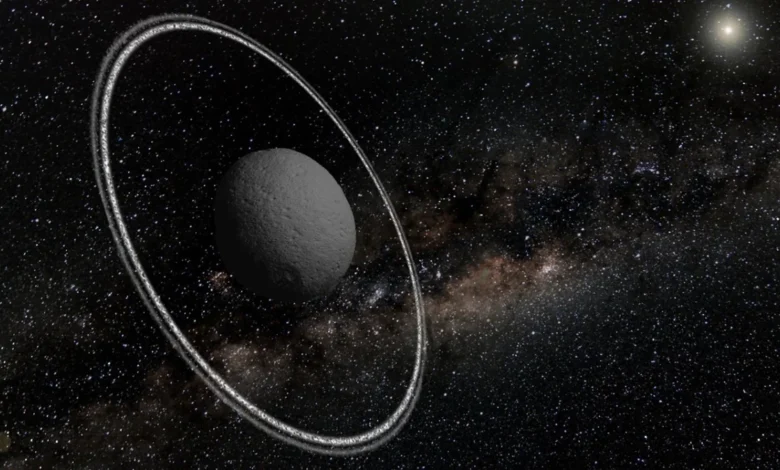
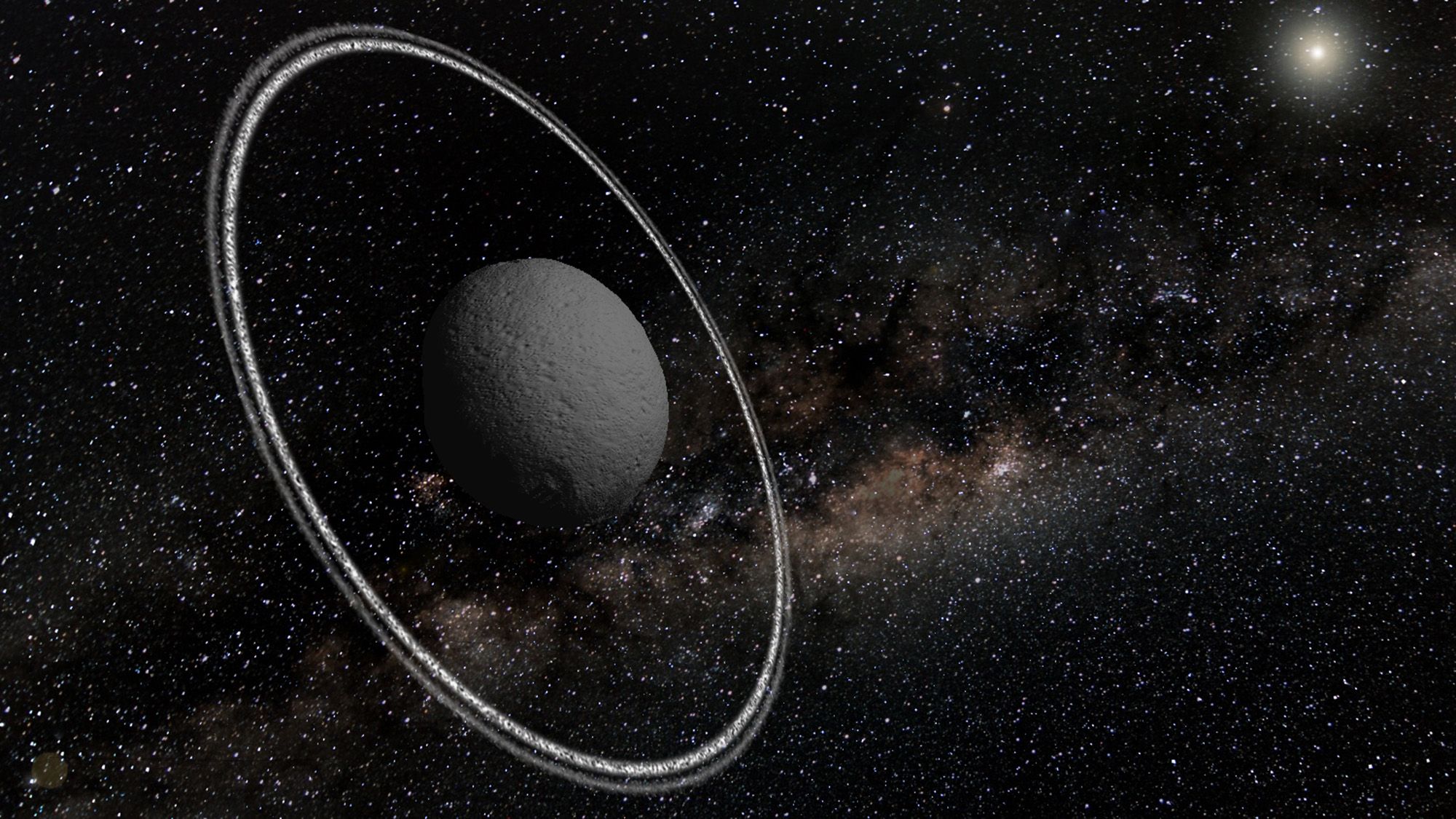
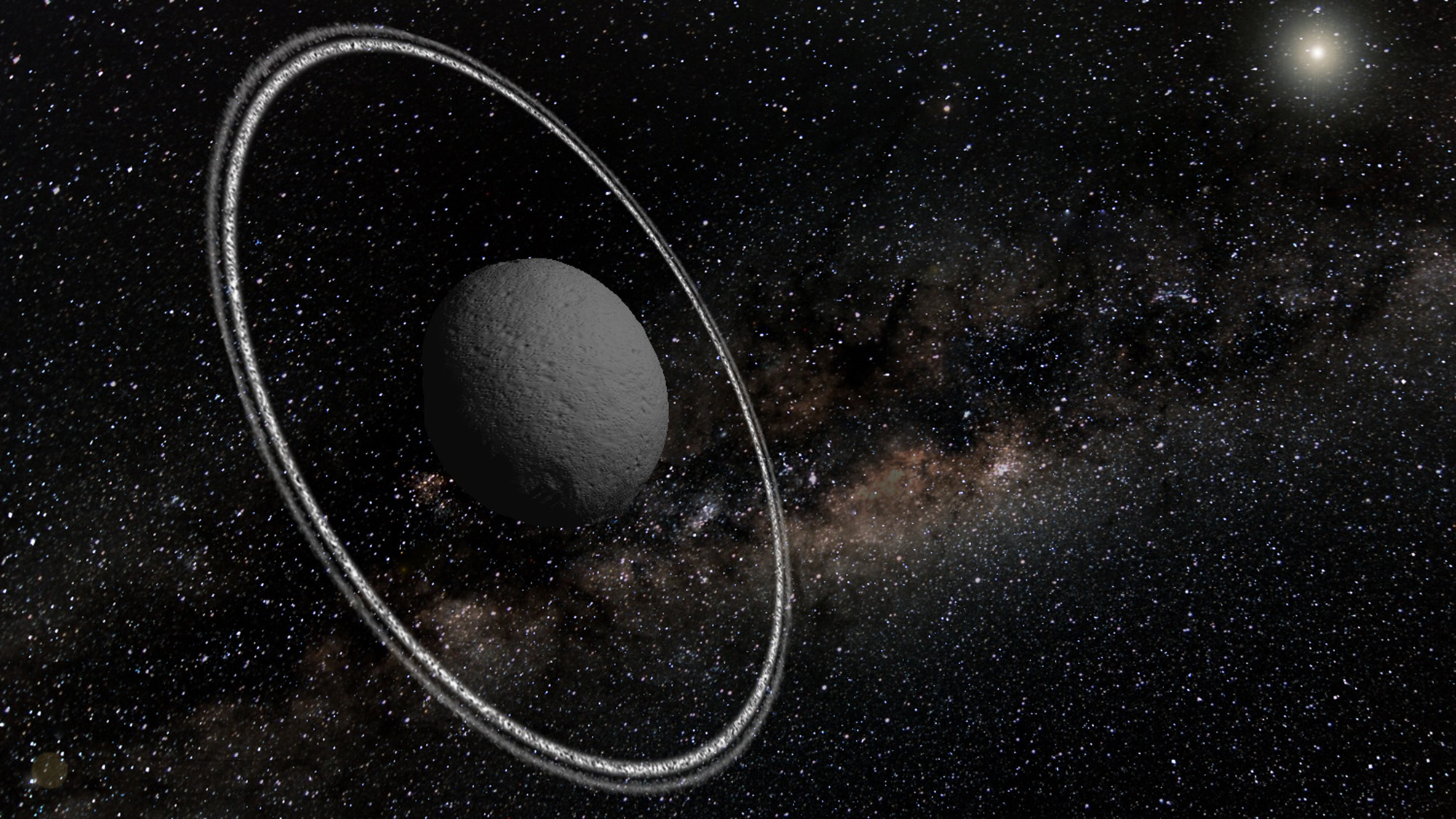
The rings encircling the small, enigmatic solar system body known as Chariklo appear to be undergoing significant changes, according to the latest data retrieved from the James Webb Space Telescope (JWST). Chariklo, a celestial object classified as a centaur, orbits the sun between the gas giants Saturn and Uranus. Its unique ring system, which was only discovered relatively recently, has become a focal point for planetary scientists seeking to understand the chaotic and dynamic nature of the outer solar system.
Defining the Centaur: A Hybrid Celestial Body
To understand the significance of Chariklo, one must first understand its classification. Centaurs are a fascinating class of small solar system bodies that exhibit dual characteristics. They typically possess the icy composition of a comet, yet they orbit the sun on unstable paths that bridge the gap between the asteroid belt and the Kuiper Belt.
Chariklo itself is modest in size, measuring approximately 400 miles (250 kilometers) in diameter. Despite its relatively small stature, it is the largest confirmed member of the centaur population. Its existence provides a bridge for researchers to study the transitionary phases of objects that are often ejected from the outer reaches of the solar system toward the sun, eventually becoming short-period comets. The presence of rings around such a small body was, until 2013, considered an astronomical impossibility, challenging previous models of planetary formation and debris accumulation.
The Chronology of Discovery and Observation
The scientific community’s relationship with Chariklo has evolved rapidly over the last decade. The discovery of its rings in 2013, achieved via stellar occultation—the process of observing a star disappear behind an object—was a watershed moment. Astronomers observed that the star’s light dimmed in a pattern indicating the presence of two distinct, sharp-edged rings.
- 2013: Initial discovery of the ring system by a team of international astronomers using ground-based telescopes, revealing two narrow, dense rings.
- 2014–2022: Continued ground-based monitoring and light-curve analysis provided rough estimates of the ring structure and orbital period.
- 2023–2024: The James Webb Space Telescope, utilizing its Near-Infrared Spectrograph (NIRSpec), began targeted observations of Chariklo. The high-resolution data provided by the JWST’s infrared capabilities allowed researchers to peer through the glare of the centaur itself, revealing subtle variations in the light reflected by the rings.
These latest JWST observations indicate that the rings do not remain in a static, predictable configuration. Instead, the infrared signature suggests either a change in the particle density within the rings or a potential orbital shift that was previously invisible to terrestrial telescopes.
Supporting Data and Scientific Analysis
The JWST’s ability to capture near-infrared light is crucial because it minimizes the interference from the sun’s reflected light, allowing for a clearer spectroscopic analysis. Preliminary data suggests that the composition of the rings consists primarily of water ice and possibly carbonaceous material.
The "mystery" highlighted by the current data pertains to the light-curve intensity. In previous observations, the rings showed a consistent brightness. However, the JWST data shows fluctuations that imply the rings are not merely passive debris disks. Scientists are currently testing several hypotheses:
- Particle Re-accumulation: The rings may be undergoing a process of clumping, where icy debris is colliding and re-forming into larger, temporary structures.
- Shepherd Moons: The presence of tiny, undetected shepherd moons—small satellite bodies that keep ring particles in place—could be causing gravitational disturbances, creating the "changing" appearance.
- Dynamic Evolution: As a centaur, Chariklo is subject to volatile thermal changes as it moves along its elliptical orbit. The sublimation of ice on the rings’ surfaces could be altering their albedo, or reflectivity, as the object approaches its perihelion.
Official Responses and Academic Perspectives
While NASA and the European Space Agency (ESA) have not yet released a definitive peer-reviewed paper on these specific findings, lead researchers involved with the JWST project have noted that the data warrants a re-evaluation of ring stability models.
"The level of precision provided by Webb is unprecedented," noted a researcher affiliated with the Observatoire de Paris, who contributed to the imaging analysis. "We are moving from a phase of simply confirming that these rings exist to a phase where we can observe their life cycles in real-time. If the rings are indeed changing in density or structure over such a short temporal window, it suggests that small-body ring systems are far more dynamic than we ever theorized."
The consensus among the planetary science community is one of cautious excitement. The observation of Chariklo forces a pivot away from the "static rings" model, suggesting that ring systems may be a common, albeit short-lived, phase for many small, icy bodies in the outer solar system.
Broader Implications for Solar System Science
The implications of these findings extend far beyond the centaur itself. By studying how Chariklo maintains its rings, scientists can gain better insight into how the larger, more massive ring systems of Saturn, Uranus, and Neptune were formed and how they might eventually dissipate.
If a 400-mile-wide body can hold onto a ring system, it suggests that gravity is not the only factor at play; orbital resonance and the presence of volatile ices are likely key contributors. This study also highlights the importance of the JWST as a tool for "time-domain" astronomy—the study of how objects in the universe change over time.
Furthermore, this discovery underscores the complexity of the outer solar system. As we continue to identify more objects like Chariklo, we are forced to reconsider the history of our own neighborhood. Is Chariklo a relic of a past collision? Is it a proto-moon in the making? Or is it a temporary phenomenon that will eventually shed its rings as it moves closer to the Sun?
Future Outlook and Next Steps
The next phase of the investigation will involve longitudinal tracking. Astronomers plan to utilize the JWST for follow-up observations over the next three to five years. By creating a continuous data stream, researchers hope to map the orbits of the ring particles with enough precision to determine if the perceived "changes" are periodic, random, or part of a long-term decay process.
Additionally, the scientific community is looking toward future missions that might perform flybys of centaur-class objects. While no mission is currently dedicated solely to a centaur visit, the data gathered by the Webb telescope will be instrumental in designing the navigation and instrumentation for potential future probes aimed at the outer solar system.
As the JWST continues its mission, the story of Chariklo serves as a reminder that the solar system is not a static gallery of unchanging planets, but a vibrant, evolving environment where even the smallest objects have complex stories to tell. The mystery of the shifting rings is likely only the beginning of a deeper exploration into the hidden mechanics of our solar system’s most elusive wanderers.