The 65-inch TCL QM8L QLED TV is seeing a massive discount to $1,197.99 for a limited time.

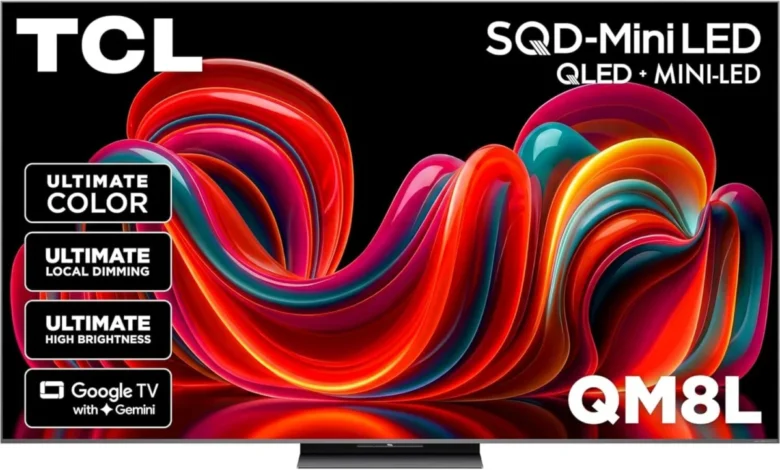
The consumer electronics market has experienced a significant shift toward high-performance, mid-range televisions that rival the specifications of flagship models. On October 29, 2026, retail data indicated that the TCL QM8L, a model that debuted in April 2026, reached its lowest price point since its market entry. The 65-inch variant, originally retailing for $2,499.99, is now available for $1,197.99, representing a savings of over $1,300. This pricing adjustment comes as major retailers prepare for the upcoming holiday shopping season, often characterized by aggressive discounting in the home entertainment category.
Chronology of the QM8L Market Cycle
The TCL QM8L series was officially introduced to the North American market in April 2026. Positioned as a high-tier offering within TCL’s expansive catalog, it was designed to bridge the gap between budget-friendly smart TVs and premium-priced boutique displays. Throughout the second and third quarters of 2026, the model maintained a relatively stable price point, reflecting its status as a newly released product.
However, as the fiscal year progressed toward the fourth quarter, market analysts observed a softening in pricing for large-format QLED panels. The price drop observed on October 29 represents a secondary adjustment for the month, with the current $1,197.99 valuation sitting $100 below the previous October low. This downward trajectory is consistent with historical patterns where manufacturers clear inventory of current-year models ahead of next-generation product announcements usually teased in early January at events like CES.

Technical Specifications and Performance Metrics
The QM8L distinguishes itself through several key technical advancements that have drawn attention from industry reviewers. The most notable feature is the "Zero Border" aesthetic, which utilizes a bezel-less design to maximize the screen-to-body ratio, catering to the modern preference for minimalist interior design.
Beyond aesthetics, the display technology is the primary driver of the model’s performance. The QM8L utilizes Mini-LED backlighting technology, which has become the industry standard for high-end QLED displays. TCL claims a peak brightness of 6,000 nits. To place this in context, current market-leading OLED displays typically struggle to surpass 700 to 1,000 nits in sustained peak brightness. This disparity is critical for HDR (High Dynamic Range) content, where high nit counts allow for more vivid highlights and better visibility in brightly lit living environments.
Furthermore, the unit features 4,000 local dimming zones. Local dimming is the process by which a TV controls the brightness of specific regions of the screen to achieve deeper blacks and higher contrast. By increasing the number of zones, TCL has minimized the "halo effect"—a common issue in LED TVs where light leaks from bright objects into surrounding dark areas. The integration of "Halo Control" software further refines this backlight management, allowing the QM8L to produce contrast ratios that approach those traditionally reserved for OLED panels, while maintaining the brightness advantages inherent to QLED technology.
Audio and Gaming Capabilities
Modern smart televisions are increasingly expected to function as all-in-one media hubs. The QM8L addresses this with an integrated sound system developed in partnership with Bang & Olufsen. While integrated TV speakers are historically regarded as secondary to dedicated soundbars or surround-sound setups, the QM8L’s inclusion of Dolby Atmos-ready hardware provides a notable upgrade in audio clarity and depth.

For the gaming demographic, the QM8L includes a native 144Hz refresh rate. In the current console and PC gaming climate, a high refresh rate is essential for smooth motion, particularly in competitive titles. By incorporating high-frequency support, TCL ensures that the TV is compatible with modern gaming consoles and high-end graphics cards, reducing input lag and screen tearing. These features have contributed to an 8.8/10 rating in independent reviews, such as those conducted by CNET, which noted the balance between price and feature set.
Market Implications and Competitive Landscape
The aggressive pricing of the QM8L series underscores the broader competitive landscape of the television industry in 2026. The competition between QLED (Quantum Dot LED) and OLED (Organic Light Emitting Diode) technologies has intensified. OLEDs have long been praised for their infinite contrast and true blacks, but they have historically been limited by lower peak brightness and the risk of image retention (burn-in). QLEDs, conversely, have focused on durability and brightness.
By pushing the QM8L to the 6,000-nit threshold, TCL is effectively challenging the dominance of high-end OLED manufacturers. This strategy is forcing a price war that benefits the consumer. When a 65-inch television with professional-grade brightness and advanced dimming zones drops below the $1,200 threshold, it shifts the value proposition for the average consumer, making premium home theater experiences more accessible.
Data from the current retail environment suggests that larger sizes in the QM8L lineup—the 75-inch, 85-inch, and 98-inch models—are also seeing proportional discounts. For example, the 75-inch model is currently priced at $1,597.99, while the massive 98-inch unit is listed at $3,497.99. These prices represent significant savings of over $1,400 and $2,500 respectively, compared to the manufacturer’s suggested retail price.

Analysis of Purchasing Trends
For consumers evaluating these deals, the current price activity serves as a primary signal of the "early" holiday shopping season. With supply chain stabilization and increased competition, manufacturers are opting to initiate promotional cycles weeks earlier than in previous years.
Financial analysts tracking consumer electronics suggest that while these prices are historically low, they are reflective of a broader trend of commoditization. As panel manufacturing techniques improve, the cost of producing high-performance displays continues to decrease. This allows brands like TCL to aggressively undercut traditional premium brands, which often maintain higher price points due to brand equity and marketing overhead.
However, consumers should note that deal pricing and availability are subject to rapid change. Inventory levels for high-end television models are often limited, and the combination of high-demand features and deep discounts frequently results in stock shortages as the end-of-year shopping period intensifies.
Final Considerations for Consumers
When considering the purchase of a display in this category, it is recommended to evaluate the specific environmental conditions of the installation site. Because the QM8L is a high-brightness model, it is particularly well-suited for rooms with high ambient light, such as living rooms with large windows. While OLEDs remain a strong choice for darkened home theater rooms, the QLED technology found in the QM8L offers a versatile performance profile that caters to a wider range of viewing environments.

In conclusion, the current promotional event surrounding the TCL QM8L represents a notable moment in the 2026 consumer electronics market. By offering flagship-level features—including 4,000 dimming zones and 6,000 nits of peak brightness—at a mid-range price point, TCL continues to disrupt the traditional pricing tiers of the television market. Whether this signals a permanent shift in price-to-performance expectations remains to be seen, but for the immediate future, it provides a significant opportunity for consumers looking to upgrade their home entertainment systems.