Beyond the Headlines: What Astrobiologists Really Think About the Search for Alien Life


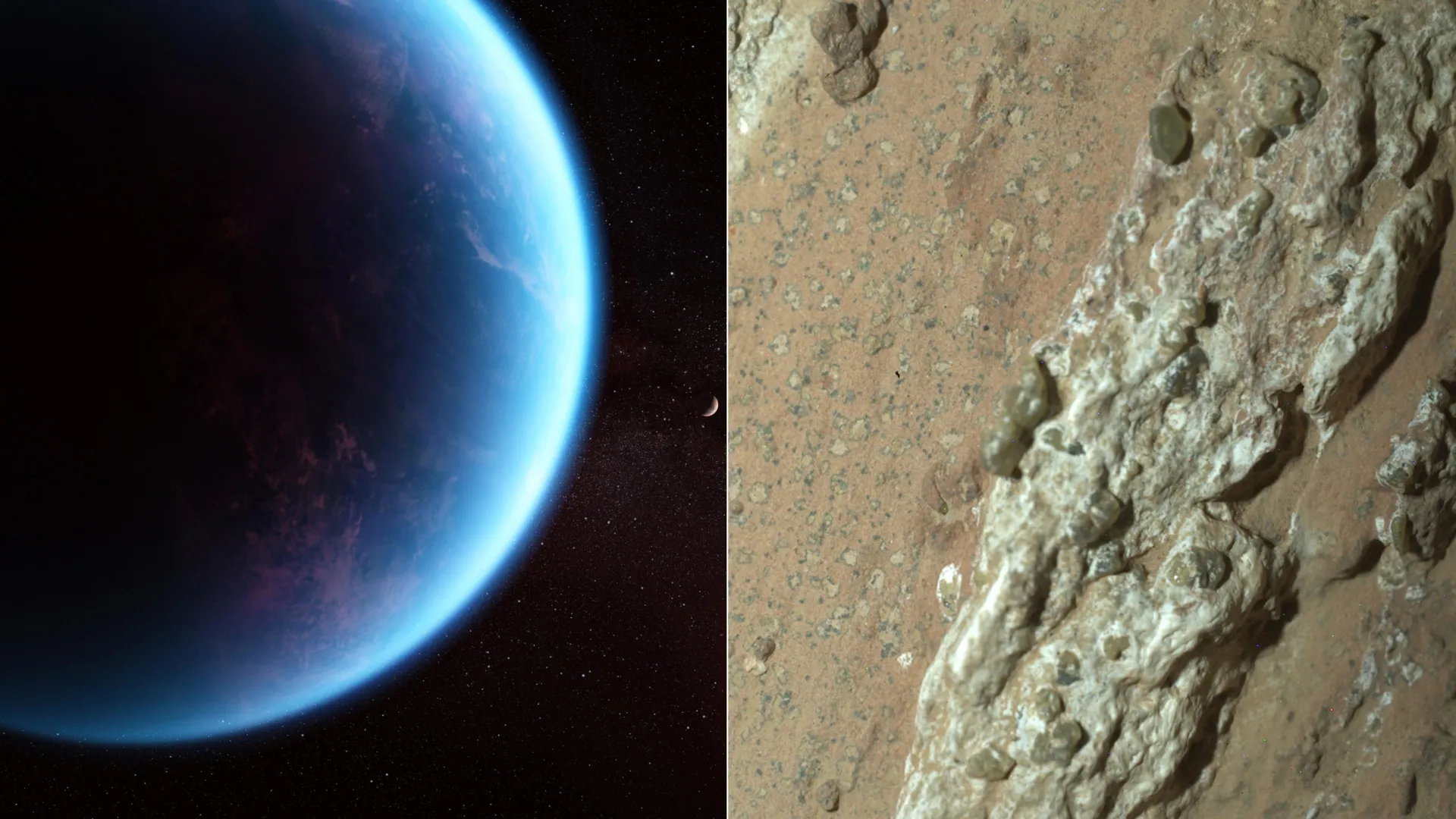
The search for extraterrestrial life has long captured humanity’s imagination, fueled by dramatic headlines and high-profile announcements from space agencies and research institutions alike. In recent years, public discourse has reached a fever pitch following several monumental claims. In 2025, a wave of excitement swept through scientific communities and mainstream media outlets following a press release suggesting researchers had uncovered some of the strongest hints yet of biological activity on the distant exoplanet K2-18b. Later that same year, NASA Administrator Sean Duffy described a sample collected from a rock formation named "Cheyava Falls" on Mars as the closest humanity has ever come to discovering life on the red planet.
These captivating moments invariably command global attention. Yet, beneath the sensationalized headlines and sweeping media pronouncements, a fundamental question remains frequently unaddressed: what do the majority of working scientists actually think about these extraordinary claims?
In practice, systematic data regarding broader scientific opinion is surprisingly scarce. When a major scientific breakthrough or controversy dominates the news cycle, journalists and institutional press officers typically rely on a handful of vocal experts for commentary. While these individual perspectives are often insightful, they rarely reflect the nuanced distribution of views held across the wider scientific community. Nevertheless, public discussions frequently invoke blanket phrases such as "the science says" or "scientists believe," creating an illusion of monolithic consensus where uncertainty and debate may actually prevail.
Recognizing this gap in empirical understanding, a group of researchers recently sought to quantify expert opinion within the specialized domain of astrobiology. Prompted by the twin announcements of potential extraterrestrial biosignatures in 2025, the research team conducted a comprehensive survey of global astrobiologists. Their objective was to map how expert judgment was truly distributed across the field in the wake of two of the most significant astrobiological claims in recent history.
Chronology of Two Landmark Claims
The first focal point of the survey involved the exoplanet K2-18b, a sub-Neptune planet located roughly 120 light-years away from Earth. In April 2025, an international team of researchers reported the detection of potential atmospheric trace molecules, specifically dimethyl sulfide (DMS) and/or dimethyl disulfide (DMDS). On Earth, these volatile sulfur compounds are almost exclusively produced by living organisms, predominantly marine phytoplankton.
The media coverage surrounding the K2-18b announcement was immediate and extensive. Many outlets framed the detection as a watershed moment in humanity’s search for life beyond the solar system, heightening public expectations.
The second focal point unfolded several months later, in September 2025. NASA formally announced that its Perseverance rover, operating in the Jezero Crater on Mars, had identified an intriguing rock target dubbed "Cheyava Falls." The rock displayed distinctive "leopard spots"—small, light-colored mineral rings encrusted with iron and phosphate. On Earth, similar chemical patterns and mineral configurations are frequently formed by microbial activity, as chemical reactions provide metabolic energy for ancient microscopic life. NASA officials and mission scientists highlighted the discovery as a profound astrobiological target, further accelerating public enthusiasm.
Survey Data Reveal Cautious Scientific Consensus
To move beyond anecdotal commentary, researchers surveyed hundreds of professional astrobiologists from across the global research community within days of each respective announcement. The survey posed a straightforward central question to the experts: did they believe extraterrestrial life had probably been discovered in either case?
The empirical results painted a picture characterized far more by professional caution than by unbridled optimism. Regarding the atmospheric data from K2-18b, a mere 6.6% of surveyed astrobiologists agreed that scientists had probably found extraterrestrial life. Conversely, nearly two-thirds (roughly 66%) explicitly disagreed with the proposition, while 28.0% adopted a neutral stance, indicating that the available evidence was insufficient to render a definitive verdict.
For the Martian biosignature discovery at Cheyava Falls, expert confidence shifted upward, though caution remained the dominant sentiment. Approximately 15.1% of respondents agreed that life had probably been found. Total disagreement fell to 44.6%, while neutrality rose notably to 40.3%.
A deeper analysis of the data, however, revealed that binary metrics of agreement and disagreement masked critical shifts in the community’s collective mindset. While outright skepticism persisted, the proportion of astrobiologists who strongly disagreed with the claims dropped dramatically—falling from 35.1% in the case of K2-18b to just 11.1% in the case of Mars.
This statistical migration demonstrated that expert opinion was not simply swinging back and forth between absolute rejection and uncritical endorsement. Instead, the community was progressively warming up to the plausibility of the discoveries without embracing them outright, moving from hardened skepticism toward more tentative, open-minded positions.
Methodological Challenges and False Biosignatures
The divergence in scientific response between the two cases highlights the complex nature of astrobiological evidence. The K2-18b claim relied heavily on remote spectroscopic data—interpreting light filtered through the distant atmosphere of a planet located trillions of miles away. In contrast, the Martian case involved physical material that could be analyzed in situ by sophisticated instruments aboard a robotic rover, allowing for granular geological and chemical assessment.
Despite these advanced capabilities, astrobiologists are acutely aware that seemingly lifelike features can frequently be generated by abiotic, non-biological processes. Geological, chemical, and photochemical reactions routinely mimic biological signatures, creating what researchers term "false biosignatures."
Consequently, the primary hurdle in modern astrobiology is rarely imagining how biological systems could generate a specific signal. Rather, the fundamental challenge lies in exhaustively understanding all the ways nature might produce identical phenomena in the complete absence of life. Until alternative geological or chemical pathways can be entirely ruled out, the scientific community remains deliberately restrained.
Deconstructing Public Perceptions of Scientific Consensus
The findings underscore a broader truth about how scientific progress is communicated and perceived. Public discourse frequently treats scientific inquiries as binary equations: communities either endorse a hypothesis or reject it. However, the internal distribution of expert opinion is multifaceted, encompassing strong agreement, moderate consensus, neutrality, targeted disagreement, and vehement skepticism. Each category conveys vital context regarding how specialists interpret emerging data.
A high concentration of neutral responses, for instance, can signify several distinct realities. Researchers may genuinely view the existing evidence as inconclusive; they may hold a moderate, intermediate degree of confidence; or they similarly may judge a hypothesis as too speculative to warrant definitive endorsement or rejection.
Similarly, a migration from strong disagreement to mild disagreement reveals a softening of institutional resistance, even if overall consensus remains elusive. Flattening these complex distributions into simplistic "for or against" narratives strips away the nuance essential for genuine scientific literacy.
Broader Implications Beyond Astrobiology
The lessons learned from surveying astrobiologists extend far beyond the search for alien microbes. Across numerous high-stakes scientific disciplines—including climate science, pandemic epidemiology, artificial intelligence development, and complex medical research—public conversations routinely invoke the concept of a unified "scientific consensus."
In certain domains, robust consensus genuinely exists. In others, particularly where empirical data is emergent, evolving, or subject to severe methodological constraints, consensus is aspirational rather than actual. Historically, society has lacked systematic, empirical mechanisms for measuring what researchers collectively think, leaving policymakers and journalists vulnerable to selective quoting, vocal outliers, or unfounded assumptions.
To address this vulnerability, academic initiatives are beginning to emerge. Research groups such as C-Scope (the Centre for Scientific Community Opinion Polling and Evaluation) at Durham University are pioneering systematic studies to track how expert opinion is distributed and how it evolves over time in response to unfolding evidence. The goal of such efforts is not to replace hard empirical data with public opinion polling, nor to mistake majority consensus for absolute truth, but rather to illuminate the complex ways scientific communities navigate uncertainty.
As public debate and political decision-making increasingly hinge on complex scientific claims, understanding the inner workings of expert consensus—and the healthy skepticism that accompanies it—has never been more critical. Scientific knowledge does not advance through uniform certainty, but rather through rigorous debate, persistent uncertainty, and the gradual, painstaking revision of human understanding.