A Blue Tsunami in the Lone Star State: Texas Democrats Pull Off Historic Upset Driven by Healthcare Discontent

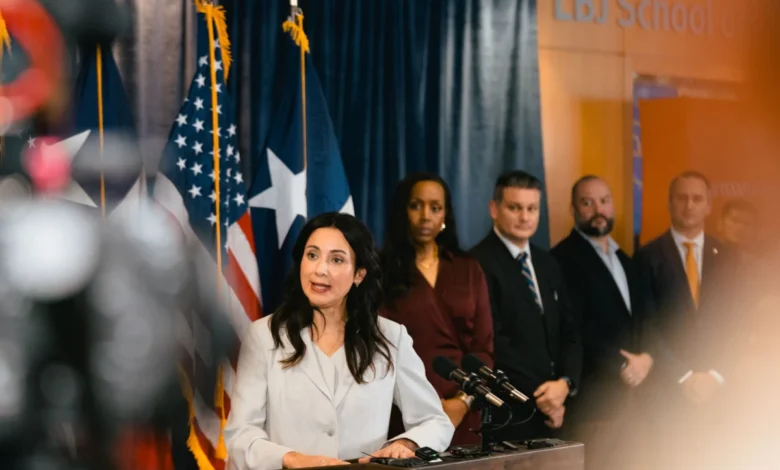
After spending three decades in the political wilderness, effectively shut out of the governor’s mansion and major statewide leadership posts, Texas Democrats achieved a stunning and decisive upset in the November general election. The earthquake-like political shift, which saw the party capture crucial statewide offices alongside a majority in the state House, was propelled largely by intense voter frustration over soaring healthcare costs, systemic access barriers, and profound public dissatisfaction with the status quo.
Now, the newly elected Democratic leaders face a high-stakes, compressed timeline. With just two months remaining before the grueling 140-day legislative session kicks off on January 12, the incoming administration must rapidly translate broad campaign promises regarding healthcare affordability, abortion access, and reproductive rights into cohesive, actionable policy. They must do so while navigating an intensely polarized political environment and bracing for bruising partisan opposition from a Republican-controlled state Senate.
Political analysts note the sudden reversal of fortune has left the victors scrambling. James Henson, director of the Texas Politics Project at the University of Texas-Austin, characterized the current situation vividly, describing it as a classic "dog catches car" scenario where Democrats are hastily assembling a governing agenda after years of being the permanent minority.
A Nationwide Wave Hits the Deep Red Bastion
The Lone Star State sat at the very crest of a broader national blue wave that ultimately altered the balance of power in Washington, D.C. In a departure from its traditional deep-red status, Texas voters elected James Talarico to the United States Senate and successfully picked up a congressional seat in the U.S. House. These victories materialized despite a concerted, multi-million-dollar defensive effort by national Republicans, which included aggressive congressional redistricting maps designed to favor GOP candidates and an estimated $225 million poured into the state by tech billionaire Elon Musk to bolster conservative contenders.
Yet, for the nearly 32 million residents of Texas, the most immediate and tangible shifts will likely stem from the sweeping domain of state-level governance. The stakes could scarcely be higher. Texas routinely languishes near the bottom of national rankings for overall health outcomes, and it continues to claim the dubious distinction of having the highest uninsured population in the United States, a systemic vulnerability that amplified economic anxieties at the ballot box.
Under the state’s electoral calendar, Governor-elect Gina Hinojosa and Lieutenant Governor-elect Vikki Goodwin—both seasoned state lawmakers—are scheduled to be formally sworn into office on January 19, exactly one week after the legislative session officially convenes. Hinojosa’s victory is historic, marking the first time a Democrat has occupied the governor’s mansion since Ann Richards concluded her term in January 1995. Hinojosa pulled off the upset by defeating long-serving Republican Governor Greg Abbott, a prolific fundraiser and exceptionally popular incumbent who had maintained an unblemished record in statewide elections prior to this defeat.
For three successive terms, Abbott—alongside powerful Lieutenant Governor Dan Patrick—waged an aggressive, multi-pronged campaign against federal healthcare initiatives and progressive social policies. Their administration vehemently fought against expanding Medicaid under the Affordable Care Act, repeatedly challenged the legality of the ACA in federal courts, oversaw the near-total dismantling of abortion rights following the reversal of Roe v. Wade, and successfully championed measures to loosen school vaccine mandates across the state.
Campaign Promises Meet Capitol Realities
During the heat of the campaign trail, Hinojosa and Goodwin placed healthcare reform at the absolute center of their platforms. Their stated priorities focused squarely on expanding coverage footprints, lowering out-of-pocket medical expenses, and safeguarding women’s health services. Goodwin, in particular, campaigned on an ambitious proposal to establish a government-funded statewide healthcare program, suggesting it could be financed by tapping into Texas’s formidable $24 billion "rainy day fund."
During their respective tenures as members of the state House, both leaders attempted to lay legislative groundwork for these ambitions. Goodwin filed targeted legislation aimed at expanding Medicaid and restoring abortion rights, while Hinojosa sponsored or co-authored bills designed to broaden medical exemptions to the state’s stringent abortion bans and integrate doulas into the state’s maternal mortality review committee. However, reflecting the absolute grip Republicans held over the legislative machinery, few of those measures ever managed to secure a coveted floor vote.
Capital lobbyists and veteran political observers in Austin emphasize that it remains far too early to predict how Hinojosa, Goodwin, and their incoming cohort will structure their legislative packages, whom they will select to head key state agencies, or how they intend to bypass the legislative roadblocks sure to be erected by the Republican Senate majority.
The pressure is relentless. Once the upcoming legislative session concludes at the end of May, the Texas legislative calendar dictates that lawmakers will not convene for another regular session until 2029. That subsequent session will arrive immediately on the heels of the 2028 presidential election cycle, a turbulent period when the entire membership of the state House will once again face the voters.
The Grimmer Realities of the State’s Health Landscape
The foundational numbers illustrating the state of health care in Texas explain much of the voter revolt. Approximately 5 million Texans—nearly 16 percent of the state’s population—currently lack any form of health insurance coverage. This alarming total includes roughly 1 million uninsured children.
Texas remains one of only 10 states that steadfastly refused to expand Medicaid under the ACA to incorporate low-income adults. Compounding these structural failures, maternal mortality metrics show that new mothers in Texas die due to pregnancy-related complications at rates significantly higher than the national average. Public opinion polling conducted throughout the year confirmed that the escalating cost of medical care and prescription drugs consistently outranked all other issues among Texas voters.
These state-level pressures coincided with contractions at the federal level. Over the past year, Congress opted not to renew enhanced federal subsidies for ACA marketplace insurance premiums, passed a federal budget laden with restrictive new eligibility requirements for food and healthcare assistance programs, and enacted broad cuts to the federal public health budget.
Lynn Cowles, director of health and food justice at the progressive policy advocacy organization Every Texan, pointed out that soaring operational costs and bureaucratic enrollment glitches have resulted in hundreds of thousands of Texans losing their coverage in recent months.
This friction is felt acutely on the ground. Rachel Elsberry, an insurance broker in Austin who manages client portfolios spanning more than a dozen states, has watched the affordability crisis deepen firsthand.
"Whether you voted red or blue, every client I talk to, regardless of where they are on the political spectrum, says healthcare costs are too high," Elsberry noted. She added that she is routinely forced to turn away prospective clients in Texas who earn too much to qualify for ACA premium subsidies yet cannot afford standard commercial rates and do not qualify for lean federal safety-net programs. "It’s heartbreaking," she said.
Despite these hurdles, advocacy groups have already begun engaging with the incoming administration. Cowles reported that her organization has met with Hinojosa’s transition staffers, finding them deeply receptive to a concrete, multi-step proposal designed to simplify enrollment procedures and help residents maintain coverage under existing state programs.
"It’s an incredibly different world," Cowles remarked. "It’s amazing to say these things out loud."
Yet, structural hurdles remain formidable. An estimated 1 million Texans would instantly become eligible for Medicaid should the state reverse course and expand the program. Even though the federal government would absorb 90 percent of the resulting financial burden, securing legislative approval remains an uphill battle.
"To thread that needle even after dramatic changes like last night is going to be challenging," observed John Henderson, president and CEO of the Texas Organization of Rural & Community Hospitals, reflecting on the complex arithmetic of the legislature.
Furthermore, the mechanics of passing laws in the Texas Statehouse are notoriously difficult. Charles Miller, director of health and economic mobility at Texas 2036, a nonpartisan policy research organization, noted that lawmakers operate under an intensely restrictive timetable. During the state’s most recent regular legislative session in 2025, an astonishing 11,503 bills were formally filed, but only 3,534 ultimately survived the legislative gauntlet to become law.
"The clock is ticking," Miller warned.
Senate Republicans Pledge a Legislative Firewall
While the executive branch and the state House have flipped, newly minted Democratic leaders are bracing for entrenched opposition from the Republican-dominated state Senate. Signaling that the upper chamber intends to serve as a conservative firewall, state Senator Charles Schwertner—a practicing physician who chairs the powerful Senate Business and Commerce Committee—took to social media immediately following the election returns to outline the GOP’s stance.
"Texas stands as long as the Texas Senate Republican caucus holds the line," Schwertner wrote. "We will."
Given this legislative stalemate, policy experts like Miller suggest that Democrats will be forced to pursue bipartisan compromises. Potential areas of agreement could include measures to enhance healthcare price transparency, dismantle anti-competitive healthcare monopolies, and explore mechanisms to draw down federal matching funds without directly expanding the state’s baseline budgetary commitments.
Adding another layer of complexity, a bipartisan interim House committee on healthcare affordability has been meeting throughout the year and is slated to deliver a comprehensive set of policy recommendations ahead of the legislative launch.
Historically, the office of the lieutenant governor functions as one of the most concentrated centers of power in Texas politics, wielding unilateral authority to form committees, appoint committee chairmanships, and dictate which legislation reaches the floor for a vote. Under outgoing Lieutenant Governor Dan Patrick, the office aggressively consolidated power, utilizing procedural maneuvers such as lowering the chamber’s debate threshold to push through partisan conservative priorities without needing Democratic votes.
However, political observers in Austin suggest that even Senate Republicans may be quietly exploring procedural rule changes designed to clip the wings of the lieutenant governor’s office, mitigating its centralization of power ahead of Goodwin’s assumption of the role.
"The rumors are flying in Austin," Henson said regarding the behind-the-scenes institutional jockeying.
In the realm of criminal justice and social policy, the shifts are already rippling through state agencies. Nathan Johnson, a Democratic state senator who was elected to serve as the next Texas Attorney General, told regional media outlets that while state-level criminal statutes regarding abortion will remain legally intact pending legislative action, he will not mobilize the resources of the attorney general’s office to prosecute or sue out-of-state medical providers who mail abortion medication into Texas.
The View from the Ground
For ordinary citizens grappling with chronic illnesses, the political transformation cannot materialize fast enough. Dorcaus Robinson, a 46-year-old resident of Houston and publisher of The Houston Sun newspaper, cast her ballots for Hinojosa and top Democrats, though she split her ticket in other down-ballot contests.
Robinson lives with multiple sclerosis and relies on a specialized medication regimen to manage her condition; without insurance coverage, a single monthly injection costs roughly $10,000. This year, her monthly premiums for an ACA health plan jumped from $500 to $730. Shortly after the election, her insurance provider informed her that rates would climb even higher next year.
Her immediate reaction encapsulated the mix of hope and skepticism felt by many exhausted consumers across the state: "Is it too late for me to benefit from this blue tsunami?"
Recalling the rapid pace of executive and legislative maneuvers executed by federal administrations in recent years, Robinson said she expects swift, tangible relief from the leaders she helped elect.
"It’s like football: The next man is up," she said. "Let’s go in and get this done. I hope they have their plan and they are ready."
Yet, as she surveyed the divided political landscape awaiting lawmakers in Austin, she offered a parting dose of realism: "Is it realistic? Can it be done? I don’t know."
Related posts: