‘It was evolution in a garbage bag’: How a box of dead starlings began to unravel the secret to their…

The Anatomy of an Invasion
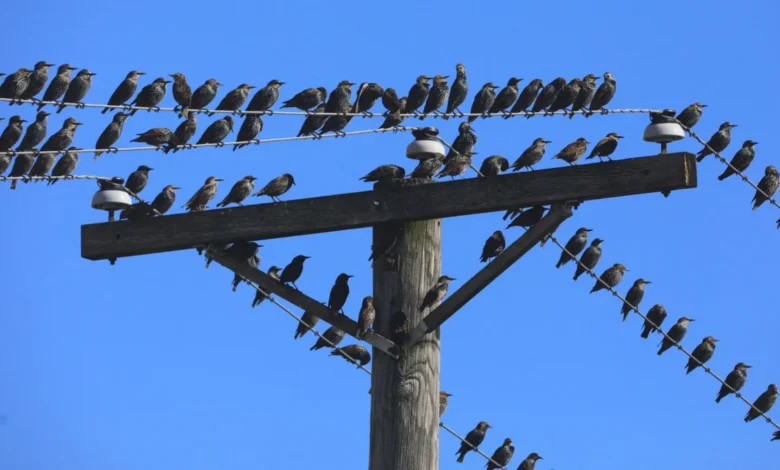
The success of the European starling in North America is a textbook case of biological invasion. Within just 80 years of their initial release, the population surged from that small group of individuals to an estimated 200 million. This explosive growth was not merely a matter of favorable climate; it was a testament to the species’ remarkable plasticity. Starlings are quintessential generalists. They are highly social, aggressive in territorial disputes, and possess a varied diet that ranges from insects and seeds to human food waste.
This adaptability allowed them to outcompete native cavity-nesting birds, such as bluebirds and flickers, for limited nesting sites. As urbanization expanded across the United States, the starling moved in lockstep with human infrastructure, utilizing barns, bridges, and commercial buildings as man-made nesting platforms. By the mid-20th century, the starling had achieved total continental dominance, effectively colonizing every major ecosystem from the Atlantic coast to the Pacific Northwest.
A Chronology of Expansion
The timeline of the starling’s spread serves as a grim roadmap for invasive species management. Following the 1890 release, initial sightings remained localized to the New York metropolitan area for several years. However, by the turn of the century, reports began appearing in New Jersey and Connecticut.
- 1890: Eugene Schieffelin releases the first batch of European starlings in Central Park.
- 1900–1920: The population stabilizes and begins a steady, aggressive westward migration.
- 1920–1940: Starlings reach the Mississippi River, finding ample farmland and grain supplies that fuel further population spikes.
- 1950s: The species successfully crosses the Rocky Mountains, establishing footholds in the Pacific Northwest and California.
- 1970: The population hits the estimated 200-million mark, a figure that remains a standard reference point for the species’ peak saturation.
By the time federal and state wildlife agencies realized the magnitude of the issue, the starling had already integrated itself so deeply into the agricultural and urban fabric that eradication was no longer a viable option.
Evolutionary Biology and Rapid Adaptation
The rapid expansion of the starling has become a focal point for researchers studying "rapid evolution." In her forthcoming book, Bird on the Street: The Unnatural History of Starlings, evolutionary biologist Julia M. Zichello examines the physical and behavioral changes that occurred as these birds encountered diverse environments. When Zichello received a shipment of preserved starling specimens for her research, she began to uncover evidence that these birds were not merely surviving in new climates—they were changing to match them.
Analysis of populations across the continent shows subtle morphological differences in wing shape and body size, which correlate with the varying environmental pressures of different North American latitudes. This suggests that the species underwent localized selection pressures within a relatively short evolutionary window. Unlike many other invasive species that maintain a stagnant genetic profile, the starling’s genome appears to be exceptionally fluid, allowing for rapid phenotypic shifts that enhance survival in extreme temperatures or high-competition environments.
Economic and Agricultural Implications
The impact of the starling on the American economy is staggering. The United States Department of Agriculture (USDA) has long classified the starling as a significant pest, primarily due to the damage it causes to livestock operations and agricultural output. Starlings are notorious for consuming vast quantities of livestock feed, fouling feedlots with their droppings, and transmitting pathogens like Salmonella and E. coli between animals.
Beyond the farm, the birds pose a consistent safety risk to aviation. The most infamous incident occurred in 1960, when Eastern Air Lines Flight 375 crashed shortly after takeoff from Boston’s Logan Airport after flying through a massive flock of starlings. The impact destroyed the plane’s engines, resulting in 62 fatalities. This incident spurred decades of research into bird-strike mitigation and remains a primary reason airports invest heavily in avian dispersal programs.
Official Responses and Management Strategies
Governmental response to the starling invasion has been characterized by a transition from total failure to damage mitigation. Throughout the 20th century, various states attempted bounty programs and mass culling, but the starling’s reproductive rate—often two or more broods per year—rendered these efforts largely ineffective.
Today, the focus has shifted toward "integrated pest management." This involves modifying agricultural structures to prevent nesting and utilizing non-lethal deterrents such as acoustic distress signals or predatory decoys. Wildlife agencies now emphasize the protection of native species rather than the wholesale eradication of the starling, acknowledging that the species is, for all intents and purposes, a permanent member of the North American biome.
Broader Implications for Ecological Research
The starling’s story is a cautionary tale regarding the hubris of human intervention in natural systems. When Schieffelin released those birds in Central Park, he could not have foreseen the ripple effects of his actions. However, the scientific community now views the starling as a unique "natural laboratory."
Researchers like Zichello argue that studying the starling provides critical insights into how species respond to human-induced global change. If a species can adapt to an entire continent in less than a century, it offers a window into the mechanisms of resilience. As climate change continues to displace species and shift ecological niches, understanding how "invasive" generalists like the starling navigate these transitions is becoming increasingly relevant for conservation biology.
The starling’s success is not just a story of a bird; it is a story of how an organism can hijack an ecosystem. By examining the data from the past century, scientists are gaining a clearer picture of the traits that define invasive success: high reproductive output, dietary flexibility, and an uncanny ability to exploit human-altered landscapes. While the starling remains a nuisance to farmers and a threat to aviation, it has also become a defining character in the modern North American wilderness, serving as a permanent, albeit unnatural, fixture of our changing environment.
As we look toward the future, the legacy of the European starling serves as a reminder that the introduction of a non-native species is a permanent decision. There is no "undo" button for biodiversity. The challenge for the next century will not be removing the starling, but learning to manage the ecological equilibrium in a world where the boundaries of natural range have been irrevocably blurred by human activity. Through rigorous study and a better understanding of evolutionary plasticity, researchers hope to mitigate the harm caused by such introductions while continuing to learn from the species that managed to turn an entire continent into its own backyard.