Bose second-generation QuietComfort Headphones hit record low price of 199 dollars for Black Friday 2026

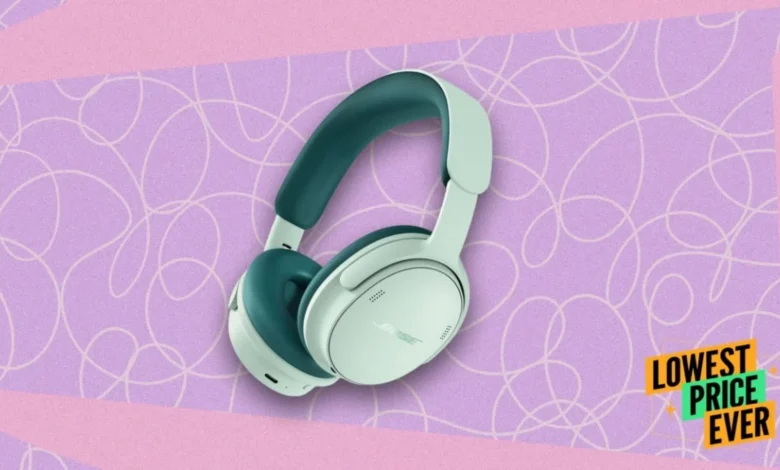
The landscape of consumer audio technology has undergone a significant shift in recent years, with noise-canceling capabilities transitioning from a niche luxury for frequent travelers to a standard expectation for remote workers and urban commuters alike. As part of the annual Black Friday 2026 retail cycle, Bose has positioned its second-generation QuietComfort headphones at a historic price point of $199. This represents a 45% reduction from the standard retail price, marking a $160 saving and establishing a new benchmark for the lowest cost ever recorded for this specific model.
Context and Market Positioning
The second-generation Bose QuietComfort series occupies a critical middle ground in the company’s product hierarchy. While the premium "Ultra" line caters to audiophiles and those seeking the absolute peak of processing power, the standard QuietComfort model is designed for high-volume accessibility.
Historically, Bose has maintained a rigorous pricing structure to preserve brand equity. However, the current retail environment in late 2026 has forced a recalibration among major audio manufacturers. With increased competition from Sony’s WH-1000XM series and Apple’s AirPods Max, Bose has leveraged the Black Friday window to consolidate its market share. By discounting this model to $199, the manufacturer is effectively targeting the mid-range market, a segment previously dominated by secondary brands or legacy models.
Design and Ergonomic Engineering
At a weight of approximately 8.1 ounces, the second-generation QuietComfort headphones remain among the lightest options in the premium over-ear category. The structural design emphasizes long-term wearability, utilizing a cushioned headband that distributes weight across the crown of the head to minimize pressure points.
The inclusion of replaceable ear cushions serves as a practical response to user feedback regarding product longevity. In previous iterations, the degradation of synthetic leather padding often necessitated the replacement of the entire unit. By allowing for modular maintenance, Bose has extended the lifecycle of the device, a move that aligns with growing consumer demand for sustainable electronics and "right to repair" initiatives. The device also maintains a foldable form factor, catering to the travel demographic that requires space-efficient storage in a hardshell carrying case.
Acoustic Performance and Technical Specifications
The audio signature of the second-generation QuietComfort leans toward a warm, bass-forward profile, a tuning choice that typically resonates with a broad demographic of mainstream listeners. While this profile is optimized for modern pop, hip-hop, and electronic genres, it may require manual adjustment for users who prefer a neutral or "reference" sound stage.
The proprietary companion application facilitates access to Bose Immersive Audio, which utilizes spatial processing to simulate a wider soundstage. However, technical reviews have noted that the integrated three-band equalizer remains limited. While it provides enough utility for casual users to adjust bass, mid, and treble levels, professional-grade audiophiles seeking granular frequency control may find the software constraints restrictive.
Noise cancellation, the cornerstone of the Bose brand, remains highly effective at mitigating low-frequency environmental noise, such as the hum of airplane engines or HVAC systems. Despite this, some reports indicate that higher-pitched ambient sounds—such as human voices or keyboard clatter—can occasionally penetrate the noise-canceling barrier, a common limitation in current ANC technology that relies on feed-forward and feedback microphones.

Connectivity and Battery Performance
In terms of technical infrastructure, the 2026 model includes several upgrades that bring it in line with contemporary industry standards:
- Bluetooth 5.4: Ensures a more stable connection and better power management compared to the previous Bluetooth 5.1/5.2 standards.
- Multipoint Pairing: Allows users to maintain simultaneous connections to two devices, such as a laptop and a smartphone, facilitating seamless transitions between conference calls and media playback.
- Google Fast Pair: Streamlines the integration process for Android-based ecosystems.
- Lossless Audio via USB-C: A significant inclusion for users looking to bypass the compression inherent in standard Bluetooth transmission.
Battery life is rated at 24 hours with active noise cancellation (ANC) engaged. While this performance is consistent with the current market average, it represents a point of contention for power users who frequently engage in long-haul travel. To mitigate this, Bose has implemented a "quick charge" feature, providing approximately 2.5 hours of playback from a 15-minute charge cycle.
Notably, the headphones lack support for advanced high-bitrate codecs such as aptX Adaptive, which are present in the more expensive QuietComfort Ultra line. This omission acts as a technical barrier, ensuring a clear value proposition difference between the entry-level premium model and the flagship offering.
Industry Implications and Market Analysis
The aggressive pricing of the QuietComfort series during the 2026 Black Friday season is emblematic of a broader trend in the consumer electronics sector. As inflation and supply chain volatility remain relevant, manufacturers are increasingly relying on holiday sales events to clear inventory and capture market share.
Retail analysts suggest that this strategy serves two purposes: clearing warehouse space for upcoming 2027 product refreshes and increasing the total number of users within the Bose digital ecosystem. By lowering the entry price to $199, the company is likely attempting to capture a larger share of the "holiday gift" demographic, a group that is historically more price-sensitive than the average tech enthusiast.
Furthermore, the integration of USB-C for both audio and charging reflects a shift toward universal standards, a move encouraged by recent international regulatory frameworks aimed at reducing electronic waste.
Consumer Considerations
For prospective buyers, the current $199 price point offers a compelling entry into the high-end noise-canceling headphone market. However, consumers should consider their specific use case before purchasing. Those who prioritize high-fidelity audio and codec support may still find the Bose QuietComfort Ultra or competing models from other manufacturers more suitable. Conversely, for users who prioritize comfort, reliable noise cancellation for travel, and long-term hardware support through replaceable components, the current sale represents an optimal time for acquisition.
As with all major holiday sales, potential buyers should be aware that inventory levels are subject to fluctuation and that the discounted price is a temporary feature of the retail calendar. The combination of design maturity, improved connectivity, and the significant price reduction positions these headphones as one of the most notable audio deals of the 2026 shopping season.
Final Technical Summary
- Model: Bose QuietComfort Headphones (2nd Gen)
- Current Promotion Price: $199
- Standard MSRP: $359 (approx.)
- Key Connectivity: Bluetooth 5.4, Multipoint, USB-C
- Battery Life: 24 hours (ANC enabled)
- Available Colors: Dewdrop Mint, Eucalyptus Green, Hazelnut Taupe
While the audio profile may not satisfy every niche requirement, the second-generation QuietComfort headphones offer a robust feature set that balances performance with portability. As the market continues to evolve, the ability to provide consistent noise-cancellation at a sub-$200 price point remains the definitive test for industry leaders. In this regard, Bose appears to be successfully navigating the challenges of a saturated market by focusing on value, comfort, and core functionality.