Gerald R. Molen the Oscar winning producer behind Steven Spielbergs Schindlers List has died at the age of 91

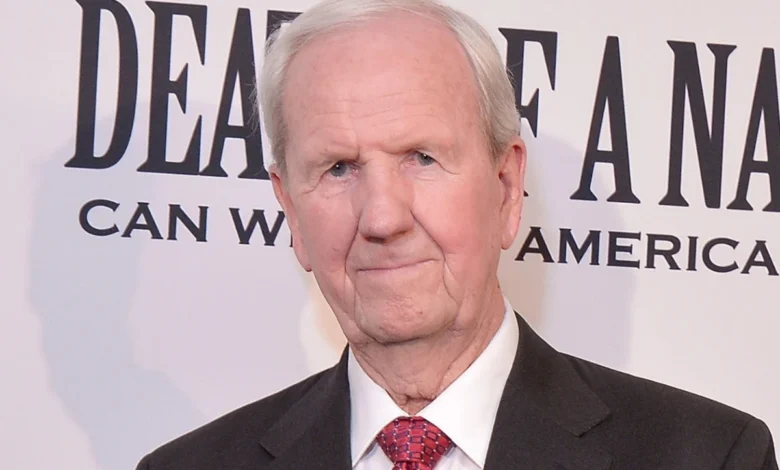
The motion picture industry is mourning the loss of Gerald R. Molen, a prolific producer whose career spanned decades and helped shape the landscape of modern blockbuster cinema. A foundational figure in the success of Amblin Entertainment, Molen passed away at the age of 91, leaving behind a legacy defined by technical mastery, narrative ambition, and an enduring partnership with some of the most influential filmmakers in Hollywood history. His passing was confirmed by his great-niece, Rachel Lorraine Pullan, who shared the news via social media on Sunday, noting that he had passed on to join his late wife, Pat, who died in January 2024.
A Career Built from the Ground Up
Born in Montana in 1935, Gerald R. Molen’s trajectory toward the heights of the film industry was not one of inherited privilege but of steady, incremental advancement. In 1947, at the age of 12, he moved to North Hollywood, a relocation that would prove pivotal. His parents, Gerald Sr. and Edith, operated a cafe situated adjacent to the Republic Pictures lot in Studio City. This proximity to the heartbeat of the Golden Age of Hollywood provided young Molen with an early, formative exposure to the mechanics of filmmaking.
Molen did not immediately ascend to the producer’s chair. His professional initiation involved the fundamental, often grueling labor that sustains a studio. He began by moving set pieces, working in logistics, and serving as a driver for the studio. These early years, spent in the trenches of production, instilled in him a comprehensive understanding of the operational complexities required to bring a vision to the screen. This hands-on experience served as the bedrock of his career, allowing him to navigate the high-stakes environments of blockbuster production with a pragmatism that directors and studios deeply valued.
The Spielberg Partnership and the Rise of Amblin
The defining chapter of Molen’s career began in 1985 when he served as a unit production manager on Steven Spielberg’s The Color Purple. The collaboration proved to be an immediate professional synergy. Spielberg, known for his rigorous standards and penchant for innovation, recognized in Molen a producer who possessed both the creative empathy to support a director’s vision and the operational discipline to maintain budgets and schedules.
Following his work on The Color Purple, Molen transitioned into an associate producer role for the 1987 film batteries not included, which Spielberg executive produced. This set the stage for a nearly two-decade run of collaborative success. As a producer at Amblin Entertainment, Molen was instrumental in facilitating the production of some of the most iconic films of the late 20th century.
His credit list during this era is a testament to his influence:
- 1991: Hook
- 1993: Jurassic Park
- 1993: Schindler’s List
- 1994: The Flintstones
- 1994: The Little Rascals
- 1994: Little Giants
- 1995: Casper
- 1996: Twister
- 1997: The Lost World: Jurassic Park
The apex of this partnership arrived in 1994, when Schindler’s List secured the Academy Award for Best Picture. Molen, sharing the honor with Spielberg and Branko Lustig, accepted the award, cementing his place in cinematic history. The film, a harrowing and vital exploration of the Holocaust, demonstrated that Molen was equally adept at managing the logistics of high-concept fantasy blockbusters as he was in supporting deeply somber, historical dramas.
Beyond the Amblin Years: A Diverse Filmography
While his tenure at Amblin remains his most recognized period, Molen’s career was marked by significant contributions outside of the Spielberg orbit. His ability to produce commercially viable and critically engaging projects remained consistent throughout his later years.
His portfolio includes the Academy Award-winning Rain Man (1988), which showcased his ability to handle character-driven dramas with massive global appeal. Additionally, he produced the high-octane racing drama Days of Thunder (1990), further demonstrating his versatility. Even as he reached his later years, Molen remained an active participant in the industry, contributing to projects like the creature feature The Meg (2018) and its sequel, as well as the family drama The Best Christmas Pageant Ever.
The Human Element: Integrity and Legacy
Reflecting on his character, those who worked with Molen often noted his unwavering moral compass. Pullan’s tribute highlighted that "Uncle Jerry was a man of great moral character and high integrity." In an industry often criticized for its volatility and superficiality, Molen was frequently described as a stabilizing presence. His transition from the studio lot driver to the man holding an Oscar statuette was viewed by his peers as the result of decades of honest, diligent labor.
His personal life was marked by a profound commitment to his wife, Pat. Their partnership, which lasted nearly seven decades, ended only with her passing earlier this year at the age of 86. Her death in January 2024 was a significant loss for Molen, and his own passing just months later has been characterized by his family as a poignant conclusion to a life shared together.
The Broader Impact on Hollywood Production
Molen’s career provides a case study in the evolution of the role of the producer. In the 1970s and 80s, the producer’s function shifted from the studio-executive-driven model to a more collaborative, filmmaker-centric approach. Molen mastered this evolution. He acted as the vital bridge between the creative whims of a visionary director and the bottom-line requirements of a major studio.
His influence on the "blockbuster" era cannot be overstated. By managing the complex physical production requirements of films like Jurassic Park—which utilized revolutionary CGI and animatronic techniques—Molen allowed filmmakers to push the boundaries of what was technically possible. He ensured that the creative risks taken by directors were backed by sound production strategies.
Industry Reflection and Analysis
The death of Gerald R. Molen marks the end of a specific era in American film history—one where the craft of production was synonymous with a deep, experiential knowledge of the studio floor. As Hollywood continues to move toward digital-first production models, the legacy of producers like Molen serves as a reminder of the value of on-set experience.
Industry analysts note that Molen’s career was characterized by a lack of ego, a rarity in a field defined by celebrity and high-profile credits. He prioritized the final product, acting as the "steady hand" behind some of the most influential directors of the century. His ability to adapt from the gritty, character-driven scripts of the 1980s to the massive, visual-effects-heavy spectacles of the 2010s demonstrates a professional agility that few in the industry achieve.
Chronology of a Storied Career
- 1935: Born in Montana.
- 1947: Moves to North Hollywood; begins proximity to the Republic Pictures lot.
- 1985: Serves as unit production manager on The Color Purple, beginning his long-term partnership with Steven Spielberg.
- 1987: Serves as associate producer on batteries not included.
- 1988: Produces Rain Man, achieving significant critical and commercial success.
- 1993: Produces Jurassic Park and Schindler’s List.
- 1994: Receives the Academy Award for Best Picture for Schindler’s List.
- 1997: Produces The Lost World: Jurassic Park.
- 2002: Produces Minority Report.
- 2018: Produces The Meg.
- 2024: Passes away at age 91.
Final Thoughts
Gerald R. Molen’s death leaves a void in the community of filmmakers who value discipline, hard work, and technical precision. His life journey—from the son of a cafe owner on the edge of a studio lot to an Academy Award winner—is a quintessentially American story. He leaves behind a filmography that has entertained generations and a reputation for integrity that will likely influence the next generation of production managers and producers who follow in his footsteps. As the film industry continues to evolve, the methodologies established by individuals like Molen remain the silent, essential gears that allow the machinery of cinema to function.