Euclid space telescope discovers the most distant active galactic nucleus ever observed

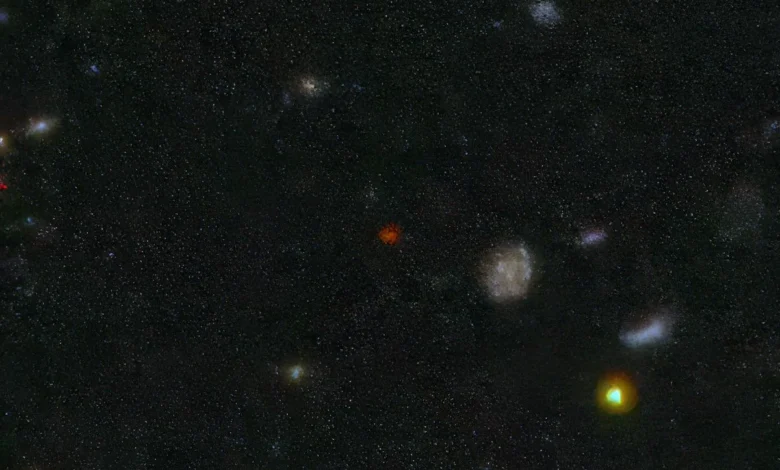
The European Space Agency’s (ESA) Euclid space telescope has officially shattered cosmic distance records, identifying the most distant active galactic nucleus (AGN) ever detected. This discovery, confirmed by an international consortium of researchers, offers a profound look into the early universe, pushing the boundaries of what modern observational astronomy can capture. By pinpointing this exceptionally remote quasar, scientists are now positioned to refine their understanding of how supermassive black holes formed and evolved during the infancy of the cosmos.
The Discovery: Peering into the Cosmic Dawn
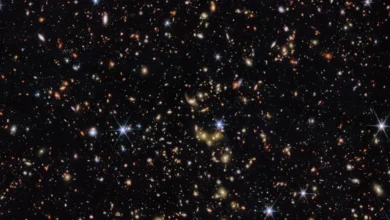
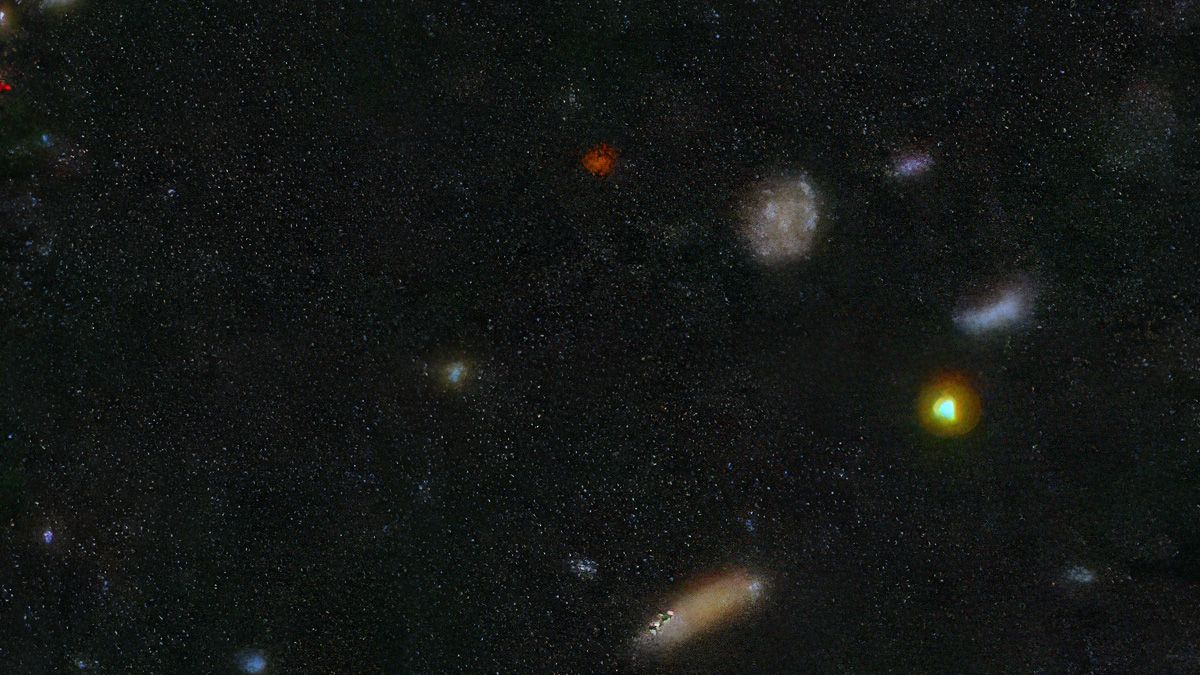
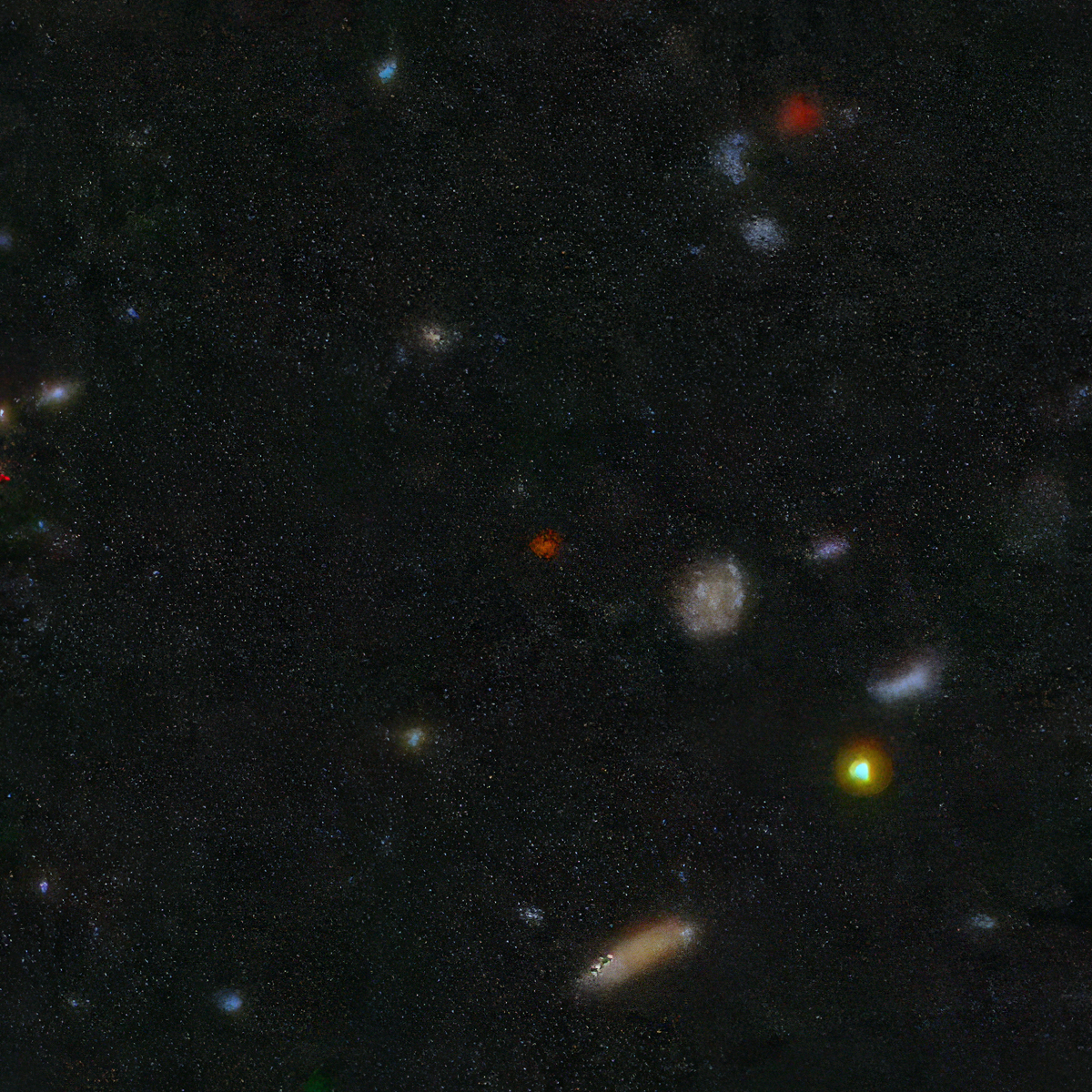
The object, identified as a highly luminous quasar, appears as a faint, red-shifted point of light in deep-space imagery captured by the Euclid mission. Quasars are the exceptionally bright cores of distant galaxies, powered by supermassive black holes that consume vast amounts of surrounding gas and dust. As this material spirals toward the event horizon, it emits intense radiation, allowing these objects to be seen across billions of light-years.
While current models of galaxy evolution suggest that supermassive black holes were present in the early universe, capturing evidence of them has been notoriously difficult due to the sheer distance and the faintness of the signals. Euclid’s advanced near-infrared capabilities allow it to detect the light from these ancient powerhouses, which has been stretched—or "red-shifted"—into the infrared spectrum by the expansion of the universe over billions of years. This newfound quasar represents a critical data point, existing at a time when the universe was significantly younger than it is today.
Chronology of Cosmic Observation
The study of active galactic nuclei has been a cornerstone of extragalactic astronomy for decades. The timeline of these discoveries has accelerated rapidly with the launch of next-generation space telescopes:
- 1960s: Astronomers first identify quasars as intense, star-like radio sources, eventually realizing they are distant, hyper-active galactic cores.
- 1990s – 2010s: The Hubble Space Telescope provides high-resolution images of host galaxies, proving that quasars reside at the centers of massive star systems.
- 2021: The James Webb Space Telescope (JWST) launches, providing unprecedented infrared sensitivity that allows for the detection of the earliest known black holes.
- 2023: The Euclid telescope begins its survey of the "Dark Universe," aiming to map the geometry of the cosmos and the distribution of dark matter.
- 2026 (Current Findings): Euclid confirms the detection of a record-breaking quasar, demonstrating the telescope’s unique ability to scan vast swaths of the sky for rare, high-redshift objects.
Supporting Data and Scientific Context
To understand the magnitude of this discovery, one must consider the sheer scale of the universe. The light from this quasar has traveled for billions of years to reach our sensors. Astronomers use "redshift" (z) to measure this distance. The higher the redshift, the further back in time the object is being observed.
Current astrophysical models indicate that supermassive black holes with masses equivalent to millions or billions of suns were already present less than a billion years after the Big Bang. This creates a "growth problem": if these black holes formed from the collapse of early stars, they would have needed to consume matter at near-impossible rates to reach their observed sizes so quickly. The discovery of this new, highly distant quasar adds a critical variable to this puzzle, suggesting that either the seeds of black holes were larger than previously assumed, or the mechanisms of accretion were far more efficient in the early universe than standard physics currently accounts for.
Official Responses and the Euclid Consortium
The Euclid Consortium, which includes over 2,000 scientists from 300 institutions, has hailed the finding as a vindication of the mission’s design. "Euclid was built to perform wide-area surveys," noted a representative from the consortium. "While many telescopes are designed to stare at a single point in the sky for a long time, Euclid’s strength lies in its ability to scan the heavens with a wide field of view while maintaining the precision necessary to pick out these rare, high-redshift needles in a haystack."
By integrating data from the ESA’s Euclid with complementary observations from ground-based observatories and the James Webb Space Telescope, researchers are building a multi-wavelength profile of the quasar. This collaborative approach is essential for verifying the distance and luminosity calculations that define the discovery.
Implications for Cosmological Models
The existence of such a massive, active object so early in the history of the universe forces a re-evaluation of galaxy formation theories. The prevailing "hierarchical model" suggests that galaxies grow through the steady merging of smaller structures over time. However, finding a fully formed, hyper-active nucleus at such a primitive stage suggests that the process of galaxy and black hole formation might be more synchronized—or even more rapid—than previously modeled.
Furthermore, this quasar serves as a "lighthouse" for astronomers. By analyzing the light spectrum as it passes through the intervening cosmic web of gas and dust between the quasar and Earth, scientists can map the distribution of matter in the early universe. This helps in the broader mission of the Euclid telescope: to measure the influence of dark matter and dark energy on the expansion of the universe.
Broader Impact on Future Research
The discovery is not merely a record-breaking event; it provides a new target for detailed follow-up studies. Future observations with the James Webb Space Telescope will likely focus on the host galaxy of this quasar to determine the stellar population and the environmental conditions surrounding the black hole.
As we move forward, the data gathered from this quasar will be integrated into simulations of the early universe. If the findings continue to show that supermassive black holes were prevalent and massive at the dawn of time, it may lead to a paradigm shift in how we understand the "Dark Ages" of the universe—the period before the first stars and galaxies fully illuminated the cosmos.
Conclusion
The Euclid mission has once again demonstrated its utility as a premier tool for modern cosmology. By capturing the light of this distant quasar, the telescope has opened a new window into the past, providing data that challenges our current understanding of black hole physics and galaxy evolution. As the Euclid mission continues its six-year survey, the scientific community anticipates that this discovery will be the first of many, as the telescope scans millions of galaxies to reveal the hidden architecture of our universe. For now, the newfound quasar stands as a testament to the endurance of the human endeavor to understand our origins, reaching across space and time to touch the very beginning of the light we see today.